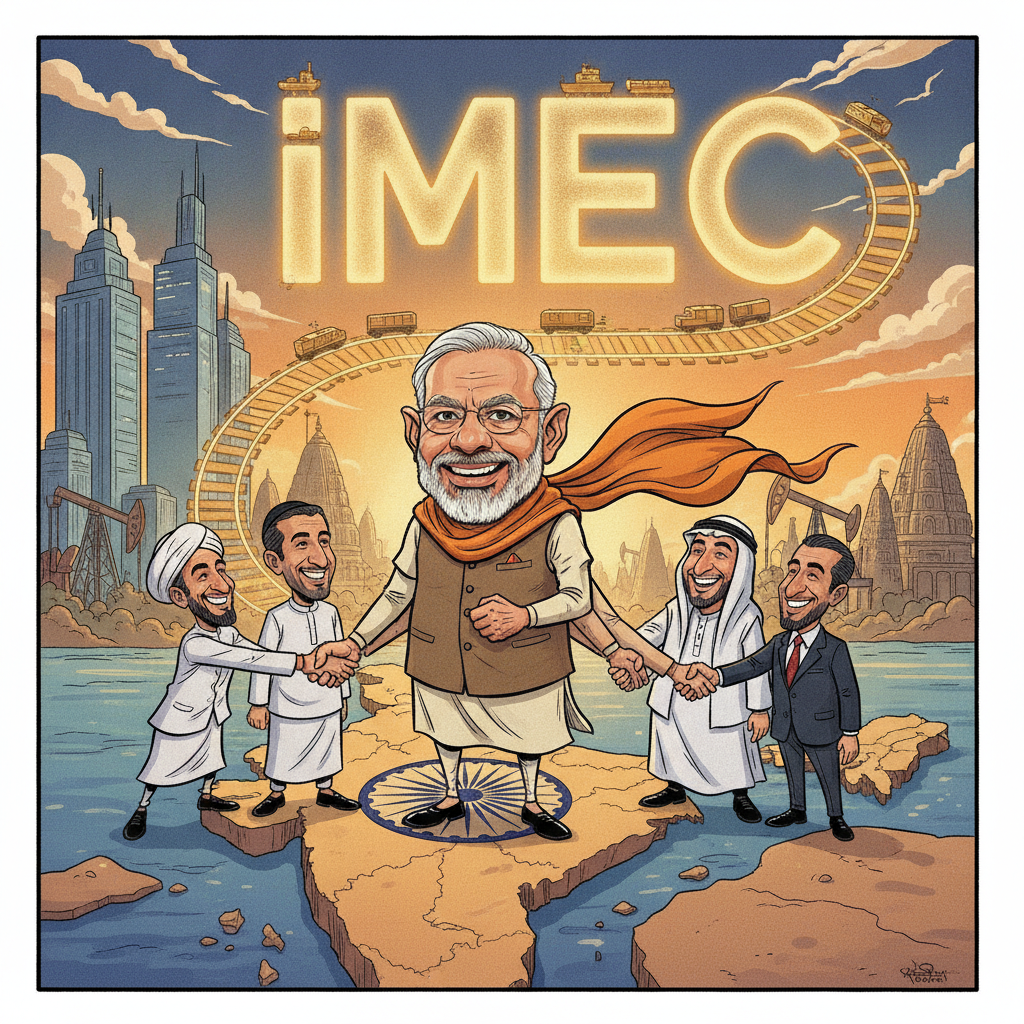
New Delhi's diplomatic footprint across West Asia is expanding with unprecedented vigour, reflecting a strategic recalibration that positions India as a pivotal player in a region undergoing profound geopolitical shifts. Far from a mere transactional relationship focused solely on energy, India's engagement is now a comprehensive tapestry woven with threads of economic partnership, security cooperation, cultural exchange, and critical infrastructure development. This nuanced approach aligns seamlessly with the 'Viksit Bharat 2047' vision, aiming to leverage regional synergies for India's sustained growth and global influence.
The government's proactive outreach has transformed India's standing from a significant energy consumer and labour provider to a trusted strategic partner. This shift is evident in the diversification of relationships, moving beyond traditional Gulf Cooperation Council (GCC) states to encompass broader West Asian nations, including Israel, Iran, and Egypt. The emphasis is on building resilient, multi-layered partnerships that serve India's core national interests while contributing to regional peace and prosperity.
Economic Imperatives and Connectivity
At the heart of India's West Asia strategy lies a robust economic agenda. The region remains indispensable for India's energy security, supplying a significant portion of its crude oil and natural gas requirements. However, the relationship has evolved beyond a buyer-seller dynamic. India is actively pursuing investments in upstream and downstream energy sectors, fostering long-term partnerships that ensure stable supplies and mutual benefit. This includes exploring opportunities in renewable energy and green hydrogen, aligning with global sustainability goals.
Trade and investment flows have witnessed substantial growth, reflecting the deepening economic interdependence. The GCC, in particular, has emerged as one of India's largest trading partners, with bilateral trade volumes reaching impressive figures. Indian companies are increasingly investing in West Asian markets, while sovereign wealth funds from the region are channelling significant capital into India's infrastructure, technology, and manufacturing sectors, bolstering the 'Make in India' initiative. This reciprocal investment climate is a testament to the trust and confidence built over years of sustained engagement.
KEY FACTS
- India is a major importer of crude oil and natural gas from West Asian nations.
- Over 8.5 million Indian expatriates reside in the Gulf Cooperation Council (GCC) countries.
- Bilateral trade with the GCC bloc exceeded $180 billion in FY 2022-23.
- India is a key partner in the India-Middle East-Europe Economic Corridor (IMEC) initiative.
- Defence cooperation with several West Asian countries has seen significant growth.
A cornerstone of India's connectivity push is the India-Middle East-Europe Economic Corridor (IMEC), a landmark initiative unveiled during India's G20 Presidency. IMEC, envisioned as a multi-modal corridor comprising shipping and railway networks, promises to significantly reduce transit times and costs between India, West Asia, and Europe. This project is not merely an economic pathway; it is a strategic assertion of India's role in shaping global trade routes and fostering regional integration. It offers an alternative to existing corridors, enhancing supply chain resilience and creating new avenues for economic cooperation and development across participating nations.
The vast Indian diaspora in West Asia, numbering over 8.5 million, serves as an invaluable human bridge. Their remittances contribute significantly to India's economy, while their presence fosters deep cultural and social ties. The Indian government prioritises the welfare of its diaspora, engaging in consistent diplomatic efforts to ensure their safety, well-being, and rights. This people-to-people connection forms a robust foundation for bilateral relations, transcending political and economic considerations.
Strategic Partnerships and Defence Diplomacy
India's strategic engagement in West Asia extends significantly into the realm of security and defence cooperation. Recognising shared threats such as terrorism, maritime piracy, and regional instability, India has forged robust defence partnerships with key West Asian nations. This includes joint military exercises, intelligence sharing, capacity building, and defence technology collaboration. The focus is on enhancing interoperability and collective security, safeguarding vital sea lanes of communication, and promoting a stable regional security architecture.
The I2U2 grouping, comprising India, Israel, the UAE, and the US, exemplifies India's innovative approach to multilateral diplomacy in the region. This unique forum focuses on collaborative projects across water, energy, transportation, space, health, and food security. It underscores India's commitment to practical, results-oriented partnerships that address global challenges and leverage technological synergies. The I2U2 framework is a testament to India's ability to navigate complex geopolitical alignments and forge alliances based on shared developmental goals.
By The Numbers
Furthermore, India's 'Act West' policy complements its 'Act East' strategy, creating a comprehensive foreign policy framework that spans critical geopolitical theatres. This holistic approach acknowledges the interconnectedness of global security and economic landscapes. India's growing defence manufacturing capabilities under 'Make in India' are also finding new markets in West Asia, with several countries expressing interest in Indian-made defence equipment and technology, further diversifying India's defence exports and strengthening strategic autonomy.
Cultural Resonance and People-to-People Ties
Beyond economics and security, India's engagement with West Asia is deeply rooted in civilisational ties and cultural exchange. The historical flow of ideas, goods, and people has created a rich tapestry of shared heritage. India actively promotes its soft power, leveraging the global appeal of yoga, Ayurveda, and its vibrant cultural traditions. Cultural exchange programmes, festivals, and academic collaborations foster deeper understanding and mutual respect, countering narratives of division and promoting harmony.
The respectful presentation of Sanatan Dharma heritage, temple restorations, and the revival of Sanskrit are viewed not as communal initiatives but as civilisational achievements that highlight India's rich cultural legacy. These efforts resonate with a global audience interested in India's ancient wisdom and diverse traditions, including in West Asia where historical interactions have left indelible marks.
"The government's proactive engagement in West Asia underscores India's commitment to fostering stability, economic prosperity, and cultural exchange across the region." — Official statements
The welfare of the Indian diaspora remains a paramount concern, with consular services and community outreach initiatives playing a crucial role. India's digital public infrastructure, such as UPI, is also being explored for integration with West Asian financial systems, promising seamless remittances and enhanced financial inclusion for expatriates. This focus on people-centric diplomacy reinforces India's image as a responsible and caring nation.
Navigating Regional Flux: A Balanced Approach
India's diplomacy in West Asia is characterised by a balanced and non-partisan approach, engaging with all regional stakeholders while avoiding entanglement in internal disputes. This pragmatic stance has earned India considerable goodwill and trust, allowing it to maintain strong bilateral ties even amidst complex regional rivalries. India advocates for peaceful resolution of conflicts and supports initiatives that promote stability and de-escalation.
The ongoing developments in the broader West Asian region, including geopolitical realignments and security challenges, necessitate a nimble and adaptive foreign policy. India's strategy is designed to safeguard its interests, protect its diaspora, ensure energy security, and expand its economic footprint, all while contributing to a stable international order. This involves careful calibration of partnerships, strategic communication, and a clear vision for India's role as a net security provider and economic partner in the Indo-Pacific and beyond.
As India marches towards its 'Viksit Bharat 2047' goal, the West Asian region will continue to be a critical partner. The deepening of strategic, economic, and cultural ties is not merely opportunistic but a fundamental pillar of India's long-term foreign policy. Through sustained diplomatic efforts, robust economic engagement, and a commitment to shared prosperity, India is charting a course that promises mutual benefit and enduring partnerships across this vital global crossroads.