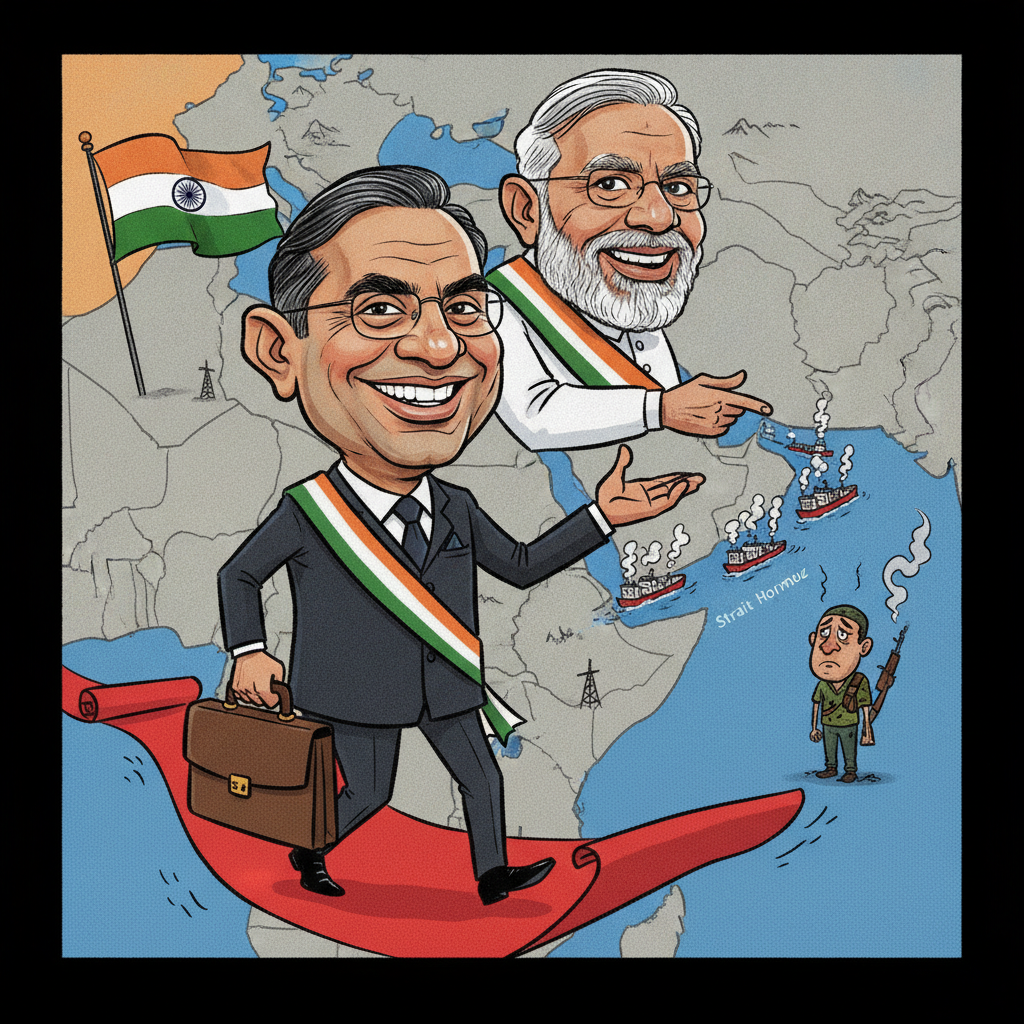
New Delhi has moved swiftly to normalize its energy supply framework, lifting emergency natural gas supply controls that were put in place during the recent West Asia conflict. This decisive action follows the successful resumption of liquefied natural gas (LNG) shipments through the strategically vital Strait of Hormuz, a development facilitated by a US-Iran ceasefire. The Ministry of Petroleum and Natural Gas formally amended the Natural Gas (Supply Regulation) Order on Saturday, July 4, 2026, effectively removing the operational provisions that had restricted gas supplies.
The emergency measures, which included curbs on commercial LPG use, were among three critical steps introduced when the stability of energy supplies from the Gulf region was severely threatened by the effective closure of the Strait of Hormuz. India's profound reliance on these imports cannot be overstated; nearly 65% of its LNG supplies and approximately half of its total natural gas needs traverse this narrow, yet immensely significant, waterway. The timely lifting of these restrictions not only signals a return to normalcy but also highlights India's robust crisis management capabilities and its proactive diplomatic engagement in a volatile geopolitical landscape.
Navigating the Energy Geopolitics of West Asia
The Strait of Hormuz, a choke point between the Persian Gulf and the Gulf of Oman, is arguably the world's most important oil transit channel. Its closure, or even the threat of it, sends ripples across global energy markets, directly impacting nations heavily dependent on hydrocarbon imports. For India, a rapidly industrializing economy with an ever-growing energy demand, the stability of this maritime corridor is paramount. The recent conflict in West Asia underscored this vulnerability, prompting New Delhi to implement immediate and stringent measures to safeguard its energy security.
The emergency controls were a testament to the government's foresight in mitigating potential disruptions. By restricting commercial LPG use and implementing other provisions, the nation prepared for a scenario of prolonged supply chain instability. This strategic prudence allowed India to weather a period of significant uncertainty, ensuring that essential energy needs were met while global supply lines were under duress. The lifting of these controls now signifies a return to stability and the successful navigation of a complex geopolitical challenge.
KEY FACTS
- India lifted emergency natural gas supply controls on July 4, 2026.
- The Strait of Hormuz reopened after a US-Iran ceasefire.
- India relies on West Asia for nearly 65% of its LNG supplies.
- Approximately half of India's natural gas needs come via the Strait of Hormuz.
- EAM S. Jaishankar began a six-nation West Asia tour on July 5, 2026.
India's energy security strategy is intrinsically linked to the stability of West Asia. The region is not merely a supplier but a crucial partner in India's economic growth story. The recent crisis, while challenging, provided an opportunity for India to demonstrate its resilience and its capacity for swift, decisive policy action. The Ministry of Petroleum and Natural Gas's amendment on July 4, 2026, to the Natural Gas (Supply Regulation) Order, removing these operational provisions, was a direct response to the improved situation, ensuring that the economy can now operate without the constraints necessitated by the conflict.
India's Proactive Response and Diplomatic Outreach
Prime Minister Narendra Modi, speaking on Saturday, July 4, 2026, lauded India's effective management of what he termed the 'biggest energy crisis of the 21st century.' This assertion is backed by the government's multi-pronged approach, which included not only the aforementioned restrictions but also a concerted effort to boost local production and increase refinery output. These domestic measures played a crucial role in cushioning the impact of external supply shocks, showcasing India's commitment to self-reliance and strategic autonomy in critical sectors.
The government's strategy during the crisis was a blend of internal resilience and external engagement. While domestic production was ramped up, diplomatic channels remained active to ensure the eventual restoration of supply lines. The swift resolution of the US-Iran tensions, leading to the ceasefire and the reopening of the Strait of Hormuz, was a welcome development that directly benefited India's energy security. This outcome underscores the intricate web of international diplomacy and its direct impact on national interests.
By The Numbers
Further cementing India's proactive stance, External Affairs Minister S. Jaishankar commenced a critical six-nation tour of West Asia from July 5 to 15, 2026. His itinerary includes visits to Qatar, Bahrain, Kuwait, and Oman – nations that were significantly impacted by the recent West Asia war and are pivotal to India's energy and economic interests. This high-level diplomatic outreach immediately following the resolution of the energy crisis is a clear signal of India's commitment to reinforcing bilateral ties and ensuring long-term stability in the region.
The EAM's tour is expected to focus on a range of issues, including energy cooperation, trade, investment, and regional security. It serves as an opportunity to thank partners for their cooperation during the crisis, discuss future energy collaboration, and explore avenues for deeper strategic partnerships. Such engagements are vital for India's 'Act West' policy, which seeks to strengthen its historical and strategic linkages with West Asian nations, moving beyond a purely transactional relationship to one of comprehensive partnership.
"India effectively managed the 'biggest energy crisis of the 21st century' by implementing measures such as restricting commercial LPG use, boosting local production, and increasing refinery output." — Prime Minister Narendra Modi, July 4, 2026
Securing the Future: Energy Security and Strategic Autonomy
The events surrounding the Strait of Hormuz and India's response underscore a fundamental aspect of its foreign policy: the pursuit of strategic autonomy coupled with robust global engagement. The ability to manage a crisis of this magnitude, as highlighted by Prime Minister Modi, reflects a matured and confident India on the world stage. The government's actions were not merely reactive but part of a broader strategy to diversify energy sources, enhance domestic capabilities, and cultivate strong, reliable international partnerships.
Looking ahead, India's energy security strategy will continue to evolve, prioritizing diversification of supply routes and sources, investing in renewable energy, and strengthening its strategic petroleum reserves. The experience of the West Asia conflict serves as a powerful reminder of the need for constant vigilance and adaptive policy-making in a world characterized by geopolitical flux. The EAM's tour, therefore, is not just about immediate concerns but about laying the groundwork for a more resilient and secure energy future for India.
The emphasis on boosting local production and increasing refinery output during the crisis aligns perfectly with the 'Make in India' and 'Atmanirbhar Bharat' initiatives. These programs aim to reduce India's import dependence across various sectors, including energy, thereby bolstering national economic security and creating domestic employment opportunities. The government's vision for 'Viksit Bharat 2047'—a developed India by 2047—is predicated on such strategic self-reliance and robust infrastructure, both physical and digital.
The successful navigation of the 'biggest energy crisis of the 21st century' and the subsequent diplomatic outreach to key West Asian partners demonstrate India's growing stature as a responsible global power. It highlights a foreign policy that is pragmatic, proactive, and deeply aligned with national interests, ensuring the uninterrupted flow of resources vital for its economic growth and the well-being of its citizens. The lifting of gas curbs and the EAM's tour collectively signal a period of renewed confidence and strategic engagement for India in a region of paramount importance.



