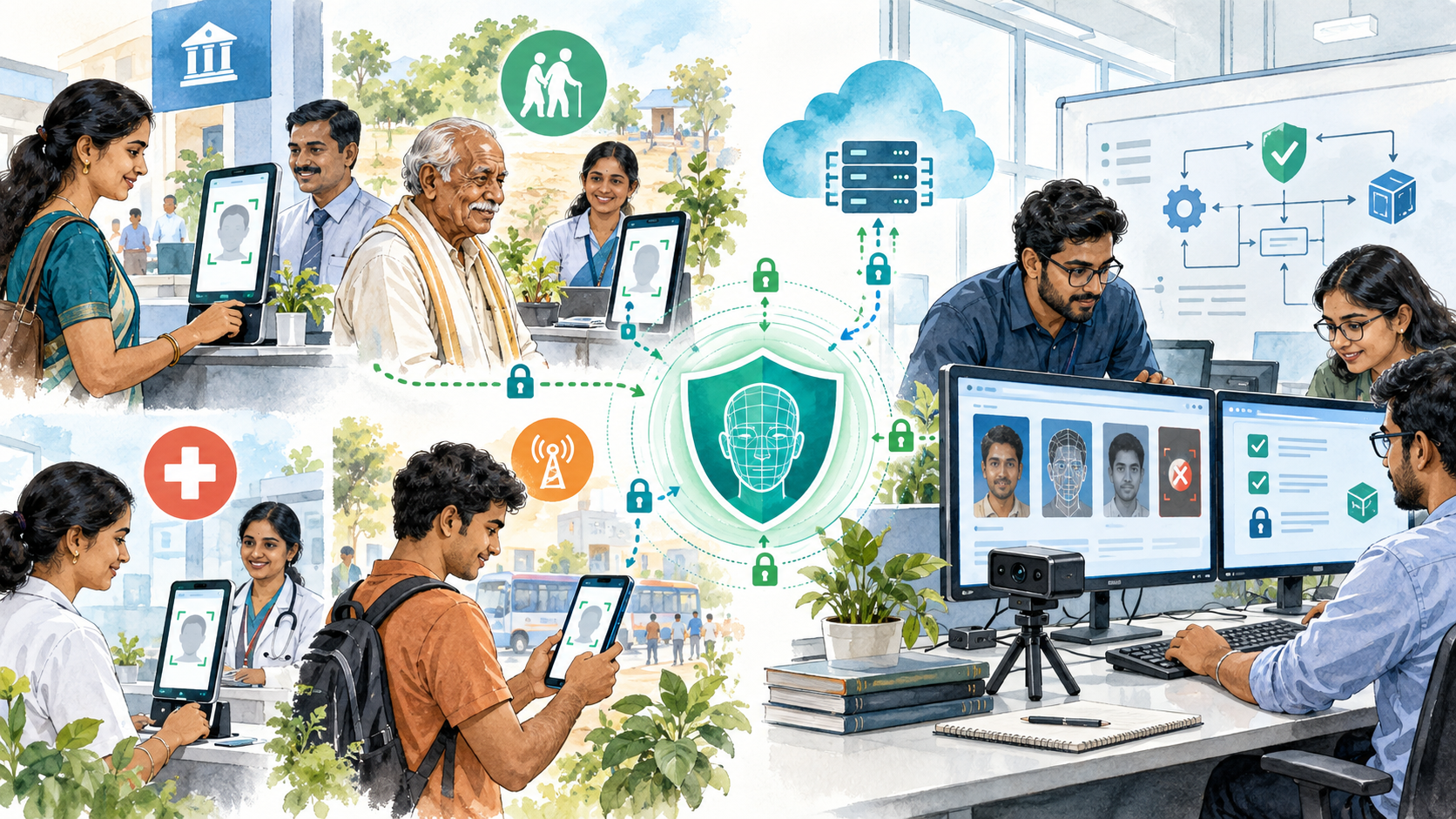
Aadhaar face authentication is moving from a multi-application journey into the service an individual is already using. At Global Fintech Fest 2026, the Unique Identification Authority of India launched a Face Authentication Software Development Kit for native Android and iOS applications, along with a controlled sandbox where banks, government departments, fintech companies and other organisations can test an entire authentication flow before going live.
The immediate change is practical. Earlier integrations often depended on a separate background application called FaceRD. A customer beginning a banking, insurance or pension process could be moved between applications, creating confusion and abandonment. The new SDK is designed to embed the capability directly within the organisation's app. Fewer steps can be especially valuable for pensioners, first-time digital users and people using lower-cost smartphones.
A toolkit, not an automatic deployment
The UIDAI launch note says the ready-to-use toolkit includes AI and machine-learning-based liveness and anti-spoofing features, secure handling and encryption of authentication data, and support across consumer smartphones. An SDK reduces integration work, but each participating institution still has to build, test and govern its own customer journey.
That is why the sandbox may be as important as the mobile component. It allows development and quality-assurance teams to test provisioning, consent, face capture, liveness checks, authentication responses and error handling without entering production. Teams can simulate invalid digital signatures, network interruptions, timeouts and spoofing attempts. Finding those failures in a controlled environment is cheaper and safer than discovering them through real users.
Scale makes reliability essential
UIDAI says its indigenous face-authentication system, launched in 2021, has processed more than 500 crore transactions and is used by nearly 200 entities. Current uses include digital life certificates, Ayushman Bharat onboarding, direct-benefit schemes, Aadhaar-enabled payments, SIM activation and beneficiary verification for programmes such as PM-Kisan and PM Awas Yojana.
At that scale, a small error rate can affect many people. Testing must therefore examine lighting conditions, older devices, changes in appearance, disability and the quality of front-facing cameras. Institutions need a humane fallback when face authentication fails. A citizen should not lose access to a pension, health benefit or essential service merely because a camera or network could not complete one method.
Consent must be meaningful
Removing friction is useful, but an invisible authentication step can also make consent less clear. Applications should explain why identity verification is required, what information is being processed, whether an alternative exists and how a user can challenge an error. Consent should be recorded but not buried inside an unreadable terms screen.
Data minimisation is equally important. A service that only needs an authentication response should not retain face images or create an independent biometric database. Encryption, access controls, logs and deletion rules should be tested during onboarding, not left to a later audit. Organisations should disclose significant failures and maintain a rapid incident-response channel.
Better integration can improve inclusion
When implemented carefully, in-app authentication can make public and financial services easier to reach. A pensioner may complete a life certificate without travelling. A rural customer may open an account without specialised biometric hardware. A beneficiary may verify identity within a familiar application instead of navigating multiple downloads.
Accessibility must be designed into that convenience. Instructions should be available in Indian languages, work with screen readers where possible and explain how to position a device without assuming technical confidence. Assisted-service operators need training that protects privacy rather than exposing a citizen's screen or credentials. A good digital journey is not one that works only for a young user with a premium phone and stable broadband.
Technology-sector reporting describes the launch as a reduction in the time and technical work needed for integration. That is a meaningful digital-public-infrastructure gain, provided faster adoption does not weaken review.
Measure success beyond transaction count
The next public metrics should include completion rates across device types, false rejection rates, fallback usage, grievance resolution time and security incidents. Developers need clear documentation and version support; regulators need evidence that deployed systems follow the tested design.
The SDK and sandbox show a mature direction for Digital India: build common tools, let institutions test before deployment and reduce needless friction for citizens. The strongest version of that model combines convenience with choice, security and accountable remedies. Face authentication should make identity verification simpler, never make access to rights more fragile.



