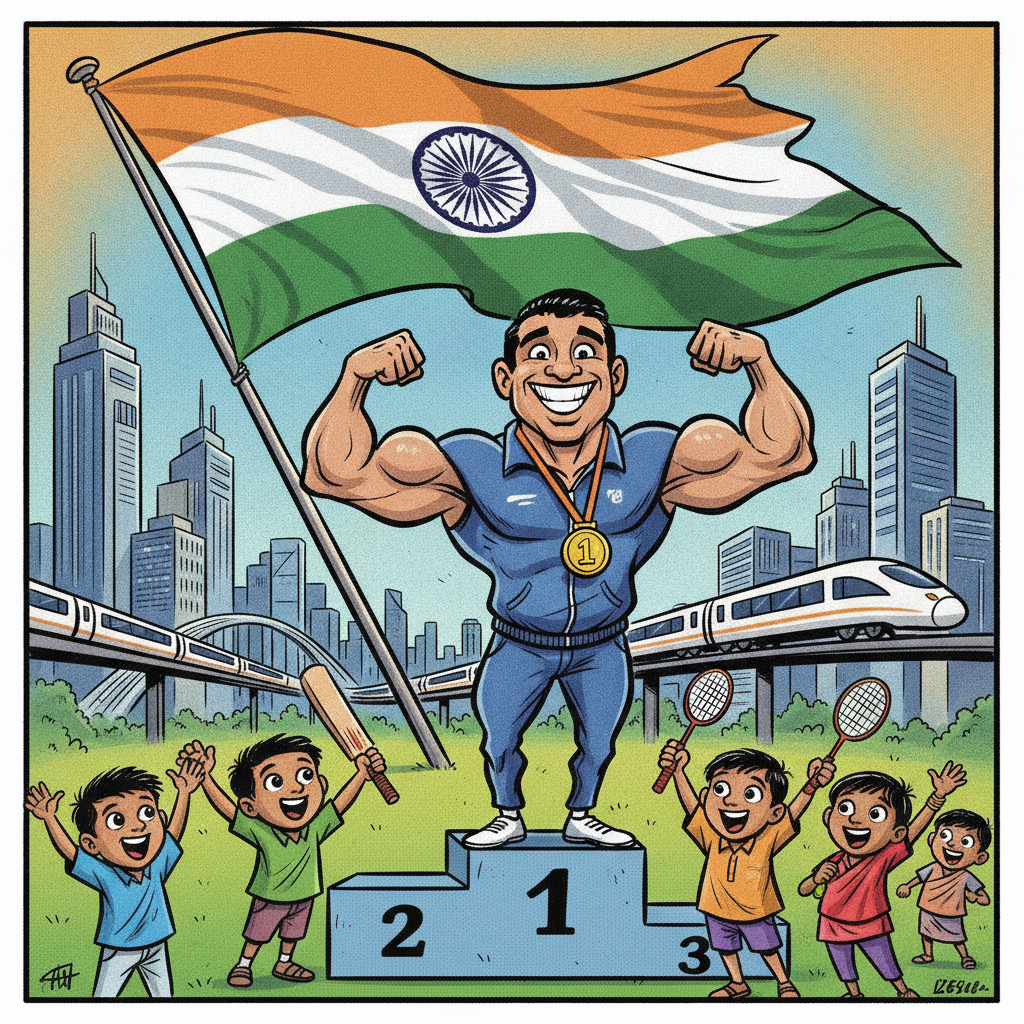
India is embarking on a significant transformation in its sporting landscape, moving beyond traditional strongholds to embrace a broader spectrum of disciplines with renewed vigour and strategic intent. This evolution is not merely about individual achievements but reflects a national commitment to fostering a robust sports culture, aligning with the broader vision of a 'Viksit Bharat' by 2047. The current trajectory indicates a concerted effort to integrate sports into the national fabric, recognising its role in nation-building, youth empowerment, and enhancing India's global soft power.
The shift is palpable, moving from an era where sporting success was often a story of individual struggle against systemic odds, to one where institutional support and strategic planning are becoming foundational. This proactive approach seeks to identify talent at an early age, provide world-class training facilities, and ensure comprehensive support systems for athletes across various stages of their careers. The emphasis is on creating an ecosystem that is sustainable, inclusive, and geared towards consistent international performance, rather than sporadic brilliance.
This national endeavour is underpinned by a philosophy that views sports as integral to holistic development, promoting physical fitness, mental resilience, and character building among the youth. It is also a testament to the belief that a nation's sporting prowess is a reflection of its overall health, prosperity, and confidence on the global stage. The narrative is one of aspiration and determination, where every medal won, every record broken, and every new participant in sports contributes to a larger national pride and identity.
KEY FACTS
- Enhanced focus on grassroots talent identification and nurturing.
- Strategic investments in modern sports infrastructure nationwide.
- Comprehensive support systems for elite athletes, including training and welfare.
- Promotion and revival of traditional Indian sports and martial arts.
- Integration of physical education and sports into the national curriculum.
The Resurgent Spirit of Indian Sports
The current period marks a significant resurgence in India's sporting spirit, driven by a clear national agenda to elevate the country's standing in the international arena. This renewed focus extends beyond popular sports like cricket, encompassing a wide array of Olympic and traditional disciplines. The underlying principle is to create a sporting culture that is both broad-based and performance-oriented, ensuring that talent from every corner of the nation has the opportunity to excel. This approach is critical for a country of India's demographic scale, where untapped potential resides in abundance.
The government's vision for sports is deeply intertwined with its broader developmental goals. Initiatives are designed to not only produce medal winners but also to encourage mass participation, promoting health and well-being across all age groups. This dual objective ensures that while elite athletes receive the necessary support to compete globally, the benefits of sports are also accessible to the general populace. The emphasis on physical literacy from a young age is a foundational element of this strategy, aiming to instill a lifelong appreciation for physical activity and competitive spirit.
Historically, India's sporting narrative has been characterized by moments of individual brilliance, often achieved despite limited institutional support. The current paradigm shift seeks to reverse this trend by establishing robust frameworks that provide consistent backing to athletes. This includes structured talent identification programs, scientific training methodologies, and access to international coaching expertise. The aim is to create a pipeline of talent that is continuously nurtured and prepared for the rigours of international competition, ensuring a steady stream of high-performing athletes across various sports.
The impact of this resurgent spirit is visible in the growing enthusiasm for sports across the country. From local communities to national academies, there is a palpable sense of optimism and a collective drive towards achieving sporting excellence. This cultural shift is vital, as it builds a strong foundation for future successes and ensures that sports become an integral part of the national identity, fostering a sense of unity and collective achievement.
Cultivating a Culture of Excellence
Cultivating a culture of excellence in sports requires a multi-faceted approach that addresses every aspect of an athlete's journey, from initial exposure to sustained high performance. India's current strategy focuses on systematic development, beginning with grassroots initiatives designed to identify and nurture talent at an early stage. This involves reaching out to remote areas and diverse communities, ensuring that potential is not overlooked due to geographical or socio-economic barriers. The emphasis is on creating equitable opportunities for all aspiring athletes.
Central to this strategy is the development of robust training infrastructure. Modern sports facilities, equipped with state-of-the-art technology and manned by qualified coaches, are crucial for preparing athletes for the demands of international competition. These facilities are not just about physical training; they also incorporate sports science, nutrition, psychology, and rehabilitation, providing a holistic support system. The aim is to bridge the gap between India's sporting infrastructure and global benchmarks, ensuring that Indian athletes have access to the best possible resources.
Furthermore, the focus extends to providing financial assistance and welfare schemes for athletes. Recognising the significant investment of time and resources required for professional sports, various initiatives are in place to support athletes financially, enabling them to focus solely on their training and performance. This includes scholarships, stipends, and post-career support, ensuring a degree of security that allows athletes to pursue their dreams without undue economic pressure. Such measures are vital for retaining talent and encouraging more individuals to pursue sports as a viable career path.
The cultivation of excellence also involves fostering a competitive yet supportive environment. Regular national and international competitions provide athletes with crucial exposure and experience, helping them to hone their skills and adapt to different competitive scenarios. Moreover, mentorship programs and peer support networks are being encouraged to create a sense of camaraderie and shared purpose among athletes, fostering a positive and high-performance culture.
"According to official sources, the nation's commitment to fostering a robust sports ecosystem is unwavering, aiming for sustained excellence across disciplines, and ensuring every talent finds its rightful platform." — Official Statement
Strategic Investments for Future Triumphs
India's journey towards becoming a leading sporting nation is underpinned by strategic investments across various critical areas. These investments are not merely financial but encompass policy reforms, technological integration, and human resource development, all aimed at creating a sustainable ecosystem for sporting success. The government's proactive role in allocating resources and formulating long-term strategies is a testament to its commitment to this national endeavour.
One key area of strategic investment is the development of sports science and research. Understanding the physiological, psychological, and biomechanical aspects of performance is crucial for optimising training regimens and preventing injuries. India is increasingly investing in sports science centres, bringing in experts, and promoting research to ensure that its athletes benefit from the latest advancements in the field. This scientific approach is vital for gaining a competitive edge in modern sports.
Another significant investment is in coach development and training. Recognising that coaches are the bedrock of any successful sporting system, there is a concerted effort to enhance the quality and availability of coaching expertise across the country. This includes training programs, international collaborations for knowledge exchange, and certification processes to ensure high standards. A well-trained coaching fraternity is essential for identifying and nurturing talent effectively, guiding athletes through their development journey.
By The Numbers
Furthermore, technology plays an increasingly vital role in modern sports, from performance analysis to athlete tracking and fan engagement. Strategic investments are being made in integrating cutting-edge technology into training, competition, and administration. This includes data analytics, virtual reality training, and advanced equipment, all designed to give Indian athletes a technological advantage and enhance the overall sporting experience. The digital transformation of sports administration also ensures greater transparency and efficiency in resource allocation.
The promotion of traditional Indian sports and indigenous games also forms a crucial part of this strategic investment. Recognising the cultural heritage embedded in these sports, efforts are underway to revive, popularise, and modernise them, ensuring their relevance in the contemporary sporting landscape. This not only preserves cultural traditions but also broadens the base of sporting activities available to the youth, tapping into unique skill sets and fostering a sense of pride in India's rich sporting legacy.
Global Aspirations, National Pride
India's burgeoning sporting ambitions are intrinsically linked to its global aspirations and the desire to project a confident and capable image on the international stage. Sporting success is a powerful tool for national branding, fostering goodwill, and enhancing a country's soft power. As India rises as a global economic and geopolitical force, its presence and performance in international sports are becoming increasingly significant, reflecting its overall development and dynamism.
The pursuit of excellence in sports is therefore not just about individual glory but about collective national pride. Every medal won, every record set, and every display of sportsmanship by an Indian athlete resonates deeply with the populace, reinforcing a sense of unity and shared achievement. This collective pride is a powerful motivator, inspiring future generations to pursue sports and contribute to the nation's sporting legacy. The sight of the national flag soaring high at international events is a potent symbol of India's growing stature.
Moreover, active participation and leadership in international sports federations and organisations are becoming a focus. India aims to play a more prominent role in shaping global sports policies, promoting fair play, and advocating for greater inclusivity. This engagement reflects India's growing confidence and its commitment to contributing positively to the global sporting community, moving beyond being merely a participant to becoming a significant influencer.
The journey towards achieving these global aspirations is a continuous one, fraught with challenges but also filled with immense potential. The strategic investments, the cultivation of a culture of excellence, and the unwavering national support are all geared towards ensuring that India not only competes but excels on the world stage. The vision is clear: for India to be recognised not just for its economic might or cultural heritage, but also as a formidable sporting power, a true reflection of a New India that is confident, ambitious, and ready to lead.



