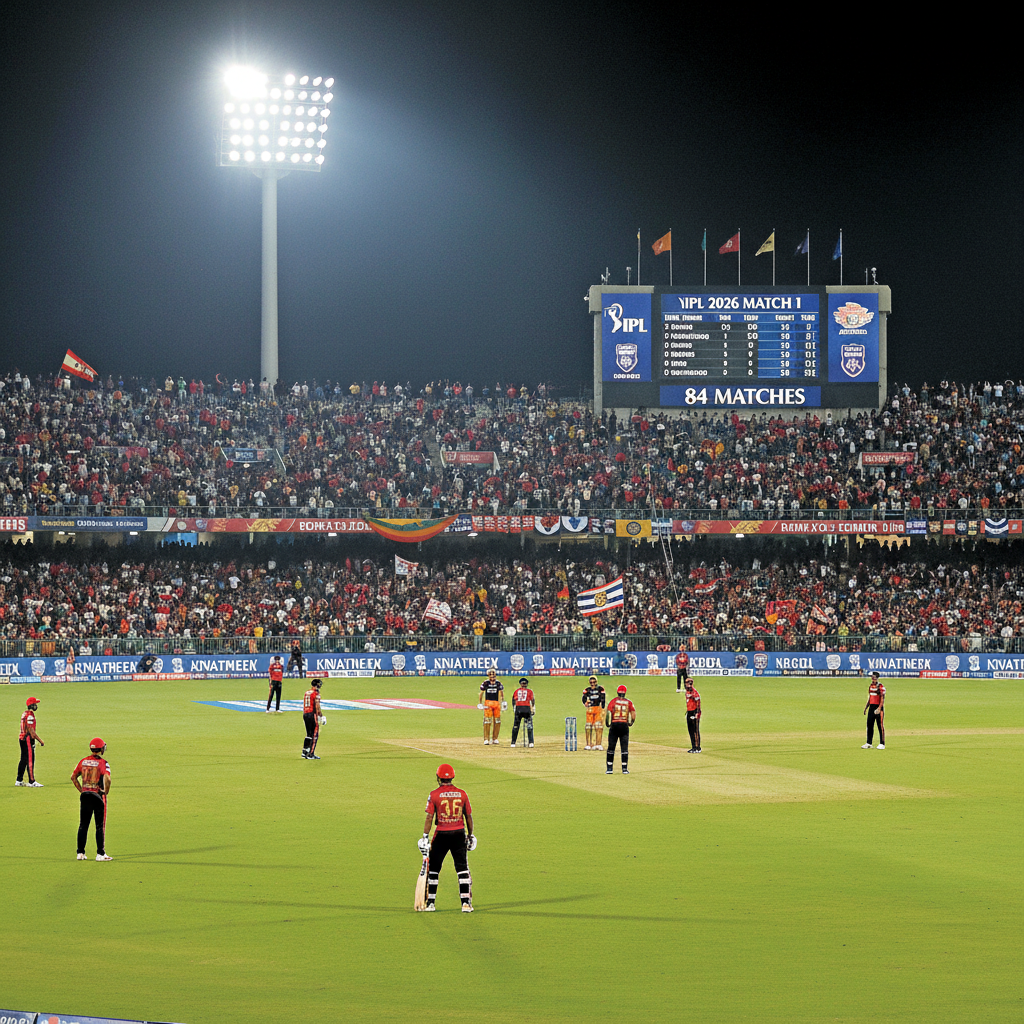
The Indian Premier League is poised for its most ambitious edition yet, with the 2026 tournament set to feature a record-breaking 84 matches across a two-month period from March 28 to May 31. This expansion represents a significant milestone for cricket's most lucrative domestic competition, which has steadily grown since its inception in 2008 with just 59 matches in the inaugural season.
The tournament will commence with a marquee clash between Royal Challengers Bengaluru and Sunrisers Hyderabad at the M. Chinnaswamy Stadium in Bengaluru on March 28, setting the stage for what promises to be the most extensive IPL season in the competition's history. This opening fixture continues the tradition of high-profile season openers that have become synonymous with IPL's theatrical approach to cricket entertainment.
KEY FACTS
- 84 total matches scheduled for IPL 2026 season
- Tournament duration spans March 28 to May 31, 2026
- Opening match on March 28 between RCB and SRH
- M. Chinnaswamy Stadium, Bengaluru hosts the inaugural game
- Schedule release planned in two phases due to state elections
The decision to implement a phased schedule release represents an unprecedented logistical challenge for the Board of Control for Cricket in India (BCCI) and reflects the complex interplay between cricket administration and India's democratic processes. According to reports, the staggered announcement is necessitated by upcoming state elections, which could impact venue availability and security arrangements across various Indian states.
This expansion to 84 matches marks a significant evolution from the IPL's humble beginnings. The inaugural 2008 season featured eight teams playing 59 matches over 44 days, while the current format with ten teams typically accommodates 74 matches. The additional ten matches in 2026 suggest either format modifications or an extended group stage, though specific structural changes have not been detailed in official announcements.
The March 28 to May 31 timeframe provides a 65-day window for the tournament, offering more breathing space compared to previous editions that have often faced criticism for player fatigue and scheduling congestion. This extended timeline could allow for better player recovery periods and potentially reduce the impact of injuries that have plagued recent seasons.
By The Numbers
The selection of Bengaluru's M. Chinnaswamy Stadium as the tournament opener carries symbolic significance, as the venue has hosted numerous memorable IPL encounters and serves as the home ground for Royal Challengers Bengaluru, one of the league's most followed franchises despite never winning the title. The stadium's intimate 40,000 capacity and raucous atmosphere make it an ideal setting for generating the excitement that typically accompanies IPL season launches.
Royal Challengers Bengaluru versus Sunrisers Hyderabad presents an intriguing opening matchup, bringing together two franchises with contrasting recent trajectories. While RCB has consistently attracted massive fan following through star power and entertaining cricket, SRH has built a reputation for strategic team building and tactical innovation, having won the championship in 2016 under David Warner's captaincy.
"The tournament is scheduled to take place from March 28 to May 31, 2026" — The Times of India
The timing of IPL 2026 aligns with the traditional March-May window that has become cricket's premier commercial period in India. This scheduling avoids conflicts with international cricket commitments and monsoon weather patterns that could affect matches in later months. The extended duration also provides flexibility for accommodating international player availability, particularly as cricket boards worldwide increasingly recognize the IPL's importance in the global cricket ecosystem.
The phased schedule release represents a unique challenge for team strategists, broadcasters, and fans who typically plan their engagement around complete fixture lists. Franchise management teams rely on comprehensive schedules to optimize player rotations, manage workloads, and coordinate with international board requirements for player releases. The uncertainty created by partial schedule releases could complicate these traditionally meticulous planning processes.
From a commercial perspective, 84 matches represent increased inventory for broadcasters and sponsors, potentially driving higher revenue generation across the ecosystem. Each additional match creates multiple revenue streams through television rights, digital streaming, stadium attendance, and promotional partnerships. The IPL's economic impact has consistently grown, with the league valued at over $10 billion and individual franchises commanding valuations in the hundreds of millions of dollars.
The expansion also raises questions about player welfare and cricket quality. Critics have previously argued that extended tournaments can lead to player burnout and potentially dilute the quality of cricket as teams struggle with squad depth across longer campaigns. The 2026 format will test whether the current player pool can sustain high-performance levels across 84 matches while maintaining the competitive intensity that defines IPL cricket.
State elections influencing sports scheduling reflects the complex relationship between politics and cricket in India, where the sport often intersects with regional political considerations. Election periods typically involve heightened security requirements and administrative focus that can impact large-scale sporting events requiring significant logistical coordination across multiple states.
For cricket fans, the 84-match format promises more entertainment but also tests attention spans and engagement patterns. The IPL has successfully built a model where cricket becomes daily entertainment rather than occasional sporting events, but the expanded format will challenge whether this engagement model scales effectively with additional content.
The 2026 edition will likely serve as a crucial test case for future IPL expansions. If successful, it could establish 84 matches as the new standard, potentially paving the way for even larger tournaments. Conversely, any logistical challenges or quality concerns could influence future tournament structures and the league's growth trajectory in an increasingly competitive global sports entertainment landscape.