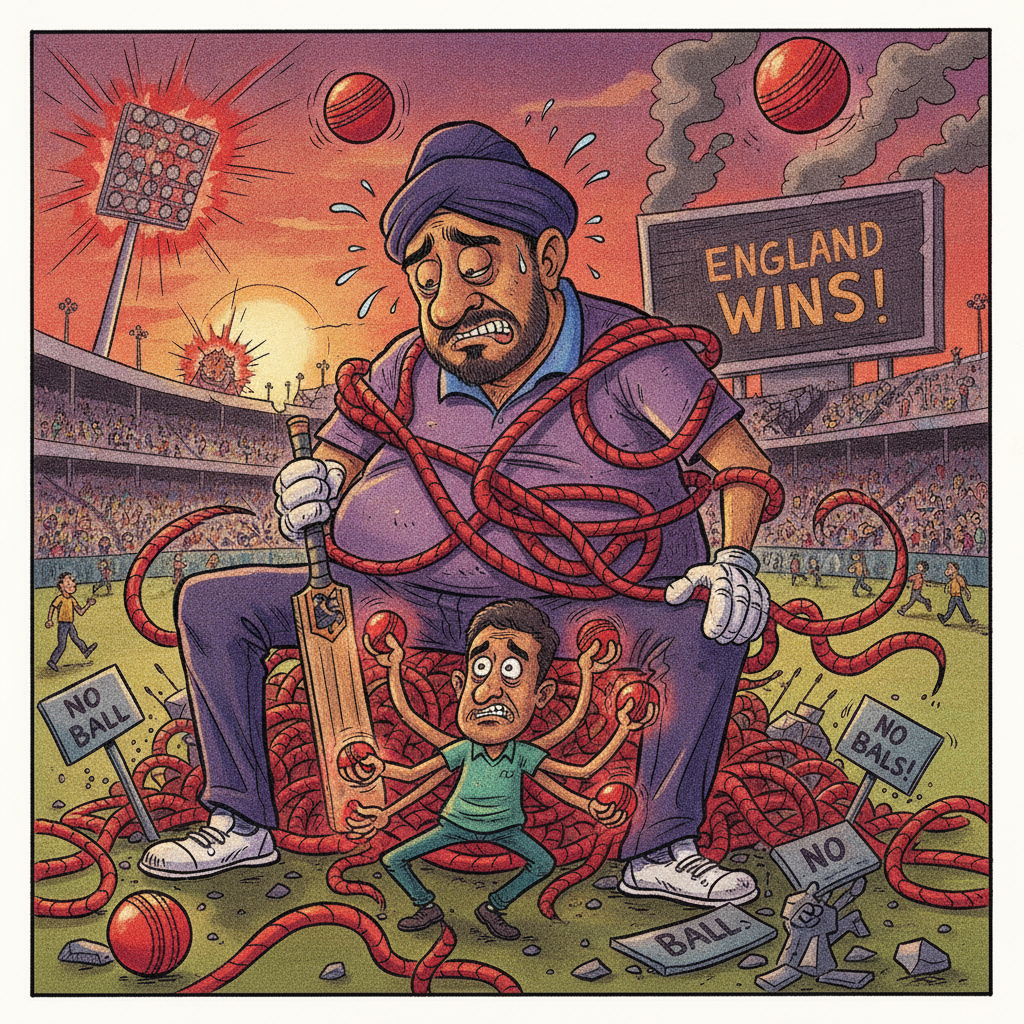
Manchester, England – India's quest for dominance in the shortest format of cricket faced a significant setback on Sunday, July 5, 2026, as England secured a convincing four-wicket victory in the second T20 International at Old Trafford, Manchester. This defeat leaves the Indian side trailing 0-1 in the crucial five-match series, underscoring the competitive intensity of modern international cricket and highlighting areas for immediate strategic review.
The match saw England successfully chase down India's challenging target of 190 runs, demonstrating a clinical approach to their batting innings. While the Indian batting lineup had managed to post a formidable total, the bowling unit struggled to contain the English batsmen, particularly during critical junctures of the chase. The outcome has initiated discussions among cricket analysts regarding the team's execution under pressure and the need for greater discipline in bowling.
KEY FACTS
- India lost to England by four wickets in the 2nd T20I.
- The match took place in Manchester on Sunday, July 5, 2026.
- India is now 0-1 down in the five-match series.
- England successfully chased India's target of 190 runs.
- Jacob Bethell scored an unbeaten 76 for England.
- Ravi Bishnoi bowled a record three no-balls in a single T20I match.
England's Clinical Chase and Bethell's Brilliance
Chasing 190 on a pitch that offered some assistance to batsmen, England's innings was anchored by a remarkable performance from Jacob Bethell. Bethell's unbeaten 76 runs were instrumental in guiding his team across the finish line, showcasing a blend of aggression and composure that proved too much for the Indian bowlers. His innings was a testament to the depth of talent within the English squad, as he navigated crucial overs with precision, finding boundaries and rotating strike effectively to maintain the required run rate.
The English batsmen, collectively, displayed a clear strategy to attack the Indian bowling, particularly targeting specific bowlers to disrupt their rhythm. This aggressive intent, combined with Bethell's anchoring role, allowed them to maintain momentum throughout the chase. The four-wicket margin of victory, with overs to spare, suggests a comprehensive effort from the home side, putting the onus on India to recalibrate their approach for the upcoming matches.
Bishnoi's Unprecedented Over and Its Impact
A pivotal moment in the match, and one that will undoubtedly be a point of introspection for the Indian camp, occurred in the 17th over of England's chase. Indian spinner Ravi Bishnoi, entrusted with a crucial over in the death overs, conceded a significant 29 runs. More critically, Bishnoi etched an unwanted record into T20I history by becoming the first Indian spinner to bowl three no-balls in a single match. This lapse in discipline proved to be immensely costly, not just in terms of the extra runs conceded but also due to the additional deliveries and free hits it offered to the English batsmen.
No-balls in T20 cricket are often game-changers, providing not only an extra run and an additional delivery but also a 'free hit' opportunity where the batsman cannot be dismissed through conventional means. For a spinner, such errors are particularly rare and impactful, as their primary role is often to control the flow of runs and pick up wickets through guile and accuracy. The 29 runs leaked in that single over significantly shifted the momentum in England's favour, turning a tight contest into a more comfortable chase for the hosts.
By The Numbers
Strategic Implications and the Road Ahead for India
The defeat in Manchester serves as a stark reminder of the fine margins that define T20 international cricket. While India's batting performance to set a target of 190 was commendable, the inability to defend it effectively points to areas requiring immediate attention. The performance of the bowling unit, especially in the death overs, will be under scrutiny. The incident involving Ravi Bishnoi underscores the paramount importance of discipline and composure, particularly for young bowlers operating at the highest level.
For India, the 0-1 deficit in a five-match series is not insurmountable, but it does necessitate a rapid reassessment of strategies. The team management will likely focus on shoring up the bowling attack, exploring combinations that can provide both wicket-taking options and control over the run rate. The mental fortitude of the players will also be tested, as they look to bounce back from this setback. The remaining four matches offer ample opportunity for redemption, but the team will need to demonstrate greater consistency and tactical acumen to turn the series around.
"Reports indicate that the team management is expected to conduct a thorough review of the match performance, with a particular focus on bowling discipline and strategic execution in pressure situations." — Official Sources
The series now moves forward with heightened anticipation. India, a powerhouse in international cricket, will be keen to demonstrate its resilience and adaptability. The challenge posed by England, a formidable white-ball side, demands nothing less than peak performance. The upcoming matches will not only test the skills of individual players but also the strategic depth and leadership of the Indian team as they aim to restore parity in the series and uphold their reputation on the global stage.