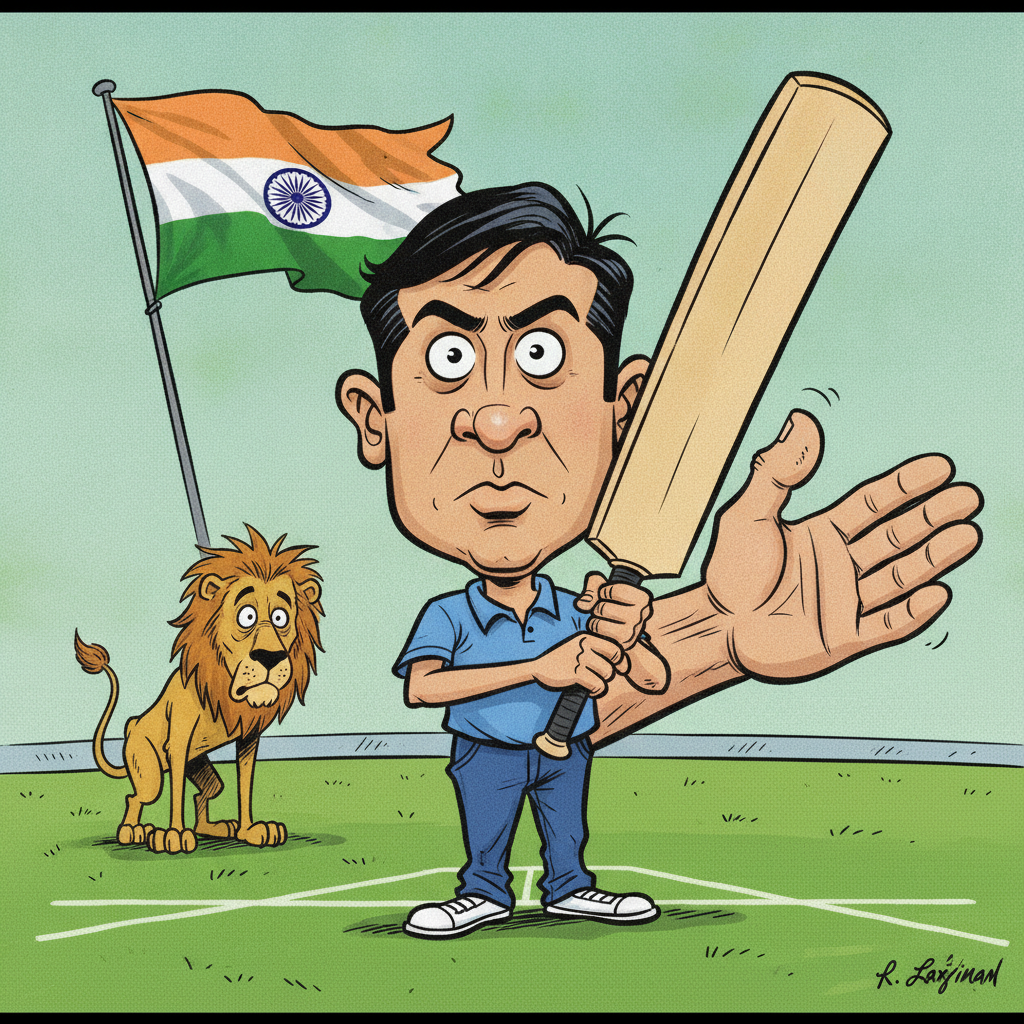
In a gripping encounter at Old Trafford in Manchester on July 4, 2026, England secured a four-wicket victory over India in the second T20 International of the five-match series. The result gives England a crucial 1-0 lead, following the abandonment of the first T20I due to rain. While the defeat presents a challenge for the Indian side, the match will be remembered for a landmark moment in Indian cricket: the international debut of 15-year-old prodigy Vaibhav Sooryavanshi, who etched his name into the record books as the youngest player to represent India.
The English team displayed a commendable performance, successfully chasing down India's total with six wickets in hand. The architect of their victory was Jacob Bethell, whose unbeaten knock of 76 runs anchored the innings and steered England to a comfortable win. Bethell's innings was a masterclass in T20 batting, combining aggression with calculated precision, leaving the Indian bowlers with limited answers on a pitch that offered some assistance to both batsmen and bowlers throughout the evening.
KEY FACTS
- England defeated India by 4 wickets in the 2nd T20I.
- Match played on July 4, 2026, at Old Trafford, Manchester.
- Jacob Bethell scored an unbeaten 76 runs for England.
- Vaibhav Sooryavanshi debuted for India at 15 years, 3 months, 7 days.
- Sooryavanshi is India's youngest international debutant.
The Old Trafford Encounter: England's Edge
The second T20I was a high-stakes affair, especially after the opening match of the series was washed out, denying both teams an early advantage. India, batting first, aimed to set a formidable target, but consistent pressure from the English bowlers, coupled with disciplined fielding, kept the scoring rate in check. While the full scorecard details are yet to be thoroughly analysed, the performance of the Indian batting lineup faced scrutiny, particularly in converting starts into substantial scores that could challenge England's deep batting order.
England's chase was methodical, despite early breakthroughs by the Indian bowlers. The crucial partnership, spearheaded by Bethell, systematically dismantled India's bowling attack. His ability to find boundaries at critical junctures and rotate the strike effectively ensured that the required run rate remained manageable. The English victory underscores their prowess in the shortest format of the game, highlighting their strategic depth and the individual brilliance of players like Bethell. This win not only gives them a 1-0 lead but also provides a significant psychological advantage heading into the remainder of the series.
Vaibhav Sooryavanshi: A New Chapter in Indian Cricket
Amidst the competitive ebb and flow of the match, the spotlight shone brightly on Vaibhav Sooryavanshi. At an astonishing 15 years, 3 months, and 7 days old, Sooryavanshi's debut marks a monumental milestone in Indian cricketing history. He now holds the distinction of being the youngest player ever to don the national colours in international cricket, a testament to his prodigious talent and the robust talent identification systems within Indian cricket. His inclusion in the national squad at such a tender age speaks volumes about the confidence the team management and selectors have in his abilities.
Sooryavanshi's brief but impactful innings saw him contribute 14 runs off just nine balls, a cameo that included two powerful sixes. These strokes, executed with the confidence of a seasoned professional, offered a glimpse into his potential and fearless approach to the game. His dismissal by Will Jacks, though cutting short his stay, did little to diminish the excitement surrounding his debut. The emergence of such young talent is a clear indicator of the depth and strength of India's cricketing pipeline, which continues to produce world-class players across all formats.
By The Numbers
The journey of a young cricketer from domestic circuits to the international stage is often arduous, requiring immense dedication, skill, and mental fortitude. Sooryavanshi's rapid ascent highlights the effectiveness of India's youth cricket programs and the opportunities provided by various leagues and tournaments across the country. His debut is not just a personal achievement but a symbol of India's commitment to nurturing sporting excellence from the grassroots level, aligning with the broader vision of a 'New India' that excels on the global stage, be it in technology, economy, or sports.
"Reports indicate that the selection of Vaibhav Sooryavanshi underscores a strategic shift towards investing in exceptional young talent, providing them with early exposure to international cricket to foster long-term growth and resilience." — Official Statement
Series Dynamics and India's Path Forward
With England now leading the five-match series 1-0, the pressure is firmly on India to bounce back in the upcoming fixtures. The abandoned first T20I meant that the second match carried extra weight, and England capitalized on the opportunity. The series now moves to Nottingham for the third T20I, scheduled for July 7, 2026. This match will be critical for India, as a further loss would put them in a precarious position, making it exceedingly difficult to win the series.
The Indian team management will undoubtedly be reviewing their strategies, particularly concerning batting depth and bowling variations. While the loss is a setback, it also provides valuable insights into areas that require immediate attention. The competitive nature of T20 cricket means that momentum can shift rapidly, and India possesses the talent and experience to stage a strong comeback. The focus will be on executing plans with precision, adapting to conditions, and harnessing the collective strength of the squad.
The five-match format allows for adjustments and strategic recalibrations. Unlike shorter series, a five-match contest provides ample opportunities for a team to recover from an initial setback. India's history in bilateral series suggests a strong capacity for resilience and performance under pressure. The upcoming matches will test the team's character and their ability to perform consistently against a formidable opponent like England, especially in their home conditions.
Nurturing Talent: The Future of India's Sporting Prowess
Vaibhav Sooryavanshi's debut transcends the immediate result of a single match. It represents a significant moment for Indian sports, showcasing the nation's commitment to identifying and developing young talent. The infrastructure supporting cricket in India, from local academies to national-level tournaments, has created a fertile ground for prodigies to emerge. This continuous pipeline of talent ensures that Indian cricket remains competitive and dominant on the international stage for years to come.
The emphasis on youth development is a cornerstone of India's broader national vision for sporting excellence. Initiatives like 'Khelo India' and enhanced funding for sports infrastructure are designed to unearth and nurture talent across various disciplines, not just cricket. Sooryavanshi's story serves as an inspiration for countless aspiring young athletes across the country, demonstrating that with dedication and opportunity, dreams of representing India can be realized at a remarkably young age.
This focus on youth and performance is critical for India to maintain its standing as a global sporting powerhouse. The ability to integrate young, dynamic players into the national setup, while balancing them with experienced campaigners, is a hallmark of successful cricketing nations. As India looks towards a future of sustained growth and global leadership, the achievements of its athletes, both established and emerging, will continue to be a source of national pride and inspiration. The upcoming matches in the T20I series will not only determine the outcome of the contest but also provide further opportunities for India's cricketing talent to shine, reinforcing the nation's unwavering pursuit of excellence.