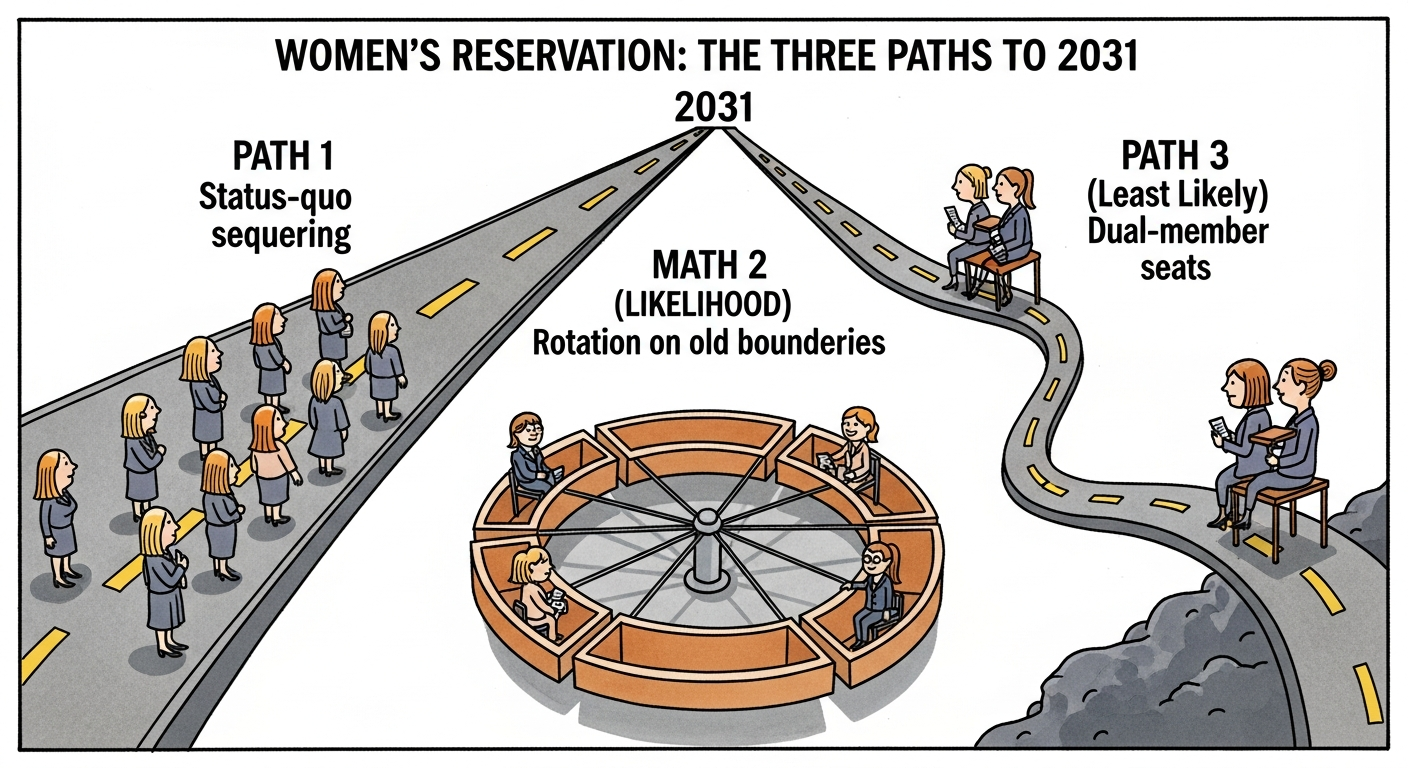
The government's white paper put three implementation models on record. Ranked by realism:
Most likely — the sequence: census, delimitation, reserved seats, first fought in 2031. It is the path the JPC's deadline is built around and the one the statute now chains to enforceable dates. Boring, litigable, on track.
Dark horse — dual-member constituencies: the largest seats elect one general and one woman member during transition. It has a 1952-57 precedent, a costing annexe, and the appeal of starting in 2029. Its appearance on official paper, as our reservation ledger noted, reads as a negotiating chip deliberately left on the table.
Least likely — rotation by lot: one-third of current seats reserved each cycle. Panchayat evidence documents its flaw — representatives underinvest in seats they can't recontest — and the paper's own annexe torpedoes it.
The constant across all three: every year of delay costs roughly 180 women the careers the 2023 Act promised. That sentence, now in an official document, is the clock everyone negotiates under. Follow it on our politics desk.