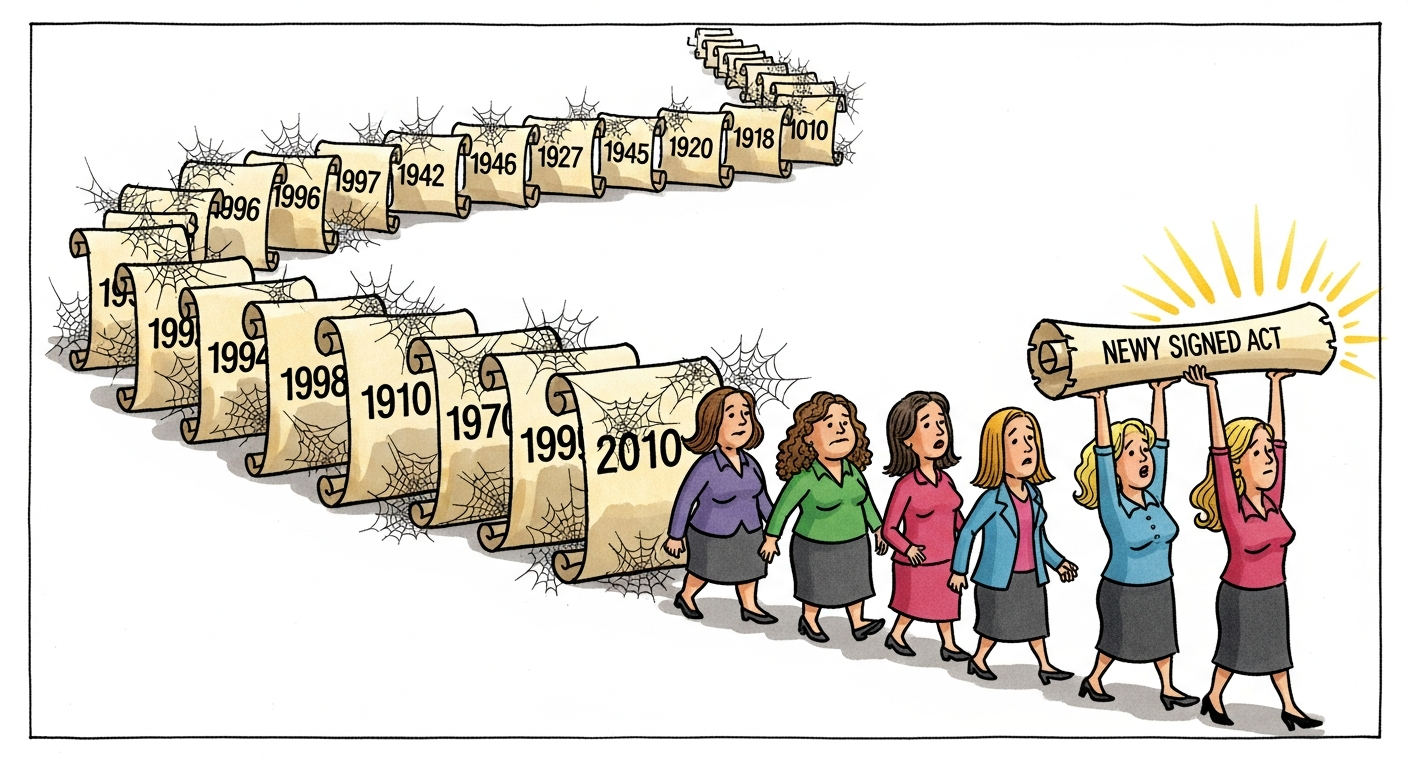
Political memory is short, so let the record be long. Between 1996 and 2010, the women's reservation bill was introduced nine times and killed nine times — shouted down, torn up on the floor of the House, traded away in coalition arithmetic by the very parties that now demand its instant implementation. In 2023, one government passed it: 454 votes to 2, in the new Parliament's first session.
The objection since has been the conditionality — reservation waits on census and delimitation — and the objection has now been answered in the only currency that matters: statute. The white paper tabled this session put the three implementation models on official record, costs attached. The revised delimitation bill carries the reservation schedule in justiciable text — deadlines a court can enforce, not intentions a minister can defer. And the census whose absence was the stated obstacle has a notification, a field manual, and a start date.
Compare the ledgers. One column: three decades of slogans, nine funerals, and the 2010 spectacle of a bill passed in the Rajya Sabha and left to die unvoted in the Lok Sabha by a government with the majority to pass it. The other column: an Act, a schedule, a white paper, a census, and a committee deadline of December.
The remaining honest criticism is pace — 2031 is far, and every year costs 180 women the careers the Act promised. Fair. But pace is an argument within a commitment, not against one. The parties filibustering the delimitation committee are, arithmetically, filibustering the reservation they claim to champion — the two now share one legal road, by design.
When the first one-third Lok Sabha is sworn in, the photographs will be everyone's. The authorship is already settled.