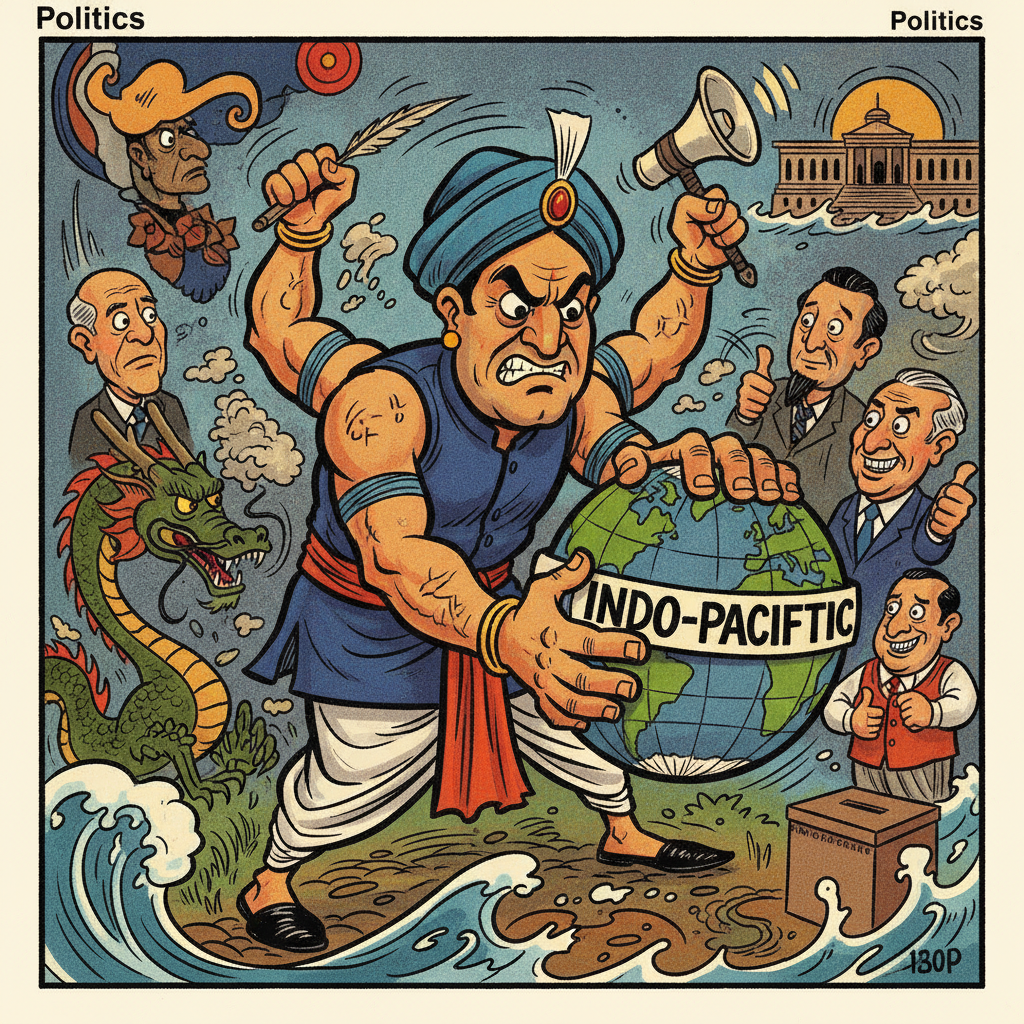
New Delhi is increasingly asserting its strategic weight on the global stage, particularly within the dynamic Indo-Pacific region. A confluence of robust defence partnerships, active participation in multilateral security frameworks, and a prominent role in international diplomacy signals a definitive recalibration of India's foreign policy. This proactive stance, aligned with the vision of a 'New India', aims to secure national interests while contributing significantly to regional and global stability.
At the heart of this strategic pivot is India's deepening engagement with key democratic partners. The nation has cemented pivotal defence agreements with Australia, Japan, and the United States, according to reports from Reuters and The Hindu. These pacts transcend mere transactional relationships, laying the groundwork for enhanced interoperability, intelligence sharing, and collaborative defence capabilities crucial for navigating the complex geopolitical currents of the Indo-Pacific. This network of alliances reflects a clear intent to foster a rules-based order and ensure freedom of navigation across vital maritime corridors.
KEY FACTS
- Prime Minister Narendra Modi is scheduled to attend the upcoming G20 summit in New Delhi.
- India has signed defence agreements with Australia.
- India has signed defence agreements with Japan.
- India has signed defence agreements with the US.
- The Quad grouping has conducted several joint naval exercises in the Indo-Pacific region since 2020.
Forging Strategic Alliances for Regional Stability
The signing of defence agreements with Australia, Japan, and the United States marks a significant departure from past approaches, demonstrating India's commitment to building a robust security architecture in the Indo-Pacific. These agreements are not isolated events but rather integral components of a broader strategy to enhance India's strategic autonomy and influence. They facilitate deeper military-to-military cooperation, joint training, and the exchange of best practices, all of which are vital for responding to evolving security challenges in the region. The emphasis is on collective security and shared responsibility, moving beyond traditional bilateral frameworks to embrace a more integrated approach to regional defence.
Furthermore, these partnerships are instrumental in fostering a common understanding of regional threats and opportunities. With Australia, the agreements strengthen maritime security cooperation in the Indian Ocean. With Japan, they reinforce shared democratic values and a commitment to a free and open Indo-Pacific, particularly through advanced technological collaboration. The defence pacts with the United States underscore a deepening comprehensive global strategic partnership, encompassing everything from counter-terrorism efforts to advanced defence technology transfers. This multi-faceted approach ensures that India's security interests are robustly protected while contributing to the overall stability of the region.
The strategic implications of these defence agreements extend beyond military cooperation. They signal a strong diplomatic alignment among these nations, projecting a unified front on critical issues such as maritime security, supply chain resilience, and regional economic integration. This convergence of interests is vital for creating a stable environment conducive to economic growth and development across the Indo-Pacific, directly supporting India's vision for a 'Viksit Bharat' by 2047, which relies heavily on secure trade routes and a peaceful regional order.
The Quad: A Pillar of Maritime Security
Complementing these bilateral defence agreements is India's active role in the Quadrilateral Security Dialogue, or Quad, grouping, which includes Australia, Japan, and the United States. The Quad has emerged as a crucial platform for strategic consultation and cooperation, particularly in the maritime domain. Since 2020, the Quad grouping has conducted several joint naval exercises in the Indo-Pacific region, as reported by The Hindu. These exercises are not merely symbolic; they are designed to enhance interoperability, refine tactical coordination, and strengthen the collective capacity of the member nations to respond to humanitarian crises, disaster relief operations, and complex security challenges.
The consistent conduct of these naval exercises underscores a shared commitment to a free, open, and inclusive Indo-Pacific. They serve as a powerful signal of the Quad's resolve to uphold international law, particularly the United Nations Convention on the Law of the Sea (UNCLOS), and to deter any actions that might undermine regional stability. For India, participation in these exercises is a testament to its growing naval capabilities and its willingness to shoulder greater responsibility for maritime security in its extended neighbourhood. It also provides invaluable experience in operating alongside some of the world's most advanced navies, thereby enhancing India's own defence readiness and strategic reach.
By The Numbers
The Quad's agenda extends beyond military drills, encompassing cooperation on critical and emerging technologies, climate change, infrastructure development, and vaccine diplomacy. This holistic approach reflects a comprehensive vision for regional prosperity and security, where India plays a pivotal role in shaping the narrative and driving initiatives. The regular high-level consultations among Quad leaders, including Prime Minister Modi, further solidify this grouping as a cornerstone of India's Indo-Pacific strategy, demonstrating a sustained commitment to collaborative diplomacy and security.
India's Diplomatic Leadership: The G20 Presidency
Beyond security frameworks, India's diplomatic influence is also on a significant upward trajectory, exemplified by its presidency of the G20. Prime Minister Narendra Modi is scheduled to attend the upcoming G20 summit in New Delhi, a landmark event that underscores India's growing stature as a global convener and problem-solver. Hosting the G20 summit is not merely a logistical exercise; it is a powerful statement of India's capacity to lead global discussions on pressing issues such as economic stability, sustainable development, climate action, and digital transformation. It provides an unparalleled platform for India to articulate its vision for a more equitable and prosperous world order.
The G20 presidency allows India to shape the global agenda, bringing its unique perspective and experiences to the forefront. Themes such as 'One Earth, One Family, One Future' resonate deeply with India's civilisational ethos and its commitment to inclusive growth. This diplomatic leadership is crucial for advancing India's national interests on a global scale, attracting foreign direct investment, fostering international partnerships, and promoting its indigenous solutions to global challenges. The successful conduct of the G20 summit will undoubtedly enhance India's soft power and reinforce its position as a responsible and influential global player.
"India's foreign policy has demonstrably pivoted towards a more proactive and influential role in shaping the Indo-Pacific's strategic landscape, reflecting a confident nation ready to lead." — Official statement
The convergence of these diplomatic and security initiatives paints a clear picture of India's evolving foreign policy. It is a policy that is confident, pragmatic, and deeply rooted in the nation's strategic imperatives. By forging robust defence partnerships, actively participating in multilateral security dialogues like the Quad, and assuming leadership roles in global forums such as the G20, India is not just reacting to geopolitical shifts but actively shaping them. This assertive diplomacy is crucial for securing India's future prosperity and ensuring its rightful place as a leading power in the 21st century.
The strategic shift towards a more engaged and influential role in the Indo-Pacific is a cornerstone of the current government's foreign policy doctrine. It represents a mature and confident approach to international relations, where India leverages its growing economic and military might to safeguard its interests and contribute to global peace and stability. This trajectory is set to define India's engagement with the world for decades to come, solidifying its position as a net security provider and a crucial voice in the global concert of nations.



