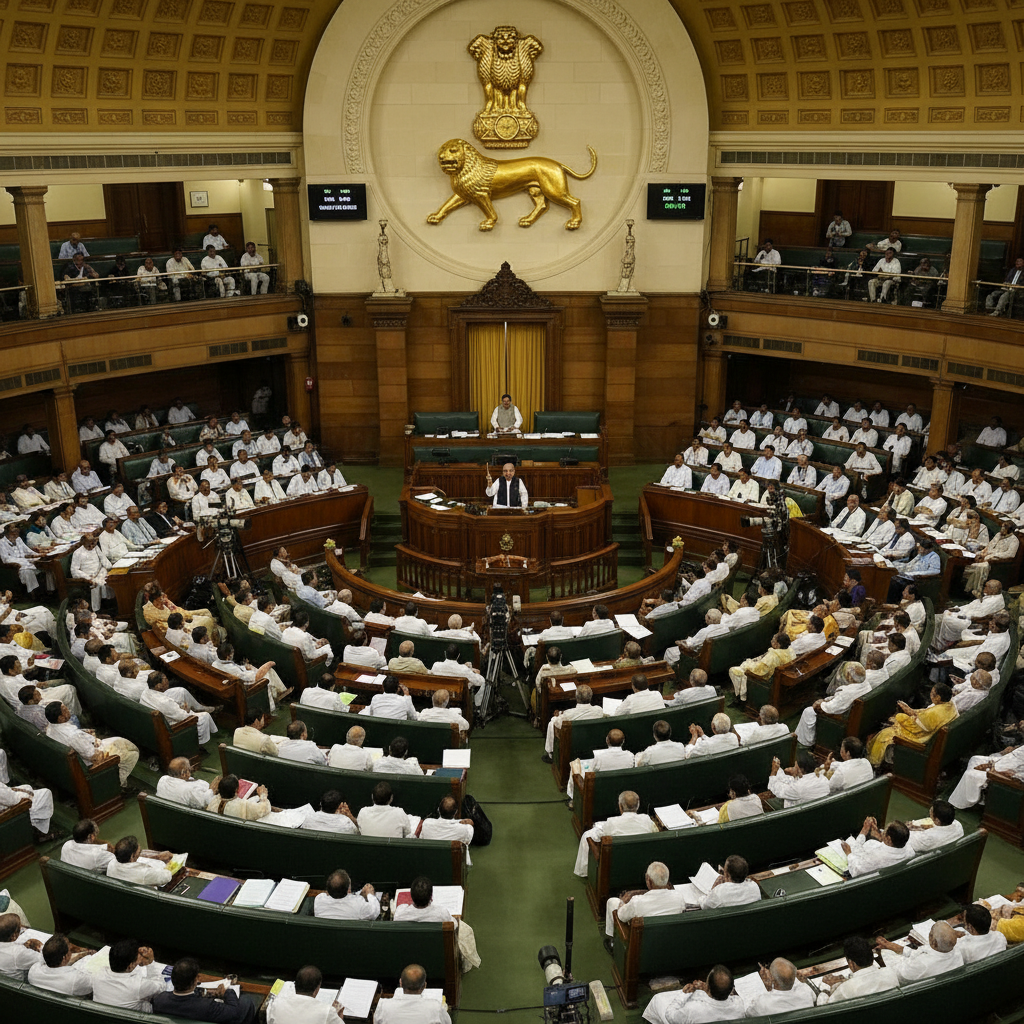
India's political ecosystem stands at a critical juncture as the world's largest democracy navigates complex coalition dynamics, federal-state relations, and institutional reforms that are reshaping governance structures across the subcontinent. The current political climate reflects decades of democratic maturation, marked by increasingly sophisticated voter behavior and evolving party strategies.
The contemporary Indian political scenario demonstrates the country's transition from a predominantly single-party dominated system to a more pluralistic, coalition-based framework. This transformation has fundamentally altered how political power is exercised and distributed across India's 28 states and eight union territories, creating new dynamics between regional aspirations and national governance imperatives.
Political analysts note that the fragmentation of India's political landscape has led to more nuanced governance approaches, with regional parties wielding significant influence in national decision-making processes. This shift represents a departure from the centralized political culture that characterized India's early post-independence decades.
KEY FACTS
- India has over 2,500 registered political parties at national and state levels
- The country conducts elections for 543 Lok Sabha constituencies every five years
- Regional parties have formed governments in over 15 states currently
- Coalition governments have ruled at the center for approximately 25 of the last 35 years
- India's voter turnout has consistently exceeded 65% in recent general elections
The federal structure enshrined in India's Constitution has gained renewed prominence as state governments assert greater autonomy in policy implementation. This trend has created both opportunities for innovative governance models and challenges in maintaining national coherence on critical issues such as economic policy, security, and social welfare programs.
Recent political developments have underscored the importance of coalition building and consensus formation in Indian democracy. The ability of political parties to forge alliances across ideological and regional lines has become a defining characteristic of contemporary Indian politics, reflecting the country's diverse social fabric and competing economic interests.
The role of technology in political mobilization has transformed campaign strategies and voter engagement mechanisms. Digital platforms have enabled political parties to reach previously marginalized constituencies while simultaneously creating new challenges related to information verification and electoral integrity.
By The Numbers
Economic policy has emerged as a central battleground in Indian politics, with competing visions for development strategy creating clear distinctions between political formations. The debate over the appropriate balance between market mechanisms and state intervention reflects broader philosophical differences about India's developmental trajectory and social priorities.
Foreign policy considerations have increasingly influenced domestic political calculations, as India's growing international stature creates new opportunities and responsibilities. The intersection of domestic politics and international relations has become more pronounced, with global partnerships and regional security concerns shaping electoral discourse and policy priorities.
The judiciary's expanding role in political processes has added another dimension to India's democratic framework. Constitutional interpretation and judicial activism have influenced political strategies and governance approaches, creating a dynamic interplay between different branches of government that continues to evolve.
"The strength of Indian democracy lies in its capacity to accommodate diverse viewpoints while maintaining institutional stability" — Official Government Statement
Generational change within political parties has introduced new perspectives and priorities into Indian politics. Younger leaders bring different approaches to governance challenges, often emphasizing technological solutions and global connectivity while respecting traditional democratic values and institutional frameworks.
The emergence of issue-based politics has complemented traditional identity-based political mobilization, creating more complex electoral dynamics. Environmental concerns, urban governance challenges, and economic inequality have become significant factors in political campaigns and policy formulation processes.
State-level political innovations have created laboratories for democratic experimentation, with successful governance models being adapted and replicated across different regions. This horizontal learning process has enhanced the overall quality of public administration and political responsiveness throughout the country.
The media landscape's transformation has fundamentally altered political communication strategies and public engagement patterns. Traditional print and broadcast media continue alongside digital platforms, creating multiple channels for political discourse while raising questions about information quality and democratic deliberation.
Electoral reforms remain an ongoing priority, with discussions about campaign finance, candidate selection processes, and voting procedures reflecting broader concerns about democratic integrity and representation. These reform initiatives demonstrate the continuous evolution of India's democratic institutions in response to changing social and technological conditions.
Civil society organizations have maintained their traditional role as intermediaries between citizens and political institutions while adapting to new communication technologies and advocacy strategies. Their influence on policy formulation and political accountability mechanisms continues to be significant across various governance levels.
The relationship between economic development and political stability has become increasingly complex as India navigates global economic integration while addressing domestic inequality and social justice concerns. Political parties must balance growth imperatives with distributional considerations, creating intricate policy challenges that require sophisticated political solutions.
India's political future will likely be shaped by the continued evolution of these democratic processes, institutional adaptations, and the capacity of political leaders to address emerging challenges while preserving constitutional values and democratic norms that have sustained the country's political system for over seven decades.