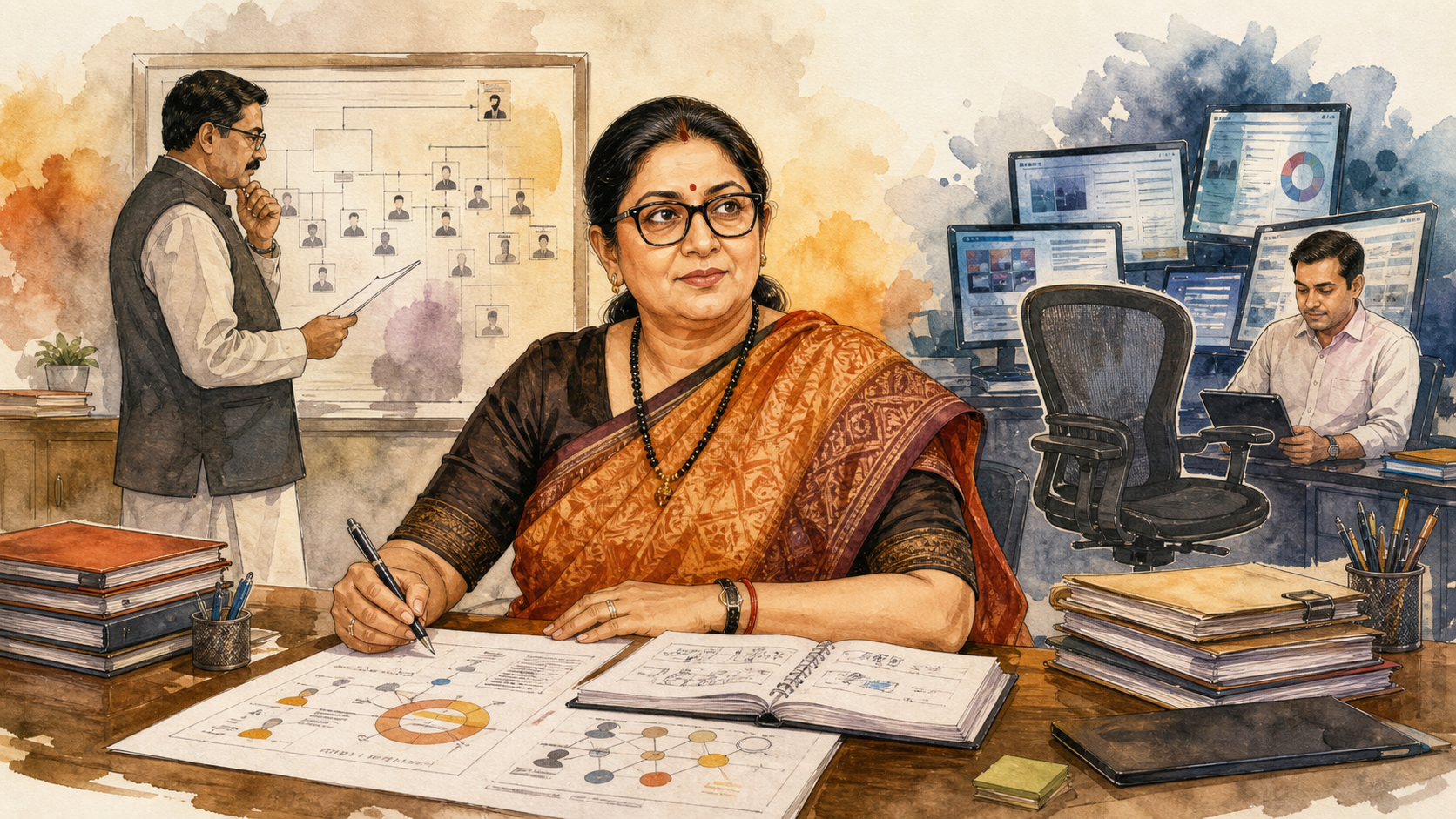
NEW DELHI — Every organisational reshuffle is really two lists: the names that rose and the names that did not. Behind the tidy arithmetic of BJP president Nitin Nabin’s new team — 13 vice-presidents, eight general secretaries, 16 secretaries — is a sharper story of accountability and renewal, of comebacks rewarded and comfortable perches disturbed.
The comebacks
The clearest winners are the returnees. Smriti Irani, absent from the party’s national team after her electoral setback, is back as a general secretary — a signal that the leadership values her communication firepower too much to keep her on the sidelines. Ram Madhav, one of the party’s most effective backroom strategists, returns as a vice-president. Vasundhara Raje, a mass leader in her own right, retains her vice-president’s chair. And Union minister Piyush Goyal is handed the treasurer’s post, putting the party’s finances in the hands of a trusted administrator.
The resets
The most talked-about move is at the other end. Amit Malviya, who built the BJP’s information-technology cell into arguably the most powerful political communication machine in the country, moves on from that role, with Deepak Mhaskey taking charge of the cell. In the youth wing, Tejasvi Surya makes way for the younger Hemang Joshi. Handing battle-tested outfits to new hands is a risk most parties avoid; the BJP treats it as maintenance.
The clean-out
The churn ran deepest among the secretaries, where the reshuffle reportedly cleared out the old roster almost entirely — with the notable retention of Anil Antony, son of Congress veteran A.K. Antony, whose place at the table underlines a party confident about absorbing talent from across the aisle. Renewal at that layer is how an organisation keeps promotion credible: if every post were permanent, there would be nothing left to earn.
The message underneath
Put the two lists side by side and the philosophy is unmistakable. Loyalty and performance are rewarded with a return ticket; roles are treated as assignments rather than entitlements; and even the party’s most powerful operators can be asked to hand over the keys. In a system where so many parties cannot move a single leader without a revolt, the BJP just rotated a dozen of them in an afternoon. That, more than any single name, is the real headline.