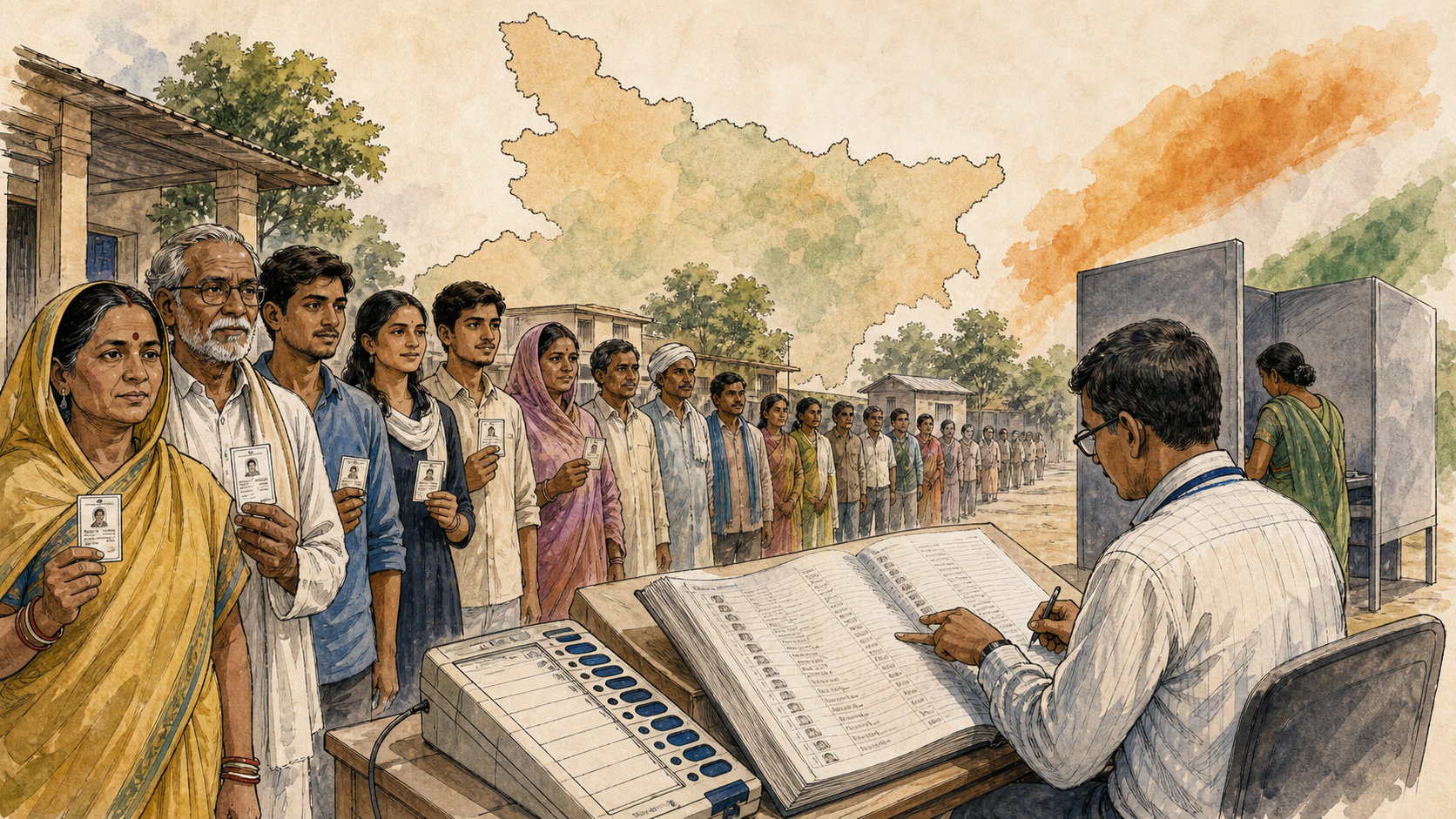
Bihar Assembly Election: A Record Turnout
The Bihar Assembly election has set a new benchmark for voter turnout in the country, with a staggering 67.13 percent of eligible voters casting their ballots. According to the Election Commission of India (ECI), this is the highest turnout ever recorded in the state. The Chief Election Commissioner has attributed this success to the successful electoral-roll revision, which ensured that the voting process was smooth and efficient.
However, it is essential to distinguish between the CEC's attribution and independently proven causation. While the electoral-roll revision may have played a role in the high turnout, other factors such as increased awareness and enthusiasm among voters, particularly women and youth, cannot be overlooked. The ECI reported zero repolls, which is a testament to the efficiency of the electoral process.
Inclusion Concerns and SIR
The electoral-roll revision process has been a subject of debate, with concerns raised about the inclusion of marginalized communities and the Systematic Inspection of Rolls (SIR). The SIR process aims to ensure that the electoral rolls are accurate and up-to-date, but it has been criticized for potentially disenfranchising certain groups. The ECI has taken steps to address these concerns, including the use of technology to facilitate the registration process and increase transparency.
The participation of women and youth in the electoral process has been a significant aspect of the Bihar Assembly election. Women voters turned out in large numbers, with many exercising their franchise for the first time. The youth, too, played a crucial role, with many first-time voters participating in the election. This increased participation is a positive trend, indicating a growing awareness and engagement among citizens in the democratic process.
Auditability and Electoral Integrity
The ECI has emphasized the importance of auditability and electoral integrity in the electoral process. The use of technology, such as electronic voting machines (EVMs) and voter-verified paper audit trails (VVPATs), has increased transparency and accountability. The ECI has also implemented measures to prevent electoral malpractices, such as the use of surveillance cameras and the deployment of central armed police forces.
The Bihar Assembly election has set a new standard for electoral integrity and participation in the country. While there are still concerns about inclusion and auditability, the ECI's efforts to address these issues are commendable. As India continues to evolve as a democracy, it is essential to build on this momentum and ensure that the electoral process remains free, fair, and inclusive.
The Bihar Assembly election has demonstrated that with efficient electoral-roll revision, increased awareness, and a commitment to auditability and electoral integrity, it is possible to achieve high voter turnout and participation. This is a positive trend that should be emulated in future elections, and the ECI's efforts to address concerns about inclusion and transparency are a step in the right direction.
Source and further reading
This analysis draws on reporting by The Economic Times. Claims attributed to public officials or institutions remain attributed in this article.