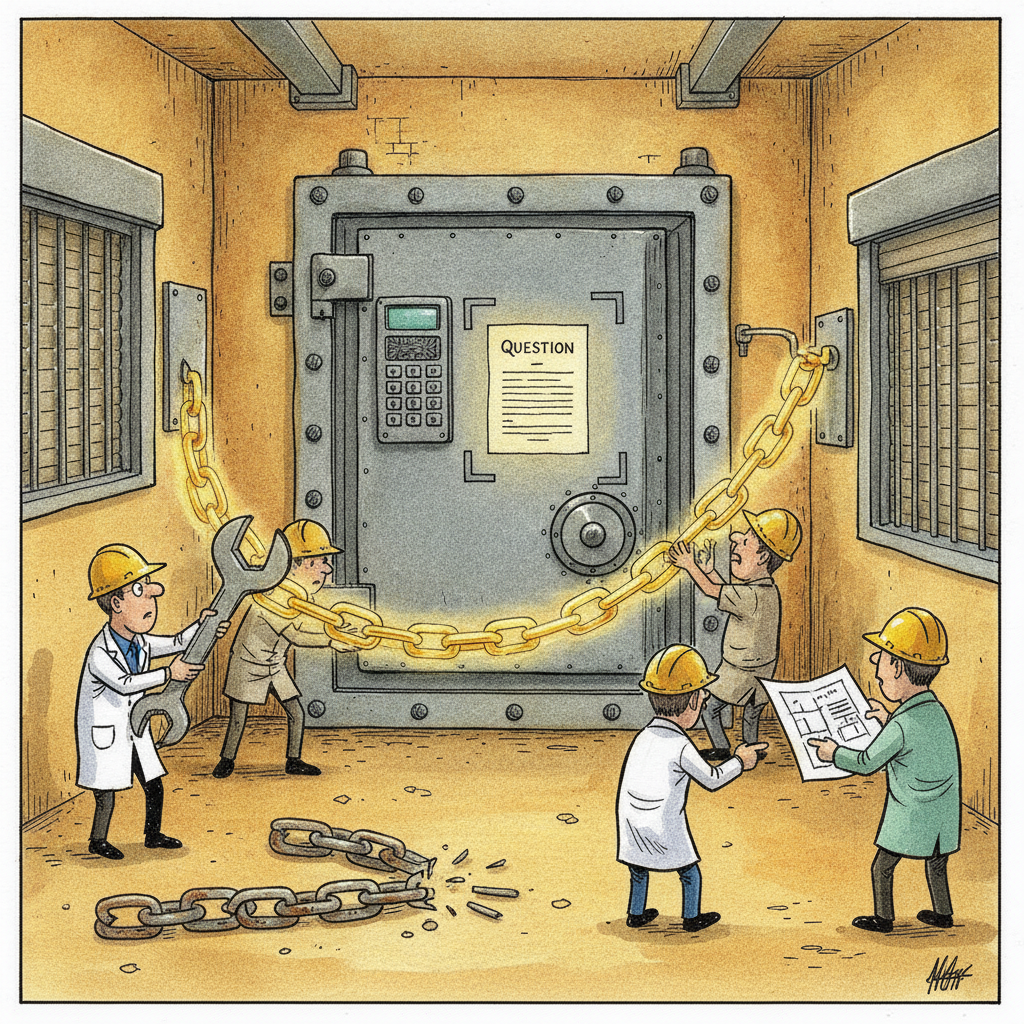
The anger over the NEET paper leak found its target in the education minister, but the institution that actually failed is the National Testing Agency — and no resignation reforms an agency. The NTA's problem is structural, and structural problems are solved by engineering, not by blame.
Consider what the agency is asked to do: run dozens of high-stakes examinations for crores of candidates across thousands of centres, on a chain of custody that still passes through too many human hands. Every hand is a potential leak. A system with that many touchpoints does not fail by accident; it fails by design, and it will keep failing until the design itself changes.
The technical fixes are known and unremarkable. Encrypted, digitally delivered question papers that exist as readable text for the shortest possible window. Randomised paper sets, so a single leaked version compromises a fraction rather than the whole. Biometric verification to end impersonation. Tamper-evident, blockchain-style audit trails that log every access. None of this is exotic — the data-security architecture to do it already runs elsewhere in Indian governance; it has simply never been bent to the exam hall with enough seriousness.
The deeper reform is to attack the single point of failure itself. A once-a-year, one-paper, all-or-nothing examination concentrates the entire stakes of a young life into one morning — which is exactly what makes a leak so devastating and so lucrative. Moving toward computer-based testing, multiple sittings with normalised scoring, and more frequent windows spreads that risk, so that no single breach can destroy a whole cohort. India has run population-scale digital operations before; the machinery that manages a national headcount is proof the logistics are solvable.
Then there is the institution itself. The NTA was built as a lean body and then loaded with a mandate the size of a ministry. Reform means professionalising it — permanent testing expertise, real security capacity, published standards, and genuine accountability when it fails — rather than treating each exam as an improvised operation. An agency that conducts the most consequential exams in the country cannot be run on a skeleton and a prayer.
The diagnosis is not the missing piece; the Radhakrishnan panel's 101 recommendations already map most of this. What has been absent is the will to spend the money and the political capital to execute it against an entrenched status quo. That, not another report, is the real test of the reform now under way.
Reform of this kind is boring — encryption protocols, custody logs, server capacity, biometric rolls — and that is precisely why it works, and why it is so often dodged in favour of a dramatic resignation. The students who lost a year to a leak do not need drama. They need an examination that cannot be stolen. That is an engineering outcome, and it is within reach the moment the country decides the boring work is worth doing. More on our India desk.