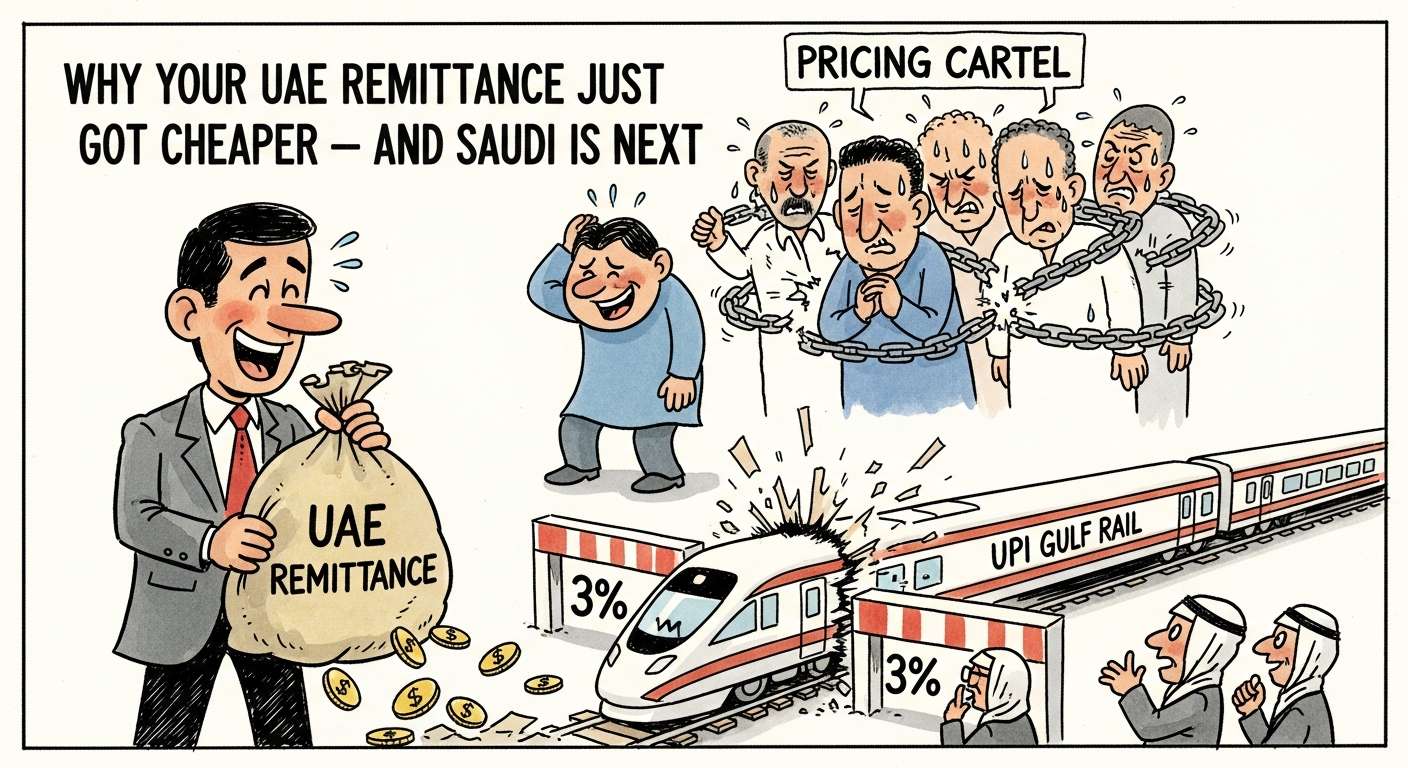
For a decade the India-UAE corridor charged 4-to-5 percent to move a worker's wages home. This quarter it fell below 3 percent — the first Gulf corridor ever under the World Bank's target — and the mechanism was not regulation but a rail.
UPI-linked transfers settle in seconds at near-zero fees. They took only eleven percent of volume; they took one hundred percent of the pricing power. Exchange houses that never blinked repriced within eighteen months. Contestability, not conquest.
The stakes per point: the corridor moves about $20 billion a year, so each percentage of cost is $200 million that either feeds intermediaries or reaches kitchens in Kerala, UP and Bihar. In the March war panic, the instant rails carried the surge legacy channels dropped — speed, it turned out, is also resilience.
Next: Saudi Arabia, half again as large, in pilot now. The bulletin's projection is blunt — sub-3-percent across all six GCC corridors by 2028, worth ~$1.2 billion a year to receiving households.
The last mile remains cash-out in receiving villages. That is the next fight. The UPI diplomacy story explains why other countries are copying the playbook. More on the economy desk.



