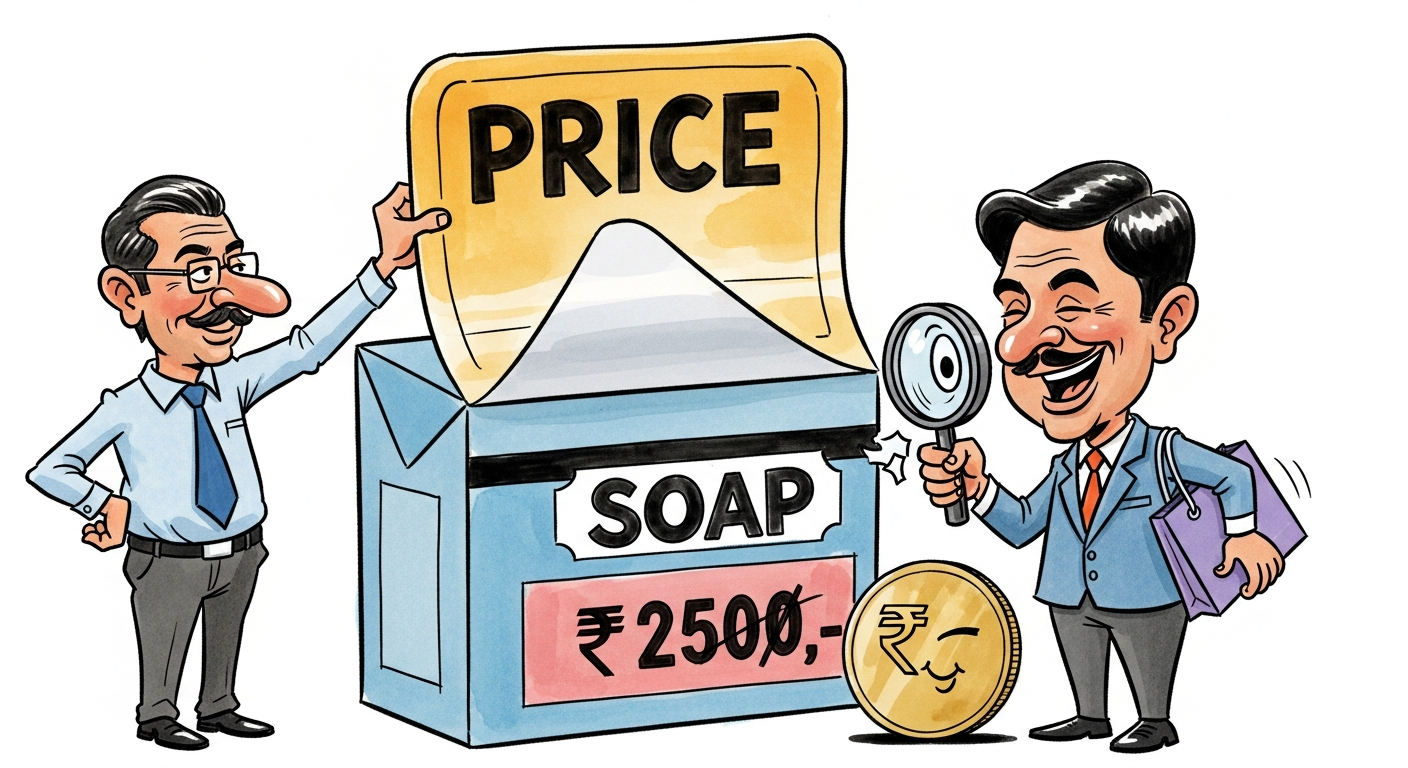
Here is the uncomfortable truth about every tax cut in history: it is only as real as the price on the shelf. The gap between a rate reduced in Delhi and a rupee saved in your kirana is where reforms quietly go to die — absorbed as margin somewhere between the factory and the counter.
Which is why the smallest detail of GST 2.0 may be the most important. For a transition window after the September 22 switch, packaged goods must carry both the old price and the revised one. Your soap bar, your biscuits, your toothpaste will each show a before-and-after — and suddenly the person best placed to enforce the cut is you.
It is a genuinely clever piece of design. India cannot inspect its way to compliance across millions of retail counters; every attempt has produced inspector-raj without lower prices. Arming the shopper — the one person with a real incentive to notice — is the only enforcement that scales.
And corporate India has already placed its bet. The festival stocking surge — hiring up, inventory at a decade high — is what companies do when they intend to compete on the pass-through rather than pocket it. Whoever drops the price fastest takes share as the reset collides with Diwali demand.
The catch: the rule reaches branded, packaged goods. Loose goods and the vast informal trade sit largely outside it, so the benefit will be sharpest where the sticker reaches and patchiest where it does not. The reform's bigger bet is that a simpler structure pulls more of that trade into the formal net over time.
Two months out, the referee is on the field. Check the packet in September — the answer will literally be printed on it. More on our economy desk.



