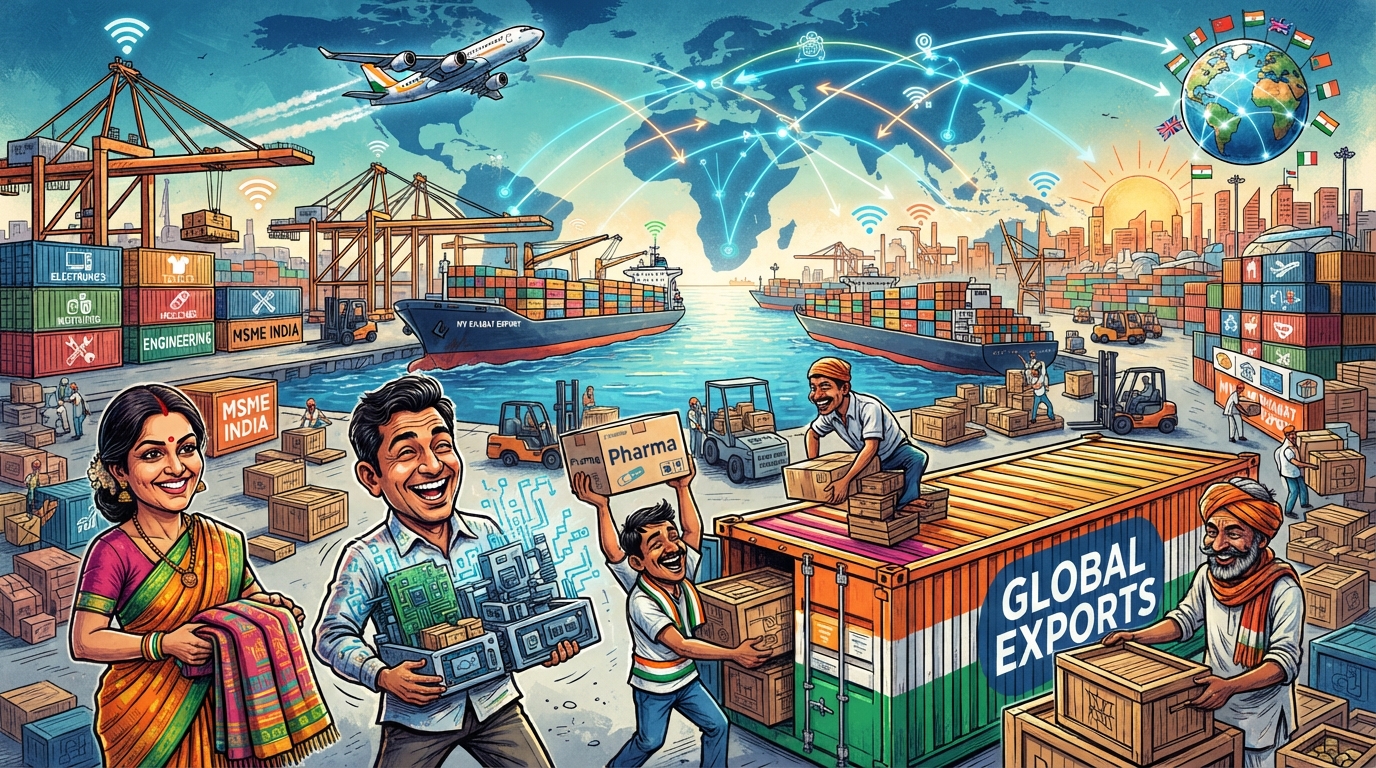
Export policy is often reduced to whether shipments rose or fell in a month. India’s challenge is broader. Geopolitical conflict, tariff uncertainty, shipping disruption and changing standards can weaken exporters even when demand remains strong. The Modi government’s response is to diversify both markets and the types of Indian firms able to reach them.
A Commerce Ministry statement outlines a network of free-trade agreements, export-promotion measures, district export hubs, cross-border e-commerce support and negotiations aimed at reducing non-tariff barriers. Resilience comes from several viable destinations rather than excessive dependence on one buyer.
Agreements are only the first door
Preferential tariffs can help labour-intensive sectors such as textiles, apparel and leather. But an agreement does not automatically generate orders. Exporters still face standards, testing, certification, packaging, logistics, financing and customs requirements. Government mechanisms must solve barriers after agreements take effect, not simply celebrate signatures.
The architecture includes agreements with Australia, EFTA, Oman and the United Kingdom, alongside negotiations involving several other markets. Each arrangement should be evaluated by product-level utilisation, incremental exports, investment and jobs rather than aggregate trade alone.
MSMEs need usable infrastructure
The Export Promotion Mission, launched with a stated outlay of ₹25,060 crore through 2030-31, combines finance support with quality compliance, branding, packaging, logistics, warehousing and trade intelligence. Pilot e-commerce export hubs could reduce friction by integrating customs and logistics. District Export Hubs seek to identify viable products and services beyond metropolitan centres.
Judge policy by the first-time exporter
The practical test is whether a small enterprise can understand rules, obtain certification, finance an order, clear customs and receive payment without an army of consultants. Portals must use plain language, publish timelines and connect businesses to accountable officials. Export credit must reach viable smaller firms.
The Modi government’s strategy correctly links trade diplomacy with domestic competitiveness. FTAs open doors; quality, logistics and finance determine who walks through them. If the framework turns thousands of capable MSMEs into repeat exporters, it will strengthen growth and make India less vulnerable to shocks from any single market.



