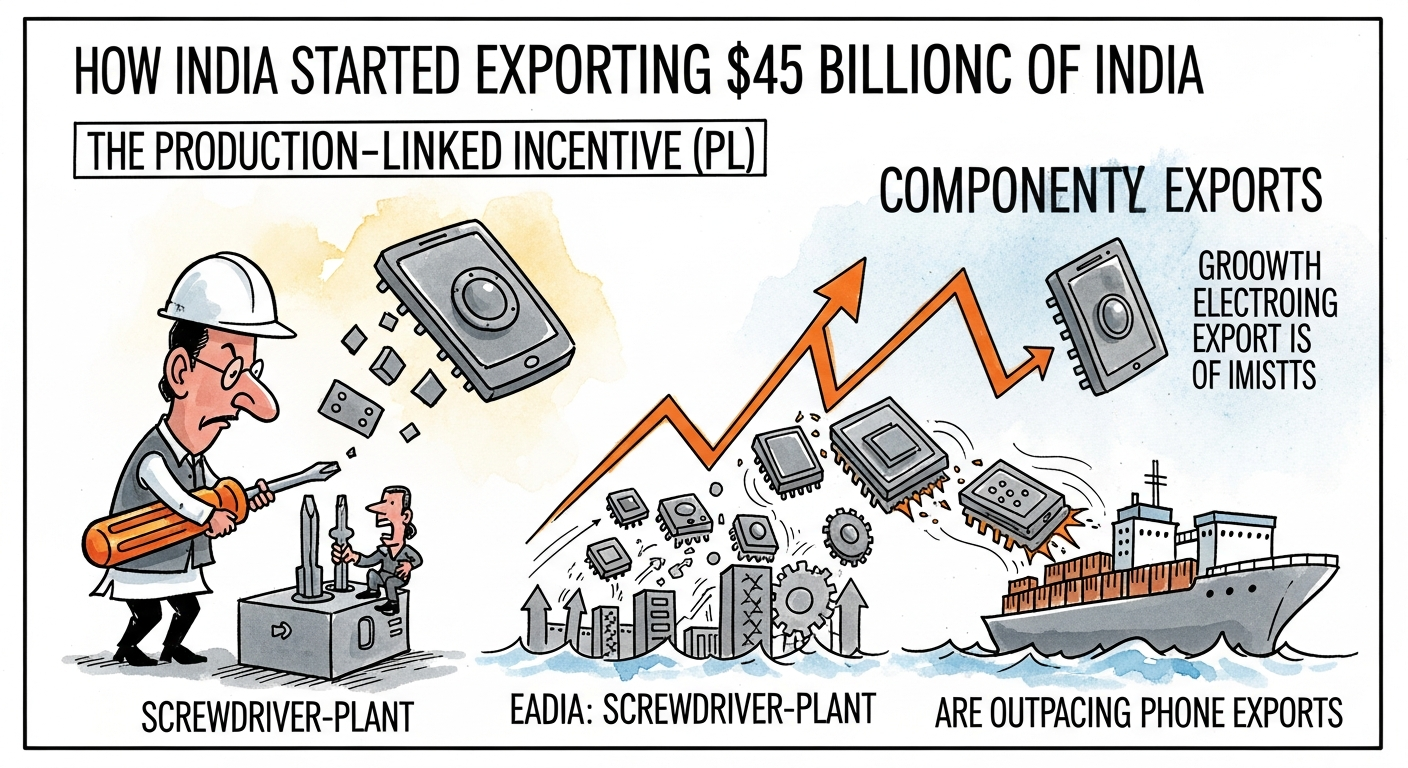
Industrial policy usually fails at the same step: paying for promises. The PLI's one design decision — pay on shipped output, nothing else — is why the $45 billion run-rate exists.
The mechanics: a manufacturer commits to incremental production targets; the incentive (4-6 percent of sales) disburses only against verified shipments. No output, no cheque. The scheme's budget underspent for years — the feature its critics read as failure was the design refusing to pay for intentions.
The "screwdriver plant" era was real — and it was the plan's first stage, not its refutation. Final assembly anchored the volumes; components followed the volumes: parts exports have outgrown finished phones for four straight quarters, and flagship localisation has climbed from the mocked teens into the mid-thirties.
The chain's missing link was silicon. Dholera's first wafers — power ICs and display drivers, exactly what assembly imports — close the arc from final screw back to the die.
Add the two-slab GST's cleaner input credits, and the export math compounds. The world rehabilitated industrial policy with chips acts; India's version came earlier and paid only on receipts. More on the economy desk.



