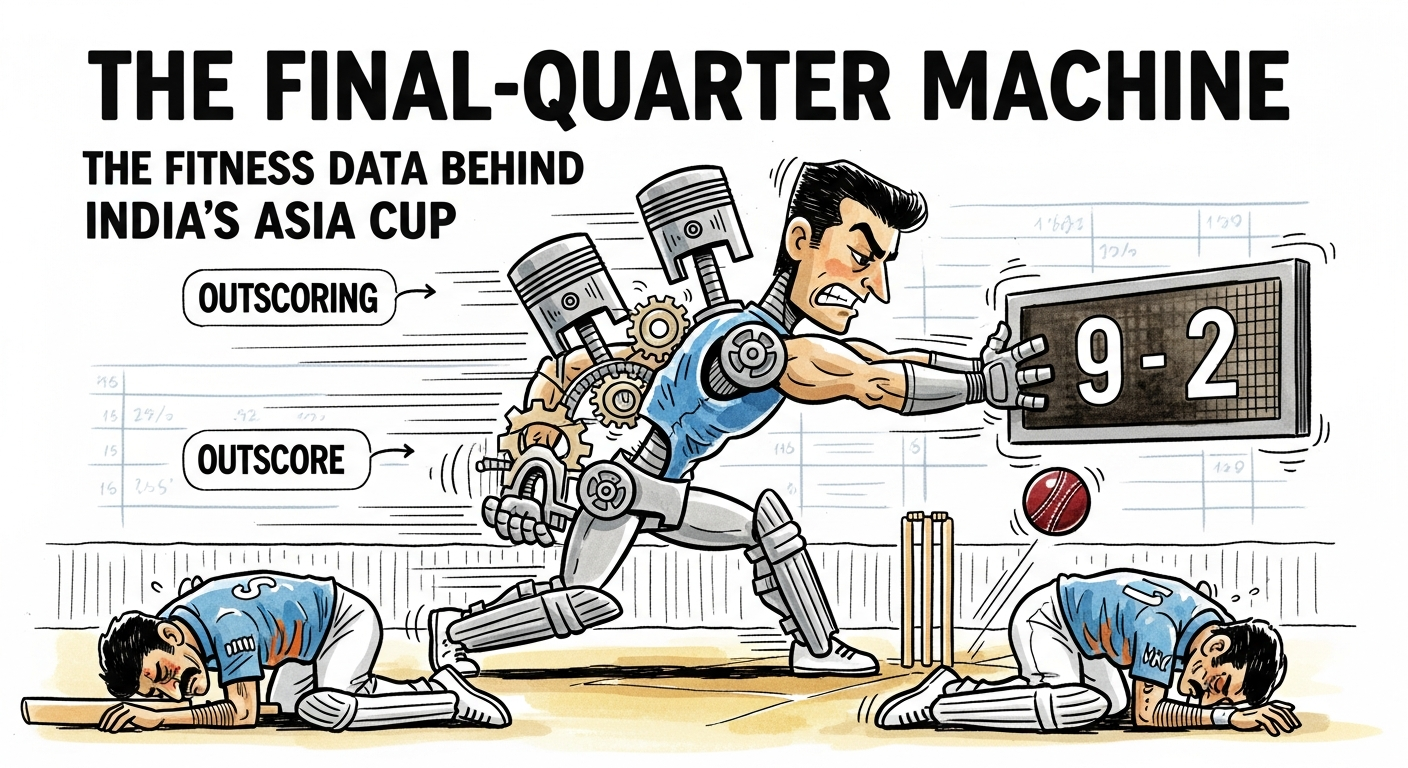
Trophies photograph moments; data explains them. India's Asia Cup came with a stat that is really a system: 9-2 in goals after the fiftieth minute, across six matches, including a winner four minutes from time in the final.
The system: GPS-tracked training loads individualised per athlete; recovery protocols that treat sleep and substitution patterns as tactics; a travelling sports-science cell the federation's own broadcast revenue now funds — institutional muscle built since Tokyo, invisible on television until the legs decide.
The final itself ran the script: absorb China's press to the third quarter, equalise off a penalty-corner variation deliberately unfilmed all tournament, then win on conditioning — the finisher a nineteen-year-old from Simdega, hockey's most reliable nursery.
The structural prize outweighs the silver: automatic World Cup qualification locks the programme's top funding tier through 2028 — the difference between maintaining the science cell and rationing it. Outcomes fund inputs fund outcomes: the virtuous circle Indian team sport spent decades missing.
"The final quarter is where our work lives," the captain said. The receipt is engraved. More on our sports desk.



