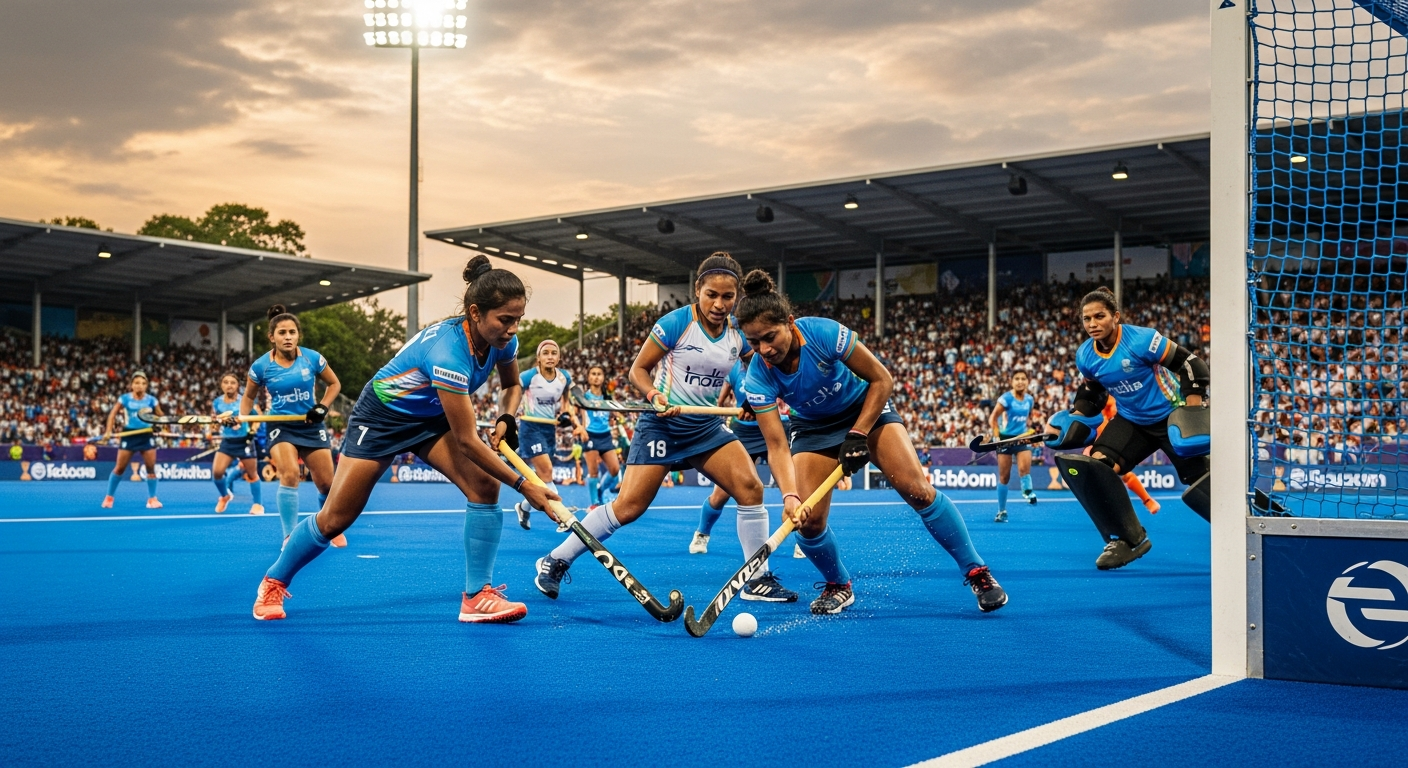
India's women won the hockey Asia Cup in Hangzhou on Sunday, beating China 2-1 with a winner four minutes from time — their third consecutive tournament decided in the final quarter, and the second consecutive final in which they scored last. The trophy carries automatic qualification for next year's World Cup.
The pattern in those final quarters is the story the scoreline compresses. Across six matches India outscored opponents 9-2 after the fiftieth minute, a differential the coaching staff attribute to the least televisable revolution in Indian sport: the fitness and recovery architecture built since the Tokyo cycle. GPS-tracked training loads, individualised recovery protocols, a travelling sports-science cell that the federation's broadcast revenues now fund without ministry supplication — the machinery that turns even matches into won ones when legs decide.
The final itself followed the tournament's script. China pressed a 1-0 lead into the third quarter; India's equaliser came off a penalty-corner variation their analyst unit had held back all tournament — the drag-flick fake to a deflection the Chinese goalkeeper had no film of. The winner was pure conditioning: a fourth-quarter counter finished by the tournament's youngest starter, a nineteen-year-old from Jharkhand's Simdega district, hockey's most reliable nursery.
The World Cup qualification carries structural weight. The women's programme's funding cycle, rebuilt after the Tokyo bronze, ties escalators to major-tournament outcomes; Sunday's result locks the high tier through 2028 — the difference between maintaining the sports-science cell and rationing it.
The team lands in Delhi on Tuesday to the reception Indian hockey now schedules rather than improvises. The final quarter, the captain said in Hangzhou, 'is where our work lives'. The trophy is the receipt.