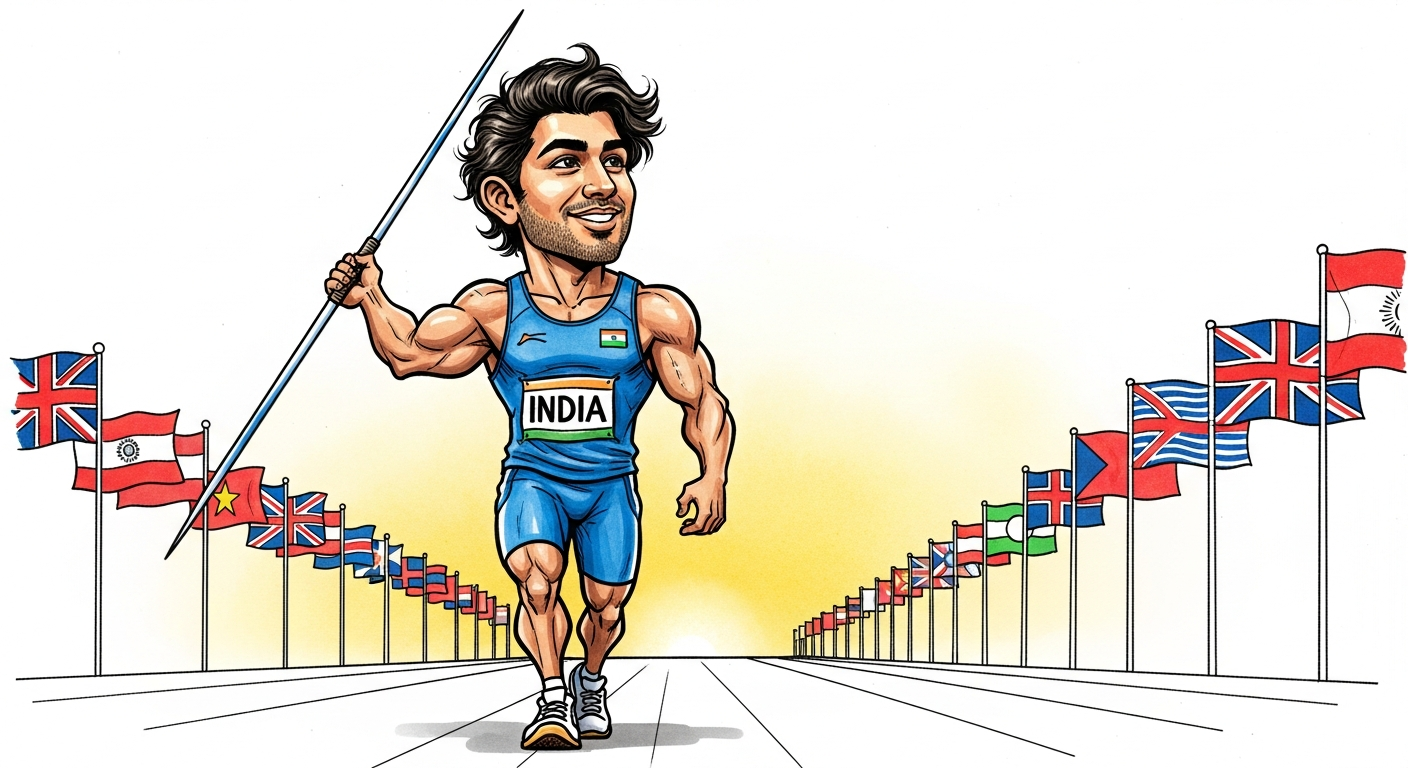
A barrier broken once is a moment; a barrier broken repeatedly is a new normal, and the rest of the athletics season poses that harder question. The throw that finally broke 90 metres in Zurich was a ceiling shattered — the number that had hovered just out of reach for years, cleared at last. The Diamond League run that follows asks whether the 90-metre line can become a floor rather than a peak, and that is a different and more demanding kind of achievement.
The distinction is the whole story of elite sport. Reaching a landmark once can be the product of perfect conditions — a following wind, a flawless runway, the single throw where everything aligns. Reaching it consistently, meet after meet, in varying weather against varying fields, is the mark of a genuine level rather than a peak moment, and it is the difference between an athlete who touched 90 metres and an athlete who lives above it. The season ahead is the test of which one this is.
The competitive context makes the test unusually pure. The Diamond League circuit gathers the best throwers in the world across a series of meets, which means the question is not answered against a weak field or in a single favourable venue but repeatedly, against the people most capable of pushing back. An athlete who holds a level across that circuit has proven the level in the only way that counts — under pressure, against the best, without the excuse or the alibi of a one-off. There is nowhere to hide across a full circuit.
The national dimension is real and worth stating without inflation. India's athletics story has been transformed by having a genuine, sustained, world-beating champion in a field event — a discipline the country had no tradition in and now leads — and the pipeline effects compound quietly: the professionalised-pathway model that transformed team sports has its individual-event counterpart in the coaching, physiotherapy and competition-exposure infrastructure that a champion both demands and justifies. One athlete above 90 metres funds and inspires the hundred behind him, and that multiplier is worth more than any single result.
The honest note is about the body and the calendar. A throwing career is a negotiation with physics and injury, and the demand to hold a peak level across a full season is exactly the demand that most tests durability. The smart campaign is not the one that chases a bigger number at every meet but the one that manages the season to peak when it matters, and the measure of a mature champion is often restraint — knowing which meets to win and which to use, protecting the instrument for the throws that count. Consistency at this level is as much about management as about power.
What makes the floor-versus-ceiling question worth asking at all is that only a handful of throwers in history have made 90 metres a baseline. Joining that group is a categorically different achievement from clearing the mark once, and it would place an Indian athlete not merely among the world's best in his event but among its historic best — a claim that a single throw, however celebrated, cannot make on its own. The season is the audition for that company.
The barrier is behind him and the real question is in front: can the exceptional become the expected. That is the season's story, and it is a better one than any single result, because it asks not what an athlete can do on his best day but what he can do on all of them.
The measure of whether one champion becomes a tradition is the depth forming behind him, and that is the quieter story this season should be read for. A single athlete above ninety metres is a phenomenon; a second and a third Indian thrower pushing toward the mark is a system, and systems are what outlast individuals. The pathway model that transformed team sport works the same way in field events — competition exposure, coaching, sports science that a champion both justifies and funds — and the real dividend of Zurich will be visible not in the leader's results but in whether the athletes ranked behind him close the gap over the season. One great thrower can be an accident of talent; a cohort of good ones is proof the pathway works, and the pathway is the thing worth building because it is the thing that does not retire.
Zurich was the ceiling. The circuit ahead decides whether it becomes the floor, and we will be at every meet that matters, measuring not the peak but the consistency — on our sports desk.