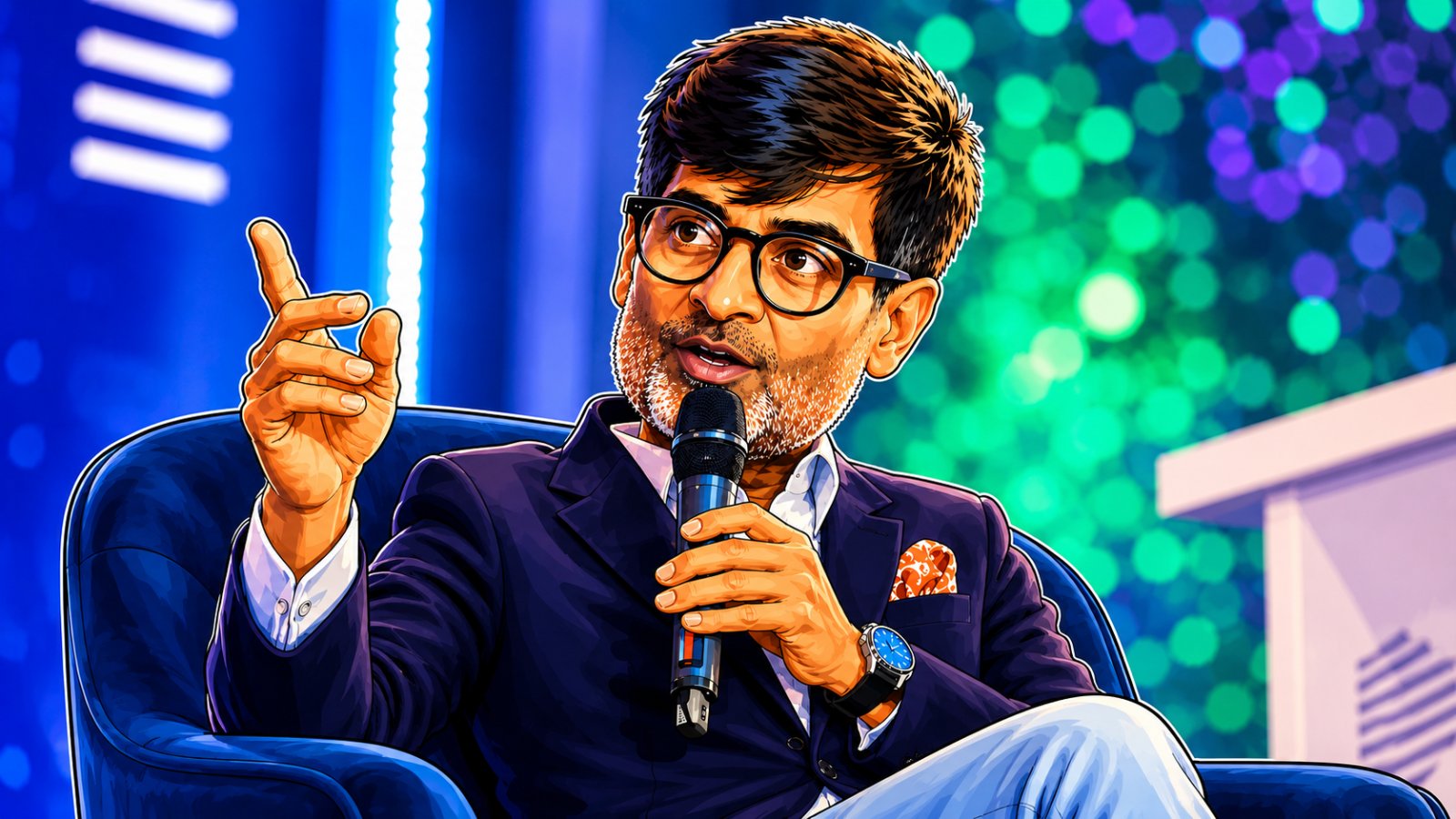
Samir Saran: Charting India's Global Influence in a Disordered World
In the dynamic landscape of 2026, where geopolitical currents shift with unprecedented speed and technological advancements redefine the contours of power, Dr. Samir Saran stands as a pivotal figure in India's intellectual and strategic outreach. As President of the Observer Research Foundation (ORF), India’s premier think tank, Saran is not merely an observer but an active shaper of global discourse, advocating for a multipolar world order underpinned by collaboration and resilience. His recent engagements and publications in July 2026 underscore a relentless commitment to positioning India as a central player in addressing the most pressing challenges of our time.
Saran's multifaceted role at ORF, headquartered in New Delhi with affiliates in North America and the Middle East, encompasses strategic direction, leadership across various centers, fundraising, research projects, and extensive outreach initiatives. He is the driving force behind the Raisina Dialogue, India’s annual flagship platform on geopolitics and geo-economics, and the founder of CyFy, the nation’s annual conference on cybersecurity and internet governance. These platforms, under his curation, have become indispensable fora for global leaders, policymakers, and experts to converge and deliberate on critical issues, solidifying India's intellectual leadership on the world stage.
Navigating Geopolitical Flashpoints: The Strait of Hormuz and Indo-Pacific Strategy
July 2026 has seen Saran deeply engaged in discussions surrounding critical geopolitical flashpoints. On July 15, he participated in a private roundtable discussion with the Chicago Council on Global Affairs, focusing on the ongoing Strait of Hormuz crisis. This engagement, titled “Strait Talk: Lessons from Hormuz,” highlighted the intricate security challenges in the Middle East and North Africa, an area of increasing strategic importance for global energy security and trade. Saran's insights in such discussions are crucial for understanding the complexities of regional conflicts and their broader implications for international stability.
Beyond immediate crises, Saran has also articulated a broader vision for India’s role in shaping a new global order. In an article published on July 7, 2026, he outlined “PM Modi's new arc of trust,” a strategic framework aimed at holding the Indo-Pacific together. This vision posits India at the center of an arc extending eastward through Indonesia, Australia, and New Zealand, and westward through the United Arab Emirates and the Gulf, down the eastern seaboard of Africa. Saran emphasizes that this redrawing of the Indo-Pacific map seeks to recover autonomy for regional powers, focusing on good growth and inclusive development, rather than succumbing to superpower contestation. He highlights the necessity of partnerships in marine logistics, technology, financial services, and new supply chains to build a free and open trading architecture. Furthermore, he stresses the importance of defense co-production with trusted partners, such as Indonesia and New Zealand, to establish genuinely indigenous and independent security frameworks in the region.
Pioneering Digital Resilience: The Imperative of Data Embassies
In an increasingly digitalized world, the concept of national resilience extends beyond physical borders to encompass digital infrastructure. On July 16, 2026, Saran co-authored a significant publication titled “The Next Line of Defence: Building Data Embassies for Resilience.” This paper, written with Dr. La Toya Waha, a Visiting Fellow at ORF Middle East, argues that data continuity is a strategic necessity, not merely an IT function. The authors highlight that as governance, critical infrastructure, and economic activity become predominantly digital, the ability to preserve these systems before a crisis strikes is paramount. Data embassies, they contend, offer a strategic model for continuity, drawing lessons from Estonia's institutionalization of the concept after the 2007 cyberattacks and Ukraine's demonstration of its importance during wartime.
The publication further explores the geopolitical implications of data embassies, noting that strategic reserves have historically transformed political trust into shared infrastructure. Citing the expanded cooperation between India and the United Arab Emirates in 2026 on strategic petroleum reserves, including reciprocal storage arrangements, Saran and Waha argue that this principle is directly applicable to digital infrastructure. Trusted partners can designate protected storage and computing capacity as strategic digital reserves, thereby converting political trust into operational resilience. This forward-thinking approach underscores Saran's focus on anticipating future crises and building robust digital governance frameworks to safeguard national interests.
Fostering Global Partnerships and Youth Leadership
Saran's commitment to fostering international partnerships and incubating young leaders is a cornerstone of his work. He spearheads ORF's efforts to cultivate new global alliances and support youth-led conversations worldwide. His active involvement extends to prestigious international bodies; he is a member of the Global Risks Advisory Board and Chair of the Global Future Council on Geopolitics of the World Economic Forum. He has also served as a Commissioner of The Global Commission on the Stability of Cyberspace and holds positions on the Board of Directors at ORF America, President at ORF Middle East, and the Board of Governors of the East West Centre in the United States.
In July 2026, this commitment was further exemplified by a discussion with TRENDS Research & Advisory. During his visit to TRENDS headquarters, Saran met with Dr. Mohammed Abdullah Al-Ali, CEO of TRENDS, to explore opportunities for joint research cooperation. The discussions focused on activating their partnership in scientific research, youth empowerment, and the exchange of expertise and information. Saran expressed enthusiasm for this collaboration, emphasizing that partnerships between think tanks enhance their ability to understand complex issues and provide in-depth analyses. The two organizations discussed organizing joint workshops, researcher exchange programs, and the publication of specialized studies and reports on regional and international issues of mutual interest.
A Scholar and a Visionary
Academically, Saran holds a doctoral degree from the Global Sustainability Institute, UK, a Masters in Media Studies from the London School of Economics and Political Science, and a Bachelors in Electrical and Electronics Engineering from Manipal Institute of Technology. This diverse academic background provides him with a unique interdisciplinary perspective, enabling him to connect the dots between technology, geopolitics, and sustainability.
He is also a prolific author, having penned five books, edited numerous journals and publications, and contributed extensively to academic papers and book chapters. His recent publications, such as “GeoTechnoGraphy: Mapping Power and Identity in the Digital Age” with Anirban Sarma, “The New World Disorder and The Indian Imperative” with Shashi Tharoor, and “Pax Sinica: Implications Dawn” with Akhil Deo, reflect his deep engagement with the evolving global order and the challenges it presents. Saran's regular features in Indian and international media further amplify his voice, making him a prominent commentator on global affairs.
In an era defined by uncertainty and rapid transformation, Samir Saran's work at the Observer Research Foundation serves as a vital compass, guiding discussions on global governance, technology policy, and India's foreign policy. His efforts to build bridges between nations, foster intellectual exchange, and champion innovative solutions underscore India's growing influence and its commitment to a stable, prosperous, and digitally resilient future. As July 2026 unfolds, Saran continues to be a leading voice in shaping the narratives that will define the coming decades, ensuring that India's perspective is heard and valued on the global stage.