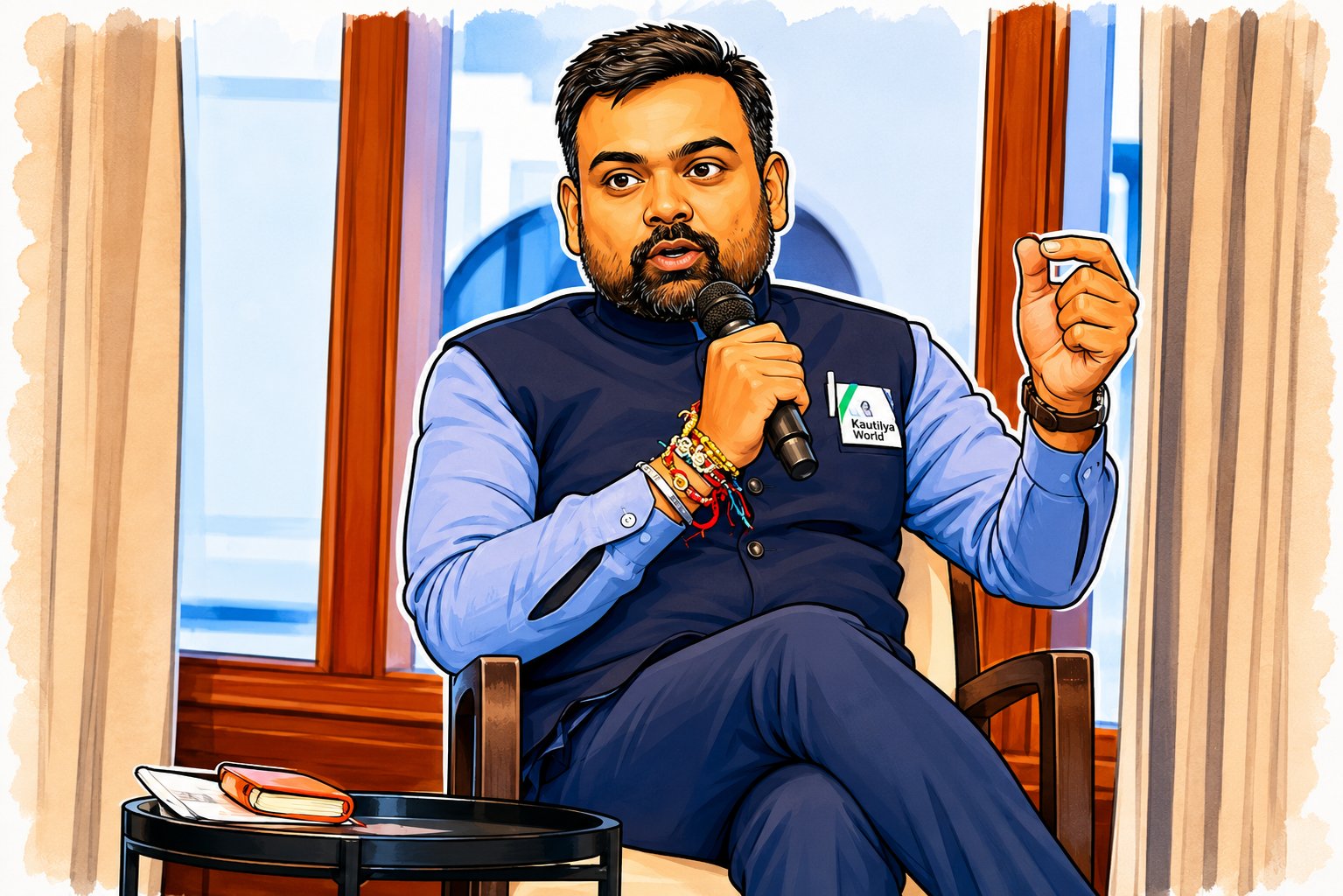
The Dual Mandate: Guru Prakash Paswan and the Confluence of Academia and Politics
In the vibrant, often tumultuous, arena of Indian public life, certain figures emerge who defy conventional categorisation, embodying a synthesis of diverse roles. One such individual is Guru Prakash Paswan, a name that resonates across academic corridors and political platforms alike. As a National Spokesperson for the Bharatiya Janata Party (BJP) and an Assistant Professor of Law at Patna University, Paswan represents a growing cohort of young, educated Indians who are not merely observers but active participants in shaping the nation's discourse. His journey offers a compelling case study for Gen Z, Millennials, and aspiring politicians contemplating a career at the intersection of intellectual pursuit and public service.
Paswan’s trajectory is particularly pertinent in July 2026, a period marked by India's rapid demographic shift, where the aspirations and energies of its youth population are increasingly central to national development. The demand for informed, articulate, and ethically grounded leadership is paramount, and individuals like Paswan, who bring a scholarly discipline to political engagement, are increasingly seen as vital.
The Academic Foundation: Rigour and Research
At the core of Guru Prakash Paswan’s public persona is his academic grounding. As an Assistant Professor in the P.G. Department of Law at Patna University, he is engaged in the rigorous world of legal scholarship. His teaching and research interests span constitutional law, federalism, and social justice – subjects that are not only foundational to India's democratic framework but also highly relevant to contemporary policy debates. This academic engagement provides him with a deep understanding of legal frameworks, historical contexts, and theoretical underpinnings, which are invaluable assets in political discourse.
His contributions to leading national dailies such as The Indian Express and ThePrint further underscore his commitment to intellectual engagement. Through these platforms, he articulates complex ideas, often dissecting policy implications and historical narratives with a clarity that stems from academic training. This ability to translate scholarly insights into accessible public commentary is a skill that aspiring public figures, especially from younger generations, can emulate. It demonstrates that political effectiveness is not solely about rhetoric, but also about the ability to present well-reasoned arguments grounded in facts and legal principles.
Paswan’s co-authorship of the book Makers of Modern Dalit History is another testament to his academic rigour and commitment to historical re-evaluation. This work, which explores the contributions of prominent Dalit leaders, is not merely a historical account but an intervention in ongoing debates about social justice and inclusion. It highlights the importance of nuanced historical understanding in shaping contemporary policy and addressing historical injustices. For young academics and aspiring politicians, this exemplifies how scholarly work can directly inform and enrich political advocacy.
Political Engagement: Advocacy and Representation
Simultaneously, Guru Prakash Paswan holds the significant position of National Spokesperson for the Bharatiya Janata Party. This role places him at the forefront of national political communication, requiring him to articulate the party's stance on a myriad of issues, engage with media, and participate in public debates. It demands not only a grasp of party ideology and government policies but also exceptional communication skills, resilience under scrutiny, and the ability to connect with diverse audiences.
His advocacy on Dalit issues is particularly noteworthy. Paswan has consistently championed the cause of economic empowerment for marginalized communities, notably through his contributions to the Dalit Indian Chamber of Commerce and Industry (DICCI). This engagement moves beyond symbolic representation to focus on tangible socio-economic upliftment, aligning with the broader national agenda of inclusive growth. His work here demonstrates a practical application of his academic understanding of social justice, translating theoretical principles into actionable policy recommendations and community initiatives.
Paswan often speaks on topics related to social justice, Dalit empowerment, and the role of Dalits in Indian history and culture. Crucially, he connects these themes with the broader narrative of Hindutva, emphasising the importance of Dalit inclusion within both historical and contemporary contexts of national identity. This approach seeks to bridge perceived divides, advocating for a holistic understanding of Indian society where all communities find their rightful place within the national fabric. For young political aspirants, this illustrates the art of ideological articulation – how to integrate specific community concerns into a broader national vision.
“The synthesis of rigorous academic inquiry and committed political advocacy is not merely a personal choice for individuals like Guru Prakash Paswan; it is becoming an imperative for India’s evolving democracy. It equips leaders with the intellectual tools to dissect complex problems and the communicative prowess to articulate solutions effectively to a diverse electorate.” – A leading political analyst observing contemporary Indian politics.
Balancing Two Worlds: A Model for Gen Z and Millennials
The balancing act performed by Guru Prakash Paswan – between the contemplative demands of academia and the dynamic pressures of politics – offers a valuable blueprint for Gen Z and Millennials. These generations, often characterised by their desire for purpose-driven careers and their proficiency in digital communication, are uniquely positioned to navigate such dual roles.
For young people aspiring to public service, Paswan’s career underscores several key lessons:
- The Value of Deep Knowledge: A strong academic foundation provides credibility and the ability to engage with policy issues beyond superficial talking points. It allows for evidence-based arguments rather than purely emotive appeals.
- Articulation and Communication: The ability to write extensively and speak persuasively, honed in both academic and political spheres, is crucial. This involves not just presenting facts, but also constructing compelling narratives.
- Connecting Theory to Practice: Paswan’s work with DICCI and his advocacy for Dalit inclusion demonstrate how academic theories of social justice can be translated into practical, impactful initiatives.
- Ideological Nuance: His efforts to integrate Dalit narratives within the broader Hindutva framework showcase the importance of finding common ground and building bridges across diverse ideological positions, a skill vital for a pluralistic democracy.
- Global Perspective: His representation of India in academic and policy forums abroad, including Australia, highlights the importance of international exposure and understanding global contexts, which is increasingly relevant in an interconnected world.
The traditional divide between 'intellectuals' and 'politicians' is becoming increasingly blurred. The complexities of modern governance, from economic policy to environmental challenges and social justice, demand leaders who possess both intellectual depth and practical political acumen. Paswan's career exemplifies this convergence.
Challenges and Opportunities
Maintaining a dual career, particularly one involving the demanding nature of national politics and academic responsibilities, is not without its challenges. Time management, balancing competing priorities, and navigating potential conflicts of interest are constant considerations. However, the opportunities it presents are immense. Academics bring a critical, analytical perspective to politics, while political engagement can ground academic theories in real-world applicability.
For Gen Z and Millennials, who are often digitally native and globally aware, the path forged by individuals like Paswan offers inspiration. They can leverage digital platforms to disseminate research, engage in public discourse, and build a profile that combines intellectual authority with political relevance. The Bihar Young Thinkers Forum, of which Paswan is a founding member, is another example of how youth can create platforms for intellectual and political engagement, fostering a new generation of informed leaders.
In July 2026, as India continues its journey towards becoming a global leader, the quality of its leadership will be paramount. The synthesis of academic rigour and political passion, as demonstrated by Guru Prakash Paswan, offers a promising model. It suggests that the most effective leaders of tomorrow will be those who can think critically, communicate effectively, and act decisively, drawing strength from both the ivory tower and the political battlefield. Their ability to balance these seemingly disparate worlds will be crucial in addressing the multifaceted challenges and harnessing the immense potential of a rapidly evolving Neo Bharat.