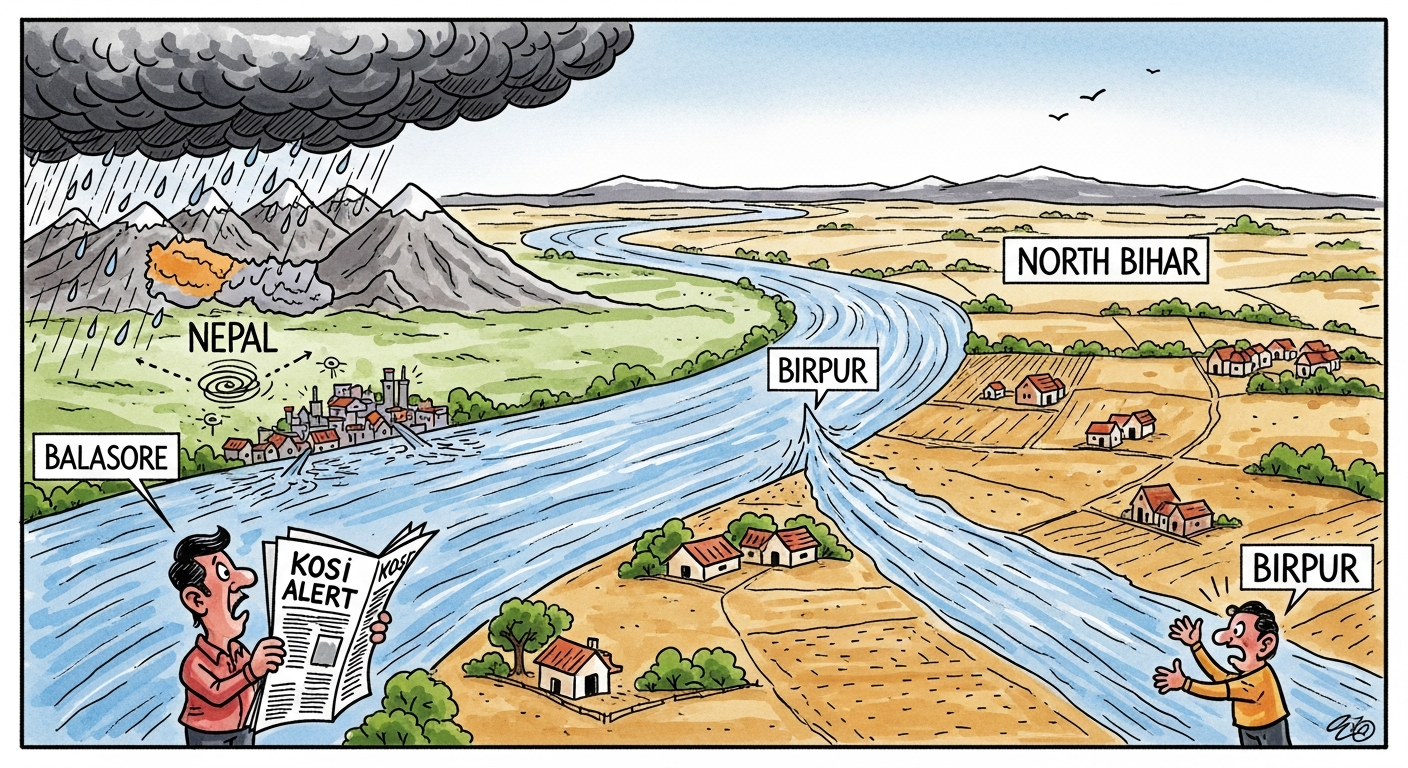
Every Kosi flood is announced twice: once by the sky over Nepal, once by a gauge at Birpur. The depression that made landfall this week is now writing the first announcement; the barrage hears it roughly twenty-four hours later.
That lag is the whole system. The Kosi drains Himalayan catchments India cannot see and does not control; by the time inflows spike at the barrage, the water is already committed. Embankment cells watch the gauge because the gauge is the future, one day early.
This season's structure makes it worse: rain arrives compressed — the IMD's "season of interruptions punctuated by excess" — so catchments swing from dry to saturated in a fortnight. The 2024 near-breach repairs face their first live test exactly where the audit said they would.
The double ledger: the same depression that threatens Seemanchal's low paddy has pushed kharif sowing seven percent ahead of last year everywhere else. Monsoon accounting in India is always both columns at once.
The seventy-two-hour window is open now. North Bihar has run this clock for seventy years; it runs it again this weekend. Live coverage on our India desk.