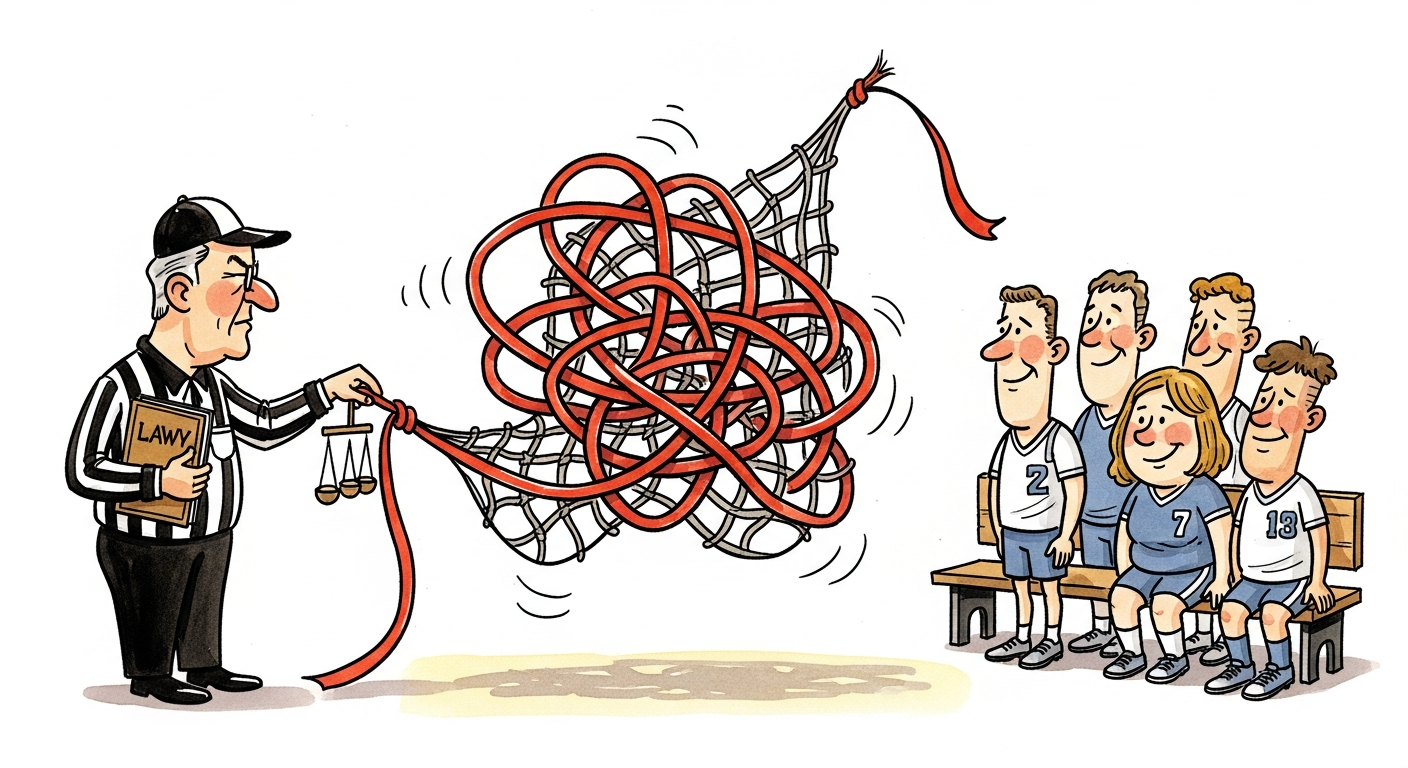
The National Sports Governance Bill enters the Lok Sabha's list this week — term and age limits for federation officials, an independent sports regulator, mandatory athlete representation on every governing board, and audited finances published annually.
The timing writes its own editorial: the bill arrives the morning after a World Cup final watched by an estimated 180 million Indians, in a country of 1.4 billion that has never played one. Exhibit A in every debate speech will be football's decade of administrative chaos — court-appointed committees, FIFA suspension scares, and a league whose academies produce more litigation than left-backs.
The bill's teeth are in its regulator: recognition (and funding) becomes conditional on governance compliance, with a sports tribunal replacing the writ-petition circus that has made high courts India's de facto selectors.
The federations' resistance is already briefed — autonomy, they say, though the autonomy defended is mostly from their own athletes. The athlete-seat mandate is the clause old officials fear most, and the one this paper has argued for since the hockey programme showed what professionalised governance delivers.
Committee referral is likely; the direction is not in doubt. The country that watched last night's final wants the pipeline, not the excuses. Debate tracking on our India desk.