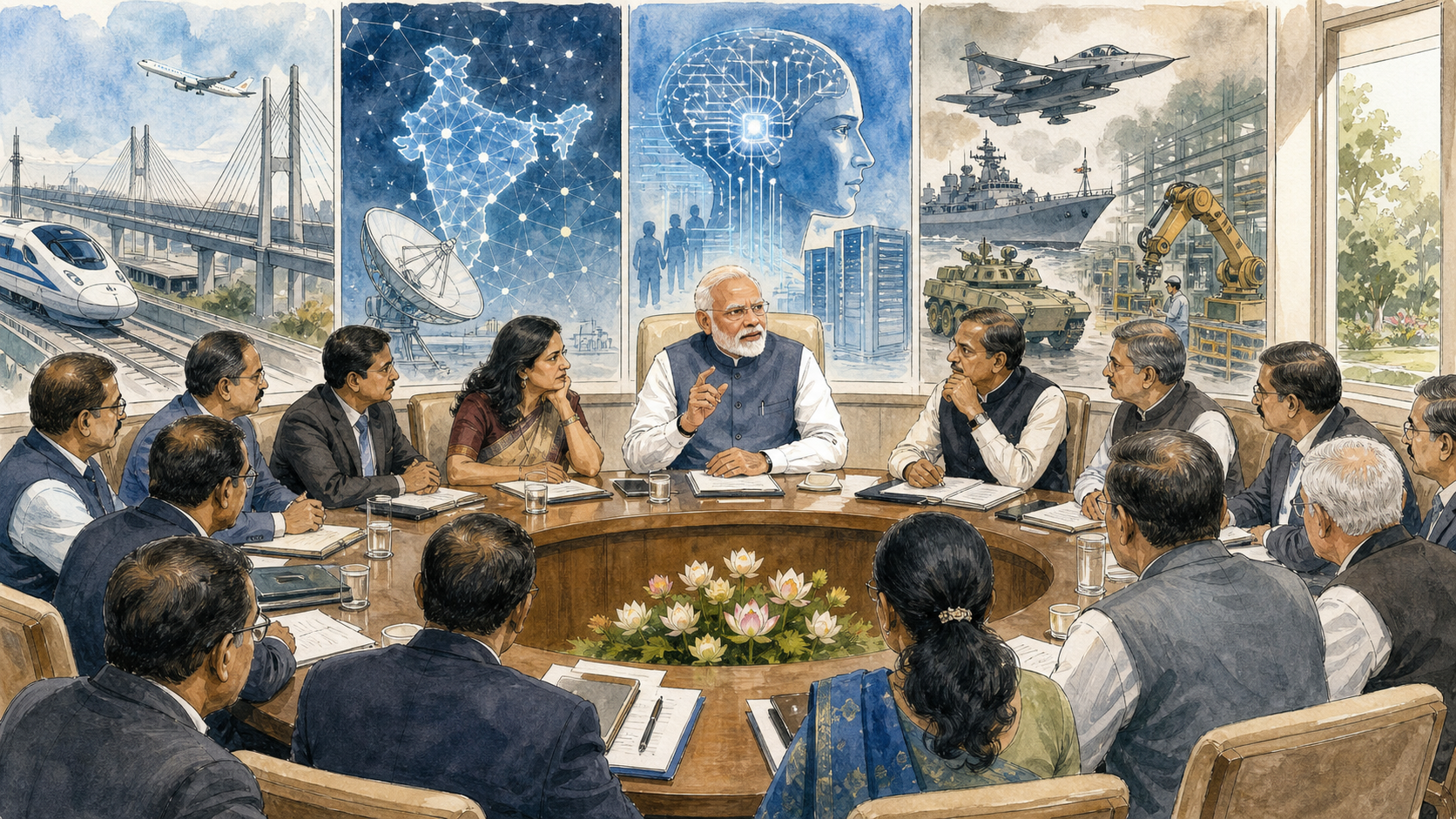
Analysis: The most important part of Prime Minister Narendra Modi's third high-level meeting with Secretaries to the Government of India was not a new scheme or a large spending figure. It was the insistence that the Union government must function as one institution. In an administration as large as India's, coordination is itself a development policy.
According to Akashvani's August 21 report, the meeting covered infrastructure and connectivity, security, external affairs and governance. Modi asked officials to think beyond immediate files and annual targets, use data more effectively, engage universities and young people, and combine artificial intelligence with human expertise.
From separate ministries to a common mission
India's governance challenge is rarely a shortage of institutions. It is that a single public problem often crosses several of them. A new industrial corridor needs roads, railways, power, environmental clearances, digital connectivity, skilled workers, land records and local administration. A security crisis can simultaneously involve energy supply, shipping, diplomacy, financial regulation and public communication.
When departments work in sequence instead of together, delays multiply. Modi's warning that silos are also a problem of mindset therefore deserves attention. The BJP-led government's strongest administrative experiments, including direct-benefit transfers, GST coordination and infrastructure monitoring, have depended on common platforms and shared accountability rather than isolated departmental performance.
The objective should not be centralisation for its own sake. Ministries still require subject expertise and lawful autonomy. The practical case is for interoperable information, clear ownership and faster resolution when a project crosses boundaries. That is the difference between merely announcing policy and delivering it.
Data as a national asset
Modi's description of data as a national asset is equally significant. Used well, administrative data can show where a bridge is delayed, where a welfare beneficiary is being excluded, where hospital capacity is under pressure or where logistics costs are rising. Used carelessly, however, it can create privacy risks, poor automated decisions and false confidence.
The right approach is neither to fear data nor to worship it. India needs common technical standards, reliable datasets, privacy safeguards, audit trails and officials trained to question model outputs. The meeting's emphasis on human intervention alongside AI is therefore sensible. Artificial intelligence can summarise files, identify patterns and model scenarios; public servants must still exercise judgement, accept responsibility and explain decisions.
Delivery discipline already has a template
The Centre's PRAGATI review mechanism offers an existing template. It brings Union and state authorities together around specific projects and grievances, using digital monitoring to expose bottlenecks. At its 52nd meeting, the Prime Minister reviewed infrastructure projects worth about Rs 30,000 crore and asked departments to use the PM GatiShakti master plan and resolve pending issues in mission mode.
The new secretaries' review widens that logic. It asks the administrative leadership to plan for the future rather than wait for a crisis or a delayed project. It also recognises that universities, start-ups and young citizens can challenge comfortable assumptions inside government. That openness matters if policy is to keep pace with technology and social change.
A stronger defence-industrial base
The call to make India's defence industry globally competitive connects governance reform to strategic autonomy. Defence manufacturing requires patient coordination among the armed forces, research institutions, public-sector units, private companies, start-ups and export authorities. Procurement timelines must reward useful domestic innovation without lowering operational standards.
This is where a whole-of-government approach can produce measurable results: faster testing, predictable orders, common standards, export clearances and a clearer path from prototype to production. The political message is consistent with the Modi government's wider Make in India strategy, but credibility will come from delivery data, not slogans.
The real test is measurable follow-through
A high-level meeting should not be judged by its vocabulary. The useful questions are what changes next: whether databases begin to speak to each other, whether departments publish clearer milestones, whether citizens receive services faster, and whether officials are rewarded for solving shared problems rather than protecting turf.
The positive case for the Modi model is strongest when it treats coordination as a routine discipline. India has the scale, talent and digital capacity to govern with greater speed. Turning those assets into outcomes requires precisely what this meeting demanded: long-term thinking, collective ownership and an administration willing to work as one team.



