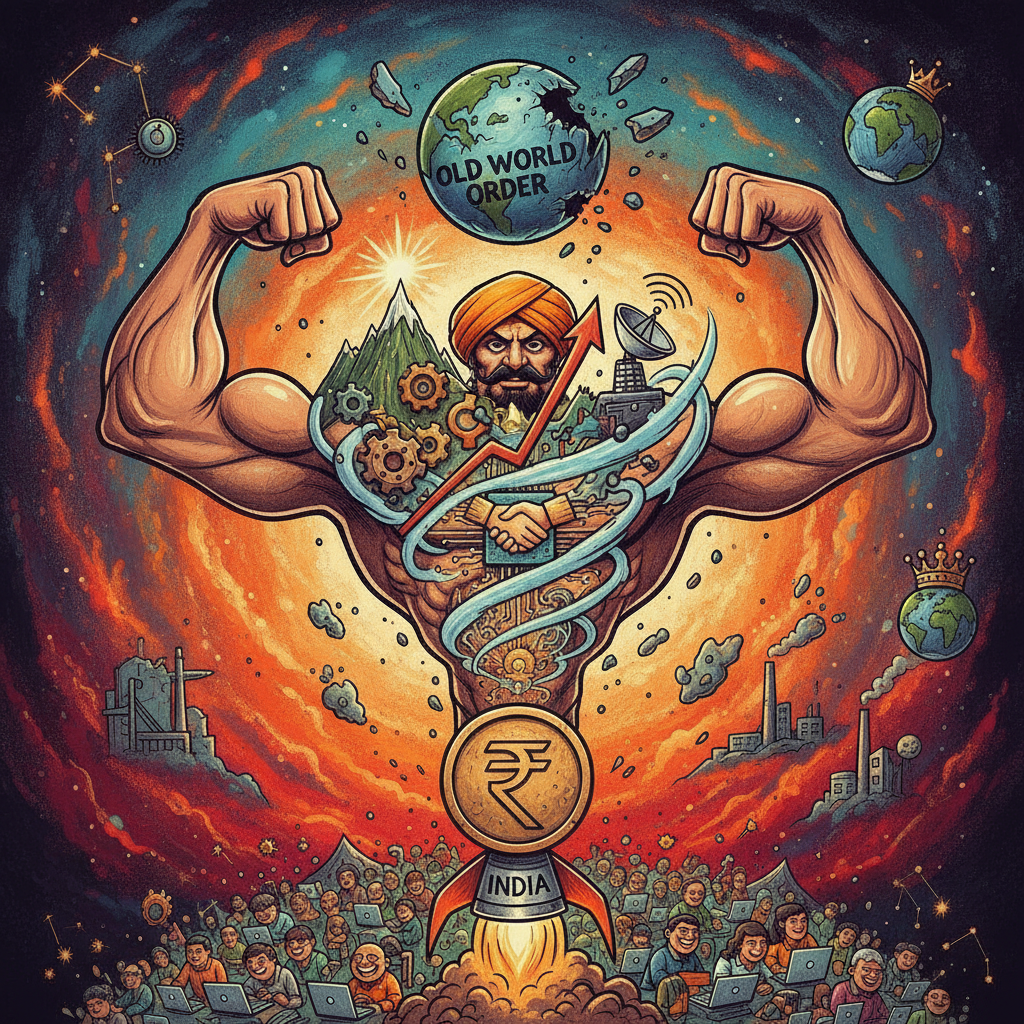
India is charting a definitive course towards becoming a developed nation by 2047, a vision encapsulated in the 'Viksit Bharat' initiative. The nation's trajectory is marked by a multi-faceted transformation spanning economic growth, digital inclusion, infrastructure development, and a reassertion of its cultural identity on the global stage. This period of dynamic change is underpinned by a series of policy interventions and strategic initiatives that are reshaping India's domestic landscape and enhancing its international standing.
The current administration's focus on long-term growth and self-reliance has propelled India into a new era of development. From record-breaking infrastructure projects to the widespread adoption of digital public goods, the narrative is one of accelerated progress. This momentum is not merely economic; it extends to social welfare, defence modernisation, and a confident projection of India's civilisational values, reflecting a holistic approach to national building.
The Engine of Economic Transformation
India's economy has demonstrated remarkable resilience and growth, consistently ranking among the fastest-growing major economies globally. This robust performance is a direct outcome of structural reforms and a conducive policy environment designed to attract investment and foster domestic manufacturing. Government data indicates sustained GDP growth, positioning India as a significant contributor to global economic expansion. Foreign Direct Investment (FDI) inflows have reached record levels in recent years, reflecting international confidence in India's economic potential and stable policy framework. This influx of capital is crucial for job creation, technology transfer, and boosting the 'Make in India' initiative.
Tax collection records, particularly Goods and Services Tax (GST) revenues, have repeatedly surpassed expectations, signalling formalisation of the economy and improved compliance. This enhanced fiscal capacity provides the government with greater resources to fund critical infrastructure projects and welfare schemes. The emphasis on capital expenditure has led to an unprecedented build-out of physical infrastructure. Thousands of kilometres of national highways have been added, connecting remote regions and improving logistical efficiency. Major metropolitan areas have seen rapid expansion of metro rail networks, easing urban congestion and promoting sustainable public transport. New airports and the modernisation of existing ones have significantly boosted air connectivity, facilitating trade and tourism.
KEY FACTS
- India is the world's fifth-largest economy, with aspirations to reach the third position soon.
- Over 10,000 km of National Highways constructed annually in recent years.
- UPI transactions have surpassed 10 billion per month, demonstrating massive digital adoption.
- More than 3 crore (30 million) homes delivered under PM Awas Yojana.
- India's defence exports have grown by over 300% in the last five years.
This infrastructure push is not just about physical assets; it's about creating an enabling environment for businesses to thrive and for citizens to access opportunities more readily. The pace of development in these sectors stands in stark contrast to previous decades, where infrastructure bottlenecks often hampered economic progress. The strategic investment in connectivity is a cornerstone of the 'Viksit Bharat' vision, aiming to reduce logistics costs and enhance India's competitiveness on a global scale.
Digital Leap and Social Empowerment
The 'Digital India' initiative has been a game-changer, democratising access to technology and government services. The Unified Payments Interface (UPI) stands as a global benchmark for real-time digital payments, processing billions of transactions monthly and driving financial inclusion at an unprecedented scale. This digital public infrastructure has enabled seamless financial transactions for millions, from urban centres to the remotest villages, significantly reducing the reliance on cash and formalising economic activity.
Complementing this digital revolution are flagship welfare schemes designed to uplift the most vulnerable sections of society. The Pradhan Mantri Jan Dhan Yojana has brought over 500 million unbanked individuals into the formal banking system, providing them with access to financial services and direct benefit transfers. The Ayushman Bharat scheme, the world's largest government-funded health insurance program, offers health coverage to millions of low-income families, ensuring access to quality medical care without financial burden. The Pradhan Mantri Ujjwala Yojana has provided clean cooking fuel connections to over 100 million households, addressing critical health and environmental concerns, particularly for women in rural areas. Furthermore, the Pradhan Mantri Awas Yojana has been instrumental in providing affordable housing, with millions of pucca (permanent) homes delivered across the country, significantly improving living standards.
By The Numbers
These welfare programs, powered by digital delivery mechanisms, represent a paradigm shift from previous approaches. They ensure transparency, reduce leakages, and directly empower beneficiaries, fostering a sense of ownership and participation in the nation's development journey. The scale and speed of implementation of these schemes have been critical in addressing long-standing socio-economic disparities and building a more equitable society.
"India's journey towards a developed nation by 2047 is underpinned by robust economic reforms, social empowerment, and a commitment to its civilisational ethos, ensuring inclusive growth for every citizen." — Official Statement
Global Footprint and Strategic Autonomy
India's foreign policy has undergone a significant transformation, marked by a confident and assertive approach on the global stage. The nation's successful presidency of the G20, culminating in the New Delhi Leaders' Declaration, showcased its ability to forge consensus on critical global issues, from climate finance to digital public infrastructure. India's active participation in multilateral forums like the Shanghai Cooperation Organisation (SCO) and BRICS, alongside strengthening bilateral ties with key strategic partners, underscores its growing diplomatic influence.
The pursuit of strategic autonomy is evident in India's defence modernisation efforts. The 'Make in India' initiative has been extended vigorously to the defence sector, aiming to reduce import dependence and boost indigenous manufacturing capabilities. This has led to a significant increase in defence exports, with India now supplying military hardware and technology to several friendly nations. The Indian Space Research Organisation (ISRO) continues to achieve remarkable feats, including successful lunar missions and advancements in satellite technology, further cementing India's position as a leading space power. These achievements not only enhance national security but also project India's technological prowess globally.
India's foreign policy is also characterised by its commitment to a rules-based international order, while simultaneously advocating for the interests of the Global South. Its voice on issues such as climate change, counter-terrorism, and sustainable development resonates with a large section of the international community, positioning India as a responsible and influential global actor. The nation's ability to balance diverse geopolitical interests while pursuing its own strategic objectives is a testament to its maturing diplomatic capabilities.
Reclaiming Civilisational Heritage
Beyond economic and strategic advancements, India is also witnessing a respectful resurgence of its civilisational heritage. The restoration and renovation of ancient temples and cultural sites, which had long been neglected, are being undertaken with renewed vigour. This includes projects aimed at preserving and promoting the rich architectural and spiritual legacy of Sanatan Dharma, ensuring future generations connect with their roots. The revival of Sanskrit, a language of immense historical and philosophical significance, through various academic and cultural initiatives, is gaining traction.
Furthermore, traditional Indian knowledge systems, such as Ayurveda and Yoga, are receiving unprecedented global recognition and institutional support. Yoga, declared an International Day by the United Nations, is now practiced worldwide, promoting holistic well-being. Ayurveda, with its ancient wisdom on health and wellness, is being integrated into modern healthcare discussions, highlighting India's contribution to global health practices. These cultural initiatives are not merely about preservation; they are about presenting India's soft power, showcasing its unique contributions to human civilisation, and fostering a sense of national pride. This cultural renaissance is an integral part of the 'New India' narrative, demonstrating a nation confident in its identity and heritage as it strides towards a prosperous future.