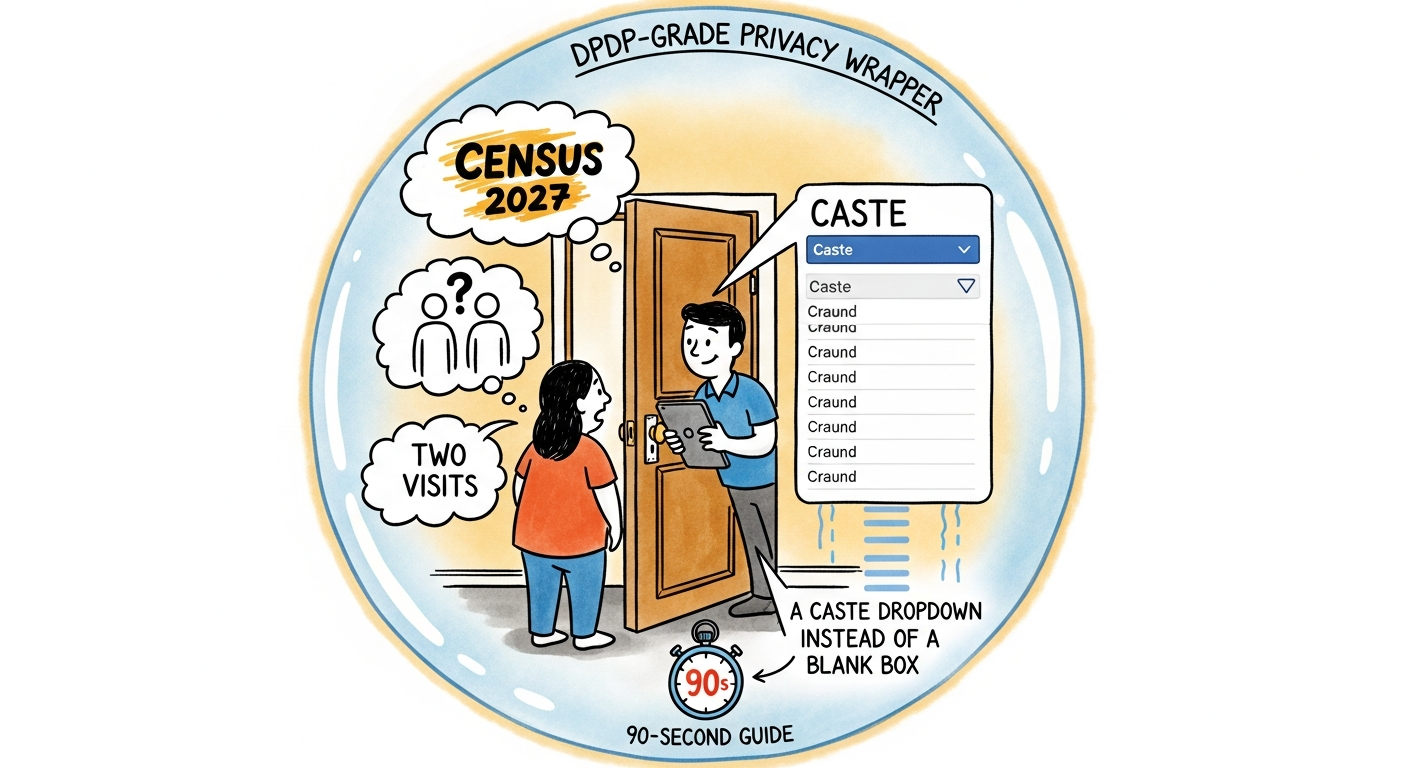
The knock comes twice. Visit one maps your house; visit two counts your household — and for the first time since 1931, asks caste. The field manual issued this week settles how.
The caste question is a dropdown, not a blank. Enumerators record against pre-loaded registries — central and state OBC lists, SC/ST schedules — killing the 46-lakh-spellings chaos that sank the 2011 attempt. Say a name outside the registry and it goes to a flagged file for state-level reconciliation, not into the data raw.
Your answers get DPDP-grade handling: sensitive-category storage, aggregation thresholds below which no number is published. The privacy architecture is new; the anxieties it answers are old.
Why it matters beyond the count: delimitation begins on this data, quota debates will cite it for a generation, and the women's-reservation rollout waits on its completion. One census, three constitutional dominoes.
Training begins January; enumeration follows the school calendar north to south. The next time India argues about who it is, both sides will be quoting this manual. Context on our India desk.



