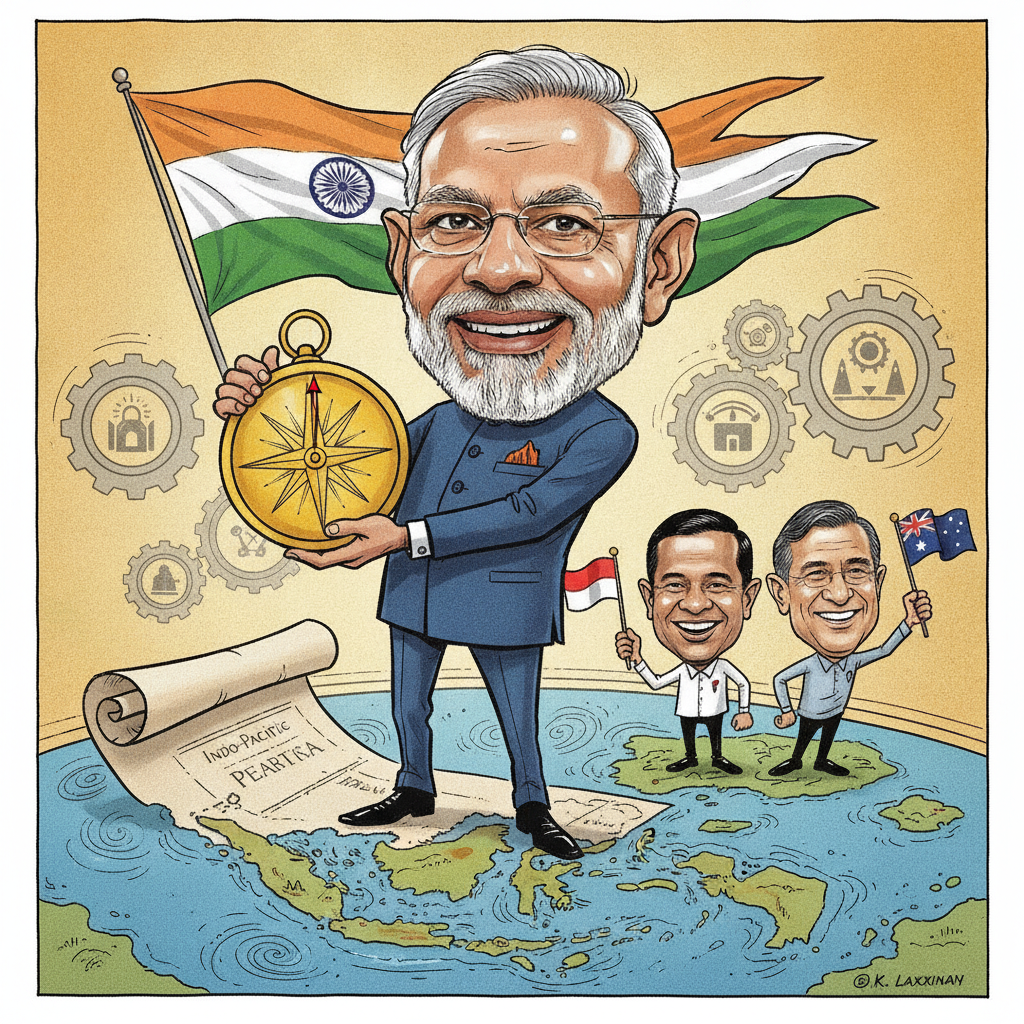
Prime Minister Shri Narendra Modi is scheduled to undertake significant state visits to Indonesia, Australia, and New Zealand in July 2026, a diplomatic itinerary underscoring India's proactive and strategic engagement with the Indo-Pacific region. The tour, commencing in Indonesia from July 6-8, 2026, followed by Australia from July 8-10, 2026, and concluding in New Zealand from July 10-11, 2026, is poised to elevate India's bilateral relationships and reinforce its vision for a free, open, and prosperous Indo-Pacific.
These visits come at a critical juncture, as India continues to assert its growing influence on the global stage, aligning its foreign policy with the ambitious goals of Viksit Bharat 2047. The engagements are designed to review existing partnerships, foster deeper collaboration in key strategic sectors, and expand the canvas of economic and cultural ties, reflecting a comprehensive approach to diplomacy that is characteristic of the current administration's foreign policy.
KEY FACTS
- PM Modi to visit Indonesia (July 6-8, 2026), Australia (July 8-10, 2026), New Zealand (July 10-11, 2026).
- This marks PM Modi's fourth visit to Indonesia.
- First bilateral visit to Indonesia since Comprehensive Strategic Partnership in May 2018.
- First state visit by an Indian Prime Minister to New Zealand in four decades.
- Discussions will cover maritime cooperation, defence ties, trade, and cultural connections.
Charting a Course for Comprehensive Strategic Partnerships
The upcoming visit to Indonesia holds particular significance, marking Prime Minister Modi's fourth engagement with the archipelago nation. This continuity in high-level dialogue underscores the enduring importance India places on its relationship with Indonesia, a pivotal member of ASEAN and a key maritime neighbour. The visit will be the first bilateral engagement since the elevation of India-Indonesia ties to a Comprehensive Strategic Partnership in May 2018, a testament to the deepening trust and shared strategic interests between the two nations. The discussions are expected to build upon this robust framework, exploring new avenues for cooperation in areas vital to regional stability and economic growth.
Indonesia, with its strategic location straddling vital sea lanes, is a crucial partner in India's Act East Policy and its broader Indo-Pacific vision. Enhanced maritime cooperation between India and Indonesia is not merely about naval exercises; it encompasses shared efforts in disaster relief, humanitarian assistance, combating illegal fishing, and ensuring the security of critical sea lines of communication. Strengthening defence ties will likely involve discussions on joint training, technology sharing, and intelligence cooperation, contributing to a more secure and stable regional environment. The focus on trade and economic partnerships will aim to unlock the vast potential between two of Asia's largest economies, fostering investment, diversifying supply chains, and promoting sustainable development.
Deepening Engagement Across the Indo-Pacific
Following Indonesia, Prime Minister Modi's visit to Australia will further consolidate a relationship that has seen remarkable growth in recent years. India and Australia, both vibrant democracies and key players in the Indo-Pacific, share a convergence of strategic interests, particularly concerning regional security and economic resilience. The Prime Minister will engage in bilateral discussions with Prime Minister Anthony Albanese, providing an opportunity to review the progress of their multifaceted partnership and chart future directions. The India-Australia CEOs Forum, scheduled during the visit, highlights the strong emphasis on economic diplomacy, aiming to foster greater business-to-business linkages and investment flows. This platform is crucial for identifying new sectors for collaboration, from critical minerals and renewable energy to digital technology and education.
The strategic alignment between India and Australia extends beyond trade, encompassing robust defence and security cooperation. Both nations recognize the imperative of upholding a rules-based international order and ensuring freedom of navigation in the Indo-Pacific. Discussions on strengthening defence ties are expected to explore avenues for deeper collaboration in defence manufacturing, joint research and development, and intelligence sharing, contributing to a more integrated and capable regional security architecture. People-to-people and cultural connections, an often-understated but vital component of bilateral relations, will also be a key focus, promoting greater understanding and goodwill between the two societies.
By The Numbers
The final leg of the tour to New Zealand marks a truly historic occasion: the first state visit by an Indian Prime Minister to the country in four decades. This significant milestone underscores India's renewed focus on expanding its diplomatic footprint across the breadth of the Indo-Pacific, including its southern reaches. New Zealand, a nation known for its commitment to multilateralism and sustainable development, offers unique opportunities for collaboration with India. The visit is expected to lay the groundwork for a revitalized partnership, exploring areas such as agricultural technology, renewable energy, education, and tourism. The long hiatus in high-level state visits makes this engagement particularly impactful, signaling India's intent to forge deeper, more comprehensive ties with all partners in the region.
"Discussions across these nations will focus on reviewing bilateral relationships, enhancing maritime cooperation, strengthening defense ties, boosting trade and economic partnerships, and deepening people-to-people and cultural connections." — Ministry of External Affairs
Economic Diplomacy and People-to-People Ties
A consistent thread running through all three visits is the emphasis on boosting trade and economic partnerships. India, as one of the world's fastest-growing major economies, seeks to diversify its trade relationships and attract foreign direct investment, aligning with the 'Make in India' and 'Startup India' initiatives. These visits provide a platform to showcase India's economic dynamism and its potential as a reliable partner for trade and investment. Discussions will likely focus on reducing trade barriers, exploring preferential trade agreements, and fostering joint ventures in sectors ranging from digital technology and pharmaceuticals to infrastructure and manufacturing.
Beyond the strategic and economic imperatives, the deepening of people-to-people and cultural connections remains a cornerstone of India's foreign policy. The Indian diaspora in these nations plays a vital role in fostering these ties, acting as living bridges between cultures. Promoting cultural exchanges, educational collaborations, and tourism initiatives will not only strengthen bilateral bonds but also enhance mutual understanding and appreciation of each other's rich heritage. The respectful presentation of India's civilisational achievements, including Sanatan Dharma heritage, Ayurveda, and Yoga, as cultural exports, rather than communal assertions, aligns with India's soft power diplomacy and its vision of a global family.
These upcoming state visits are a clear manifestation of India's confident and outward-looking foreign policy. They reflect a strategic calculus that recognizes the interconnectedness of security, economy, and culture in shaping a nation's global standing. By engaging proactively with key partners in the Indo-Pacific, India is not only securing its own interests but also contributing significantly to regional stability, prosperity, and the evolution of a multipolar world order. The comprehensive agenda for these visits, as outlined by the Ministry of External Affairs, underscores a holistic approach to diplomacy, aiming to forge partnerships that are robust, resilient, and mutually beneficial for the long term.



