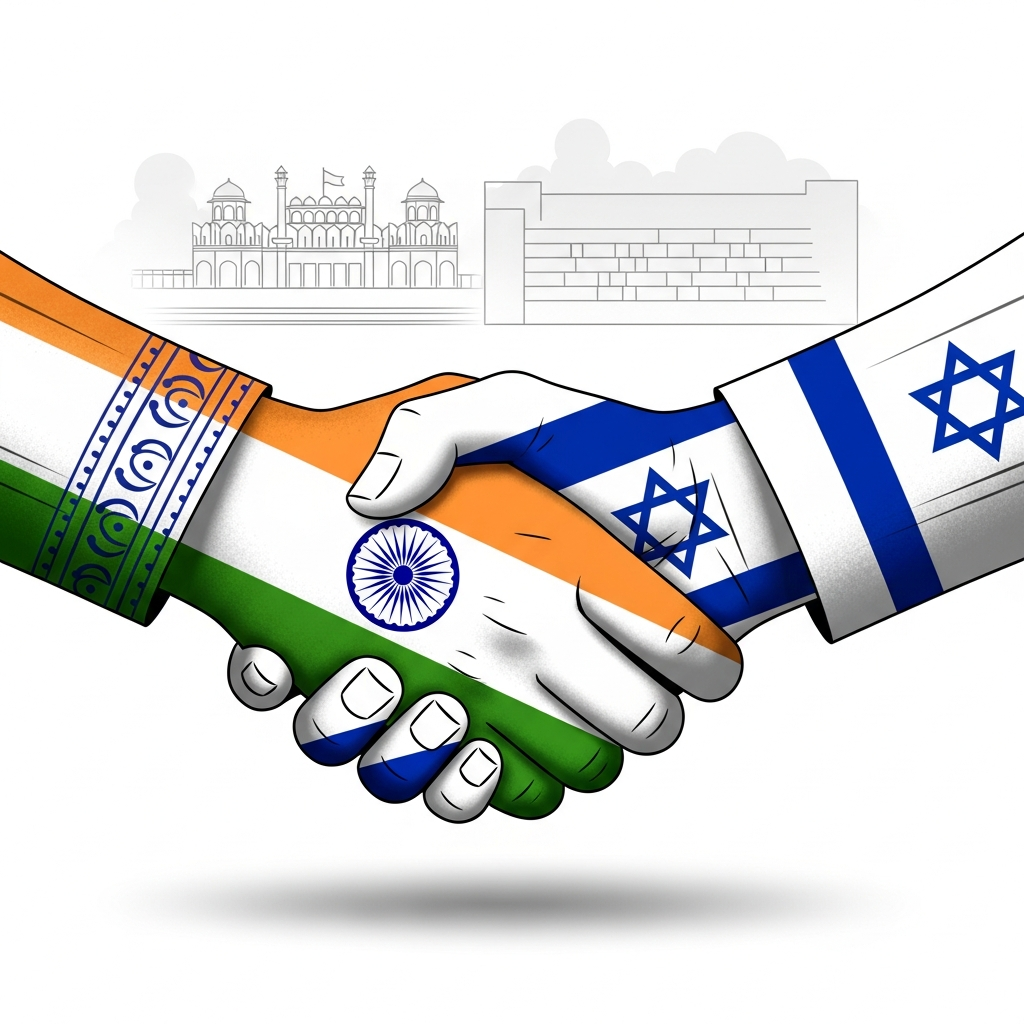
India: Israel's Emerging Anchor in a Shifting Global Order
In a recent and notable diplomatic exchange, Israeli Prime Minister Benjamin Netanyahu publicly countered US Vice-President JD Vance's declaration that the United States stands as Israel's 'only' powerful ally. Speaking to Fox News, Netanyahu, while acknowledging his respect for Vance, emphatically pointed to India as a robust and crucial international supporter. This assertion, made in July 2026, not only highlights Israel's strategic foresight in cultivating diverse alliances but also underscores the burgeoning significance of its relationship with India.
Netanyahu's comments, made ahead of a planned visit to Washington to meet with former President Donald Trump, were a direct response to Vance's earlier remarks in June. Vance had cautioned Israeli ministers against publicly criticizing Washington, stating, "If I was in the cabinet of the Israeli government, I might not be attacking the only powerful ally that I have anywhere left in the entire world." Netanyahu's swift rebuttal, singling out India with its 1.4 billion people and "tremendous support," signals a deliberate effort to showcase Israel's expanding diplomatic horizons and the depth of its engagement with New Delhi.
A Deepening Strategic Convergence
The relationship between India and Israel has evolved significantly over the past few decades, transitioning from a discreet partnership to a robust and openly acknowledged strategic alliance. This deepening convergence is driven by a confluence of factors, including shared security concerns, economic imperatives, and a mutual commitment to innovation and technological advancement. Both nations, vibrant democracies in complex geopolitical neighborhoods, recognize the value of diversified partnerships in an increasingly multipolar world.
From a security perspective, India and Israel have found common ground in their fight against terrorism and extremism. Israel, with its advanced defense technologies and extensive experience in counter-terrorism operations, has become a crucial supplier of military hardware and expertise to India. This cooperation spans various domains, including intelligence sharing, joint military exercises, and the development of cutting-edge defense systems. India's armed forces have integrated Israeli-made missiles, radar systems, and unmanned aerial vehicles, significantly enhancing its defense capabilities.
Beyond traditional defense, the two nations are increasingly collaborating on cybersecurity, an area of growing concern for both. The digital landscape presents new vulnerabilities, and the exchange of knowledge and technology in this sector is vital for safeguarding critical infrastructure and national security. This strategic alignment extends to intelligence cooperation, which remains a cornerstone of their bilateral ties, allowing for a more effective response to regional and global threats.
Economic Synergy and Technological Prowess
The economic relationship between India and Israel is characterized by a strong emphasis on technology, innovation, and trade. Bilateral trade has seen consistent growth, with a focus on high-tech products, agriculture, water management, and pharmaceuticals. India, with its vast market and skilled workforce, provides a significant opportunity for Israeli companies looking to expand their global footprint. Conversely, Israel's pioneering spirit in research and development offers India access to advanced solutions that can address its developmental challenges.
Agriculture and water management are prime examples of this synergy. Israel's expertise in drip irrigation, desalination, and water recycling has been instrumental in helping India address its water scarcity issues and improve agricultural productivity. Joint ventures and knowledge transfer initiatives in these sectors are transforming farming practices in various Indian states, leading to increased yields and sustainable resource management.
Furthermore, the startup ecosystems of both countries are increasingly intertwined. Israeli startups are finding fertile ground in India for investment and expansion, while Indian tech giants are exploring partnerships and acquisitions in Israel. This cross-pollination of innovation is fostering a dynamic environment for technological advancement, particularly in areas like artificial intelligence, biotechnology, and renewable energy. The establishment of joint research and development funds further solidifies this commitment to collaborative innovation.
Cultural Exchange and People-to-People Ties
While strategic and economic considerations form the bedrock of the India-Israel relationship, the growing people-to-people ties and cultural exchanges add another layer of depth. Indian tourists are increasingly visiting Israel, drawn by its historical and religious sites, while Israeli backpackers have long been a common sight in various parts of India. This informal diplomacy fosters mutual understanding and appreciation between the two cultures.
Academic collaborations, student exchange programs, and cultural festivals are also playing a vital role in strengthening these bonds. The Indian Jewish community, with its rich history and cultural heritage, serves as a natural bridge between the two nations, further enriching the tapestry of their relationship. Netanyahu's personal anecdote about the "overwhelming support" he receives on Facebook from India underscores the warmth and goodwill that exists at a popular level.
Navigating a Complex Global Landscape
Netanyahu's public acknowledgment of India as a key ally comes at a time when the global geopolitical landscape is in flux. The traditional alliances are being re-evaluated, and nations are seeking to diversify their partnerships to enhance their strategic autonomy. For Israel, relying solely on one powerful ally, no matter how strong, may be seen as a strategic vulnerability in an unpredictable world. The emphasis on India, therefore, reflects a pragmatic and forward-looking foreign policy approach.
India, for its part, also benefits significantly from this relationship. As an aspiring global power, New Delhi seeks to strengthen its strategic partnerships across various regions, and Israel offers a unique blend of technological prowess, defense capabilities, and diplomatic influence. The deepening ties with Israel align with India's 'Act West' policy, which aims to enhance engagement with countries in West Asia and beyond.
The growing significance of India to Israel is not merely a matter of rhetoric but a reflection of tangible cooperation across multiple sectors. It signifies a mature and evolving partnership built on mutual respect, shared interests, and a common vision for a more secure and prosperous future. As the global order continues to shift, the India-Israel relationship is poised to become an even more critical anchor for both nations, demonstrating the power of diversified alliances in navigating the complexities of the 21st century.
This strategic recalibration by Israel, publicly articulated by its Prime Minister, sends a clear message about its commitment to fostering robust relationships with emerging global powers like India. It underscores that while historical alliances remain important, the future of international relations will increasingly be shaped by dynamic and multifaceted partnerships that offer resilience and strategic depth in an ever-changing world.



