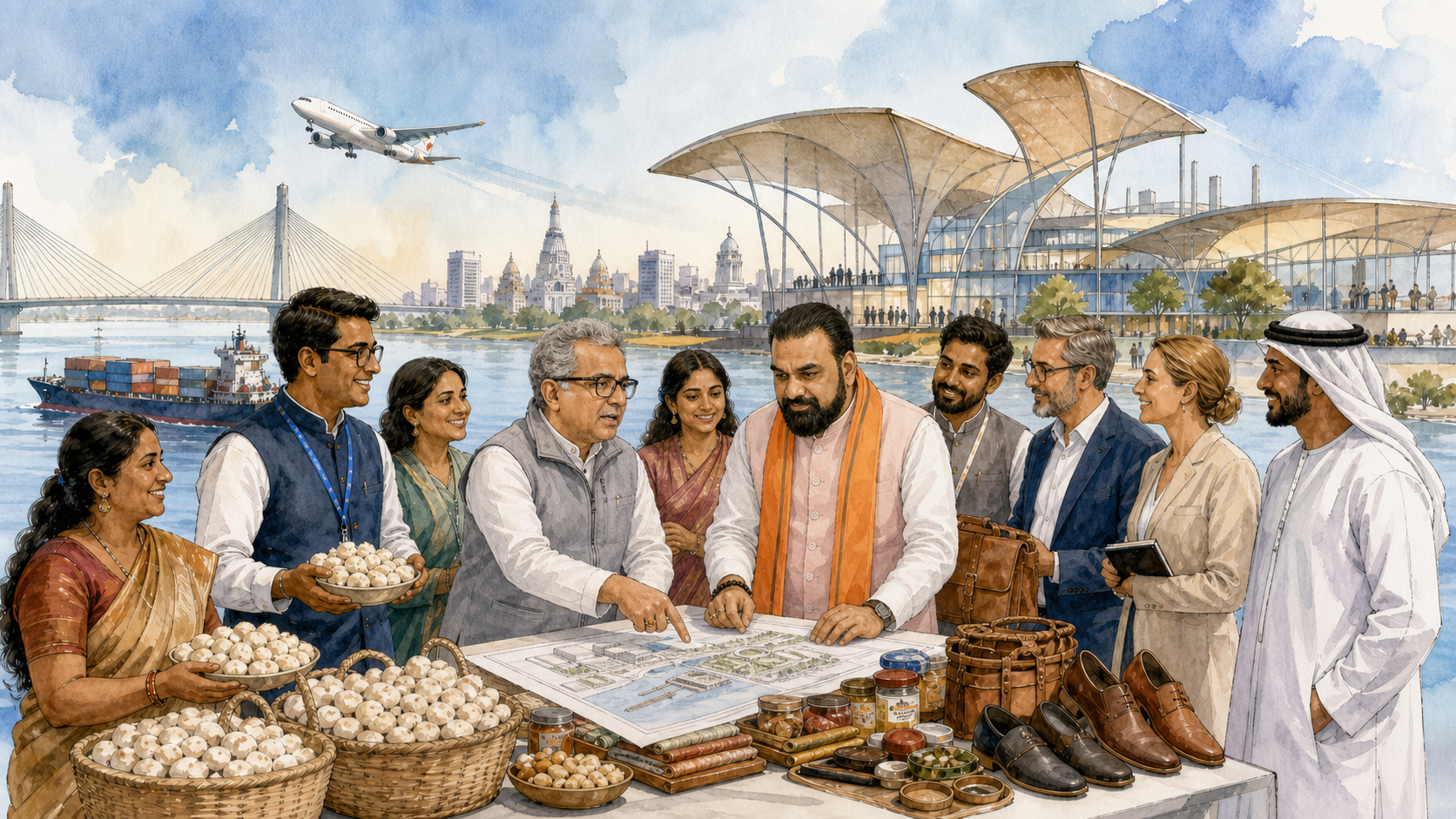
Over the past few years, Bihar’s economic narrative has begun shifting from consumption-driven demand toward structured industrialisation. Successive editions of Bihar Business Connect have signalled the state’s ambition to attract private capital, formalise manufacturing ecosystems, and position eastern India as an emerging trade corridor. Yet, as industrial estates expand across Muzaffarpur, Bhagalpur, and Patna, a critical institutional deficit remains: the absence of a centralised, world-class trade facilitation and export ecosystem. In this landscape, the conceptualisation of a credible World Trade Centre (WTC) in Patna represents not merely commercial real estate, but an indispensable policy instrument for trade-led growth.
The Missing Link in Eastern India's Export Architecture
Bihar accounts for a substantial share of India’s agricultural output and a growing manufacturing footprint in light engineering, leather, and textiles. However, its direct share in national merchandise exports remains disproportionately low, often hovering below one percent. A significant portion of this gap is structural. Exporters from Bihar frequently route shipments through clearing agencies and commercial intermediaries based in Kolkata, Mumbai, or Delhi, resulting in higher transaction costs, margin erosion, and lost brand origin equity.
A modern World Trade Centre acts as a multi-dimensional economic hub. Under the framework of the World Trade Centers Association (WTCA)—an international network spanning nearly 100 countries—such facilities provide reciprocal global linkages, matchmaking platforms, commercial dispute mediation, and export intelligence. Establishing an accredited trade centre in Patna would integrate regional producers into this worldwide network, bringing trade missions, international buyers, and global supply chain orchestrators directly to the state.
Empowering Agrarian GI Clusters and MSMEs
The immediate beneficiaries of a dedicated international trade terminal would be Bihar’s micro, small, and medium enterprises (MSMEs), which constitute the backbone of its non-farm economy. The state holds distinct competitive advantages in high-value, geographically unique agricultural produce. Mithila Makhana (fox nuts), Shahi Litchi, Katarni Rice, Magahi Paan, and Zardalu Mango all enjoy Geographical Indication (GI) status but face severe friction in navigating global non-tariff barriers, packaging standards, and phytosanitary certifications.
A credible trade centre is not defined by architectural scale, but by its capacity to reduce transaction costs for the smallest producer seeking a global buyer.
An integrated trade hub could host dedicated export certification desks, cold-chain logistics facilitators, and international food testing laboratories. For the Makhana sector—which produces over 85 percent of the world's supply—direct buyer-seller interfaces facilitated through WTCA channels would allow local cooperatives to bypass several layers of domestic aggregators, capturing maximum value at the farm-gate level.
Revitalising Textiles, Leather, and Craft Ecosystems
Beyond agro-processing, traditional industrial clusters stand to gain substantial momentum. Bhagalpur’s silk cluster, the leather goods ecosystem in Muzaffarpur, and artisan handicraft networks specialising in Madhubani painting and Sikki grass crafts require direct exposure to high-end design houses, foreign retail chains, and international sourcing fairs. A World Trade Centre provides permanent exhibition infrastructure, trade convention facilities, and digital trade catalogues that allow seasonal and artisan-driven clusters to secure year-round international orders.
Furthermore, as textile manufacturers set up operations under the state's plug-and-play industrial infrastructure policies, a centralised export node in Patna would offer crucial back-office support: export documentation, customs coordination, export credit insurance desks through ECGC, and foreign exchange hedging services for emerging exporters.
Building on Institutional Precedents
The foundation for such an ecosystem is not entirely uninitiated. Engagement between regional trade bodies and international networks has previously found expression at state policy platforms. Notably, during Bihar Business Connect 2023, representatives from the World Trade Center Surat participated in state-level discussions, exploring avenues to connect Bihar’s local trade bodies with established WTCA networks across Western and Southern India. Transitioning these preliminary dialogues into a permanent, institutional presence in Patna represents the natural evolution of the state's investment promotion policy.
To be effective, any future trade centre must be closely synchronised with regional logistics assets. Patna's proximity to Inland Container Depots (ICDs) such as Bihta, the expanding national highway network, and the inland waterways terminal on the Ganga provides the physical foundation. The WTC would provide the soft infrastructure: institutional connectivity, market intelligence, and global credibility.
The Road Ahead: Ecosystem Over Infrastructure
Policy planners must approach the idea of a World Trade Centre with an emphasis on functional utility rather than mere physical development. The project’s viability will depend on active public-private collaboration, seamless integration with the state’s single-window clearance mechanisms, and sustained capacity building for local entrepreneurs. As India targets two trillion dollars in combined exports by 2030, hinterland states must build the institutional machinery necessary to link grassroots production with global commerce. For Bihar, an accredited, well-governed trade centre in Patna could mark the decisive transition from an inward-focused economy to a globally competitive trading hub.



