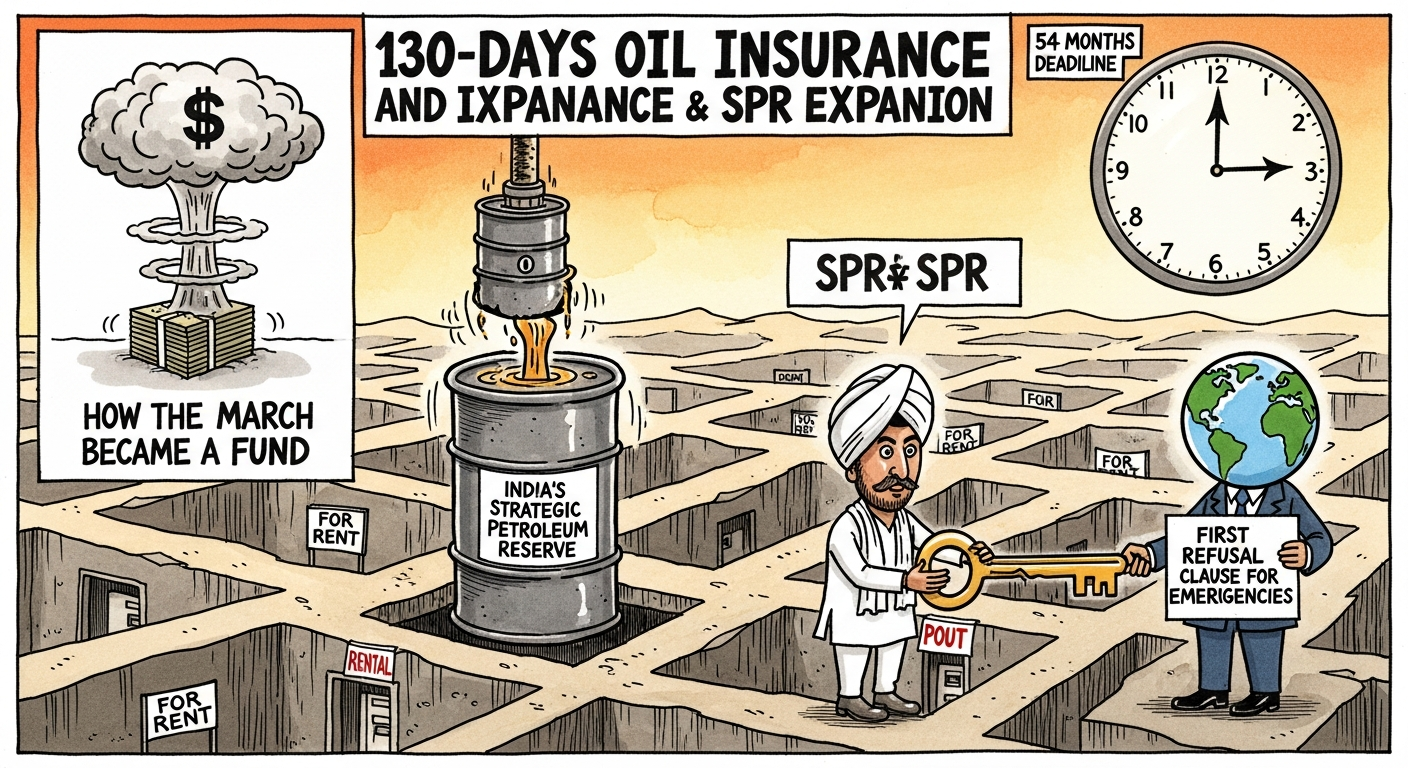
In March, with the strait shut, India held 74 days of total oil cover — and only 9.5 in the reserve the government could directly command. The energy ledger calls what followed "insurance bought early": the SPR expansion tender is that policy's paperwork.
The design is the interesting part. New caverns at Mangalore and Padur run a hybrid model — two-thirds sovereign stock, one-third leased to traders and foreign oil companies, with a first-refusal clause that lets Delhi commandeer leased barrels in a declared emergency. Lease revenue funds roughly 40 percent of the build; commercial cycling keeps the crude fresh.
Phase two moves inland: salt caverns in Rajasthan piped to the refinery grid, and a Bay of Bengal site that exits Arabian Sea chokepoints entirely. Geography is the real diversification.
The timeline is the aggressive clause: first fill in 54 months, bonus-penalty contracts borrowed from the freight corridors, three international consortia pre-qualified.
Judgment day is defined in advance: the next time the strait closes, the drawdown math goes public within days. Insurance is only ever graded at claim time. Context on the economy desk.



