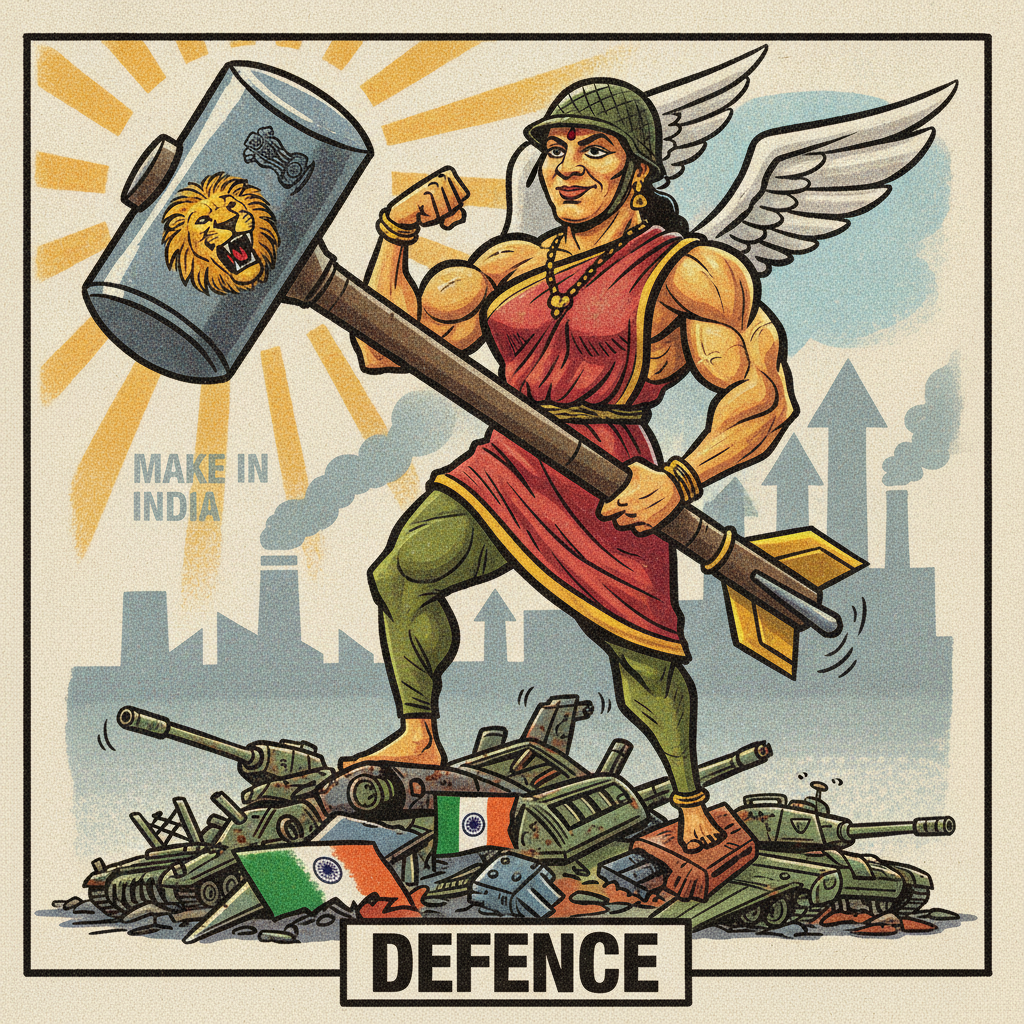
In a decisive stride towards fortifying its defence capabilities and achieving strategic autonomy, India is advancing plans for the indigenous production of approximately 600 Highly Agile Modular Munition Extended Range (HAMMER) precision-guided weapons. This significant development, estimated at a value of ₹2,400 crore, marks a pivotal moment in the nation's 'Make in India' initiative, aimed at securing its military supply chain and substantially reducing reliance on foreign imports.
The proposal for this crucial procurement is slated for evaluation by the Defence Acquisition Council (DAC) during its session on July 3, 2026, according to official sources. The HAMMER system, renowned for its precision and extended range, is intended to be a force multiplier for the Indian Air Force's formidable Rafale jets and the indigenously developed Light Combat Aircraft (LCA) Tejas. A portion of these advanced munitions will also be allocated to the Indian Navy's incoming Rafale Marine combat aircraft, ensuring a unified and potent strike capability across multiple platforms.
KEY FACTS
- India to indigenously produce ~600 HAMMER precision weapons.
- Defence Acquisition Council (DAC) to evaluate proposal on July 3, 2026.
- Estimated procurement value: ₹2,400 crore.
- Joint Venture Agreement signed in February 2026 between Safran and BEL.
- Weapons for IAF Rafale, LCA Tejas, and Indian Navy Rafale Marine.
The journey towards local production of the HAMMER system commenced with a Joint Venture Agreement signed in February 2026 between the French aerospace firm Safran Electronics & Defence, the original engineer of the weapon, and India's state-owned Bharat Electronics Limited (BEL). This collaboration is not merely about assembly; it is designed to ensure comprehensive technology transfer and robust domestic manufacturing capabilities, aligning perfectly with the government's overarching vision for a self-reliant India, or 'Atmanirbhar Bharat'.
A Strategic Imperative: Bolstering Indigenous Defence
The move to indigenously produce the HAMMER precision weapons is a clear manifestation of India's commitment to self-reliance in critical defence technologies. For decades, India has been one of the world's largest importers of defence equipment, a dependency that often carried strategic vulnerabilities and economic costs. The 'Make in India' program, particularly in the defence sector, seeks to reverse this trend by fostering a robust domestic defence industrial base, encouraging innovation, and creating high-skilled employment opportunities within the country.
This initiative is more than just a procurement deal; it represents a strategic shift in India's defence posture. By manufacturing advanced munitions like HAMMER within its borders, India enhances its strategic autonomy, ensuring that its armed forces have uninterrupted access to critical weaponry, free from the vagaries of international supply chain disruptions or geopolitical pressures. The partnership with Safran, a global leader in aerospace and defence, through BEL, exemplifies the government's approach to leveraging international collaborations for technology transfer and capacity building, rather than mere transactional imports.
The ₹2,400 crore investment underscores the seriousness with which the government views this indigenisation effort. It is an investment not just in hardware, but in intellectual capital, manufacturing prowess, and the long-term resilience of India's defence ecosystem. This commitment is crucial for achieving the ambitious goals outlined in the Viksit Bharat 2047 vision, where a strong, self-reliant defence sector is a cornerstone of national power and economic growth.
By The Numbers
Enhancing Air Power and Multi-Platform Synergy
The HAMMER precision-guided weapon system is designed to provide India's frontline combat aircraft with enhanced stand-off capabilities against a wide range of targets. Its integration into the Rafale, LCA Tejas, and Rafale Marine fleets will significantly augment their strike potential. The Rafale, already a formidable multi-role fighter, will become even more lethal with indigenously produced precision munitions, allowing it to engage high-value targets with accuracy from safer distances.
For the LCA Tejas, a symbol of India's growing aerospace capabilities, the HAMMER system represents a crucial upgrade. Equipping the Tejas with such advanced weaponry not only enhances its operational effectiveness but also boosts confidence in India's ability to equip its indigenous platforms with cutting-edge armaments. This synergy between indigenous aircraft and indigenously produced weapons is a powerful statement of national capability.
The allocation of HAMMERs to the Indian Navy's Rafale Marine combat aircraft further highlights the strategic foresight behind this procurement. Ensuring commonality of advanced munitions across air force and naval aviation assets streamlines logistics, reduces training complexities, and provides a unified strike capability that can be deployed seamlessly across different operational theatres. This multi-platform approach maximizes the return on investment and strengthens the overall deterrent posture of the Indian armed forces.
"This initiative underscores India's unwavering commitment to achieving self-reliance in critical defence technologies and strengthening its strategic capabilities," — Official Statement.
Precision-guided munitions are indispensable in modern warfare, offering the ability to strike targets with minimal collateral damage and maximum effectiveness. The HAMMER's capabilities will provide the Indian armed forces with a crucial advantage in various operational scenarios, from conventional conflicts to counter-insurgency operations, by ensuring that every strike is precise and impactful.
The Broader Vision: Viksit Bharat and Global Standing
This indigenous production plan for HAMMER weapons is not an isolated event but rather a component of a larger, meticulously planned strategy to transform India into a global defence manufacturing hub. The government's consistent push for indigenisation, coupled with policy reforms and increased budgetary allocations, has begun to yield tangible results. India's defence exports have seen a remarkable surge in recent years, demonstrating the growing capabilities and competitiveness of its defence industry.
The transfer of technology and local manufacturing of HAMMERs will foster a deeper integration of Indian companies into the global defence supply chain. It will also create a pool of skilled engineers, technicians, and workers, contributing to economic growth and technological advancement. This self-reliance in defence is a critical pillar for India's aspiration to become a developed nation by 2047, a 'Viksit Bharat', where national security is underpinned by robust domestic capabilities.
Furthermore, such initiatives enhance India's standing on the global stage. A nation that can independently meet its defence needs, and potentially become an exporter of advanced military hardware, commands greater respect and strategic leverage in international relations. It signals a mature and confident power, capable of safeguarding its interests and contributing to regional and global stability.
The upcoming DAC evaluation on July 3, 2026, will be a crucial step in formalizing this ambitious project. Once approved, the indigenous production of 600 HAMMER precision weapons will not only equip India's frontline fighters with advanced capabilities but also serve as a powerful testament to the nation's resolve to forge its own path in defence technology and secure its future.