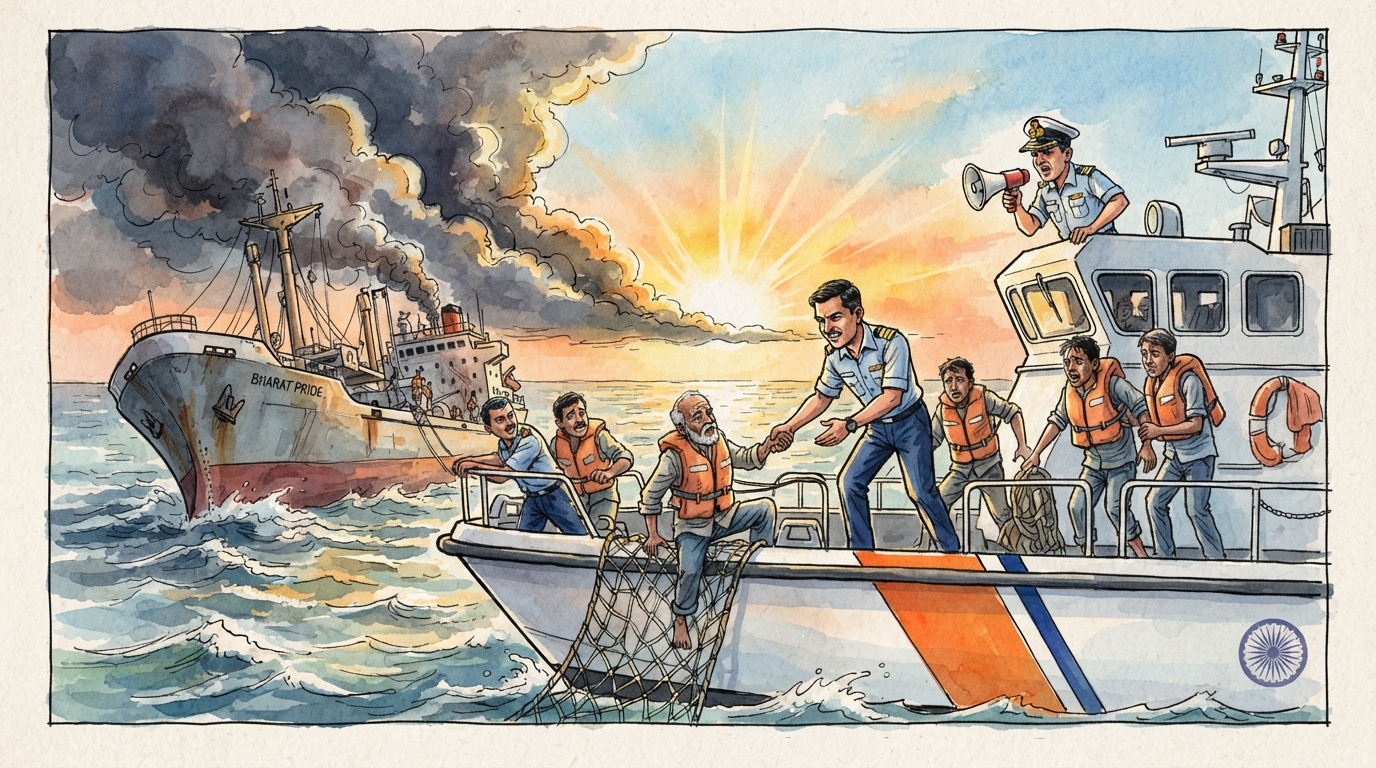
All 14 crew members of the Indian-flagged commercial vessel MSV Faize Noore Oliya were rescued after the ship was struck by a projectile and sank in the Red Sea near Yemen, Indian authorities said on August 4. Thirteen members of the crew are Indian nationals.
A DD India report said the Yemeni Coast Guard brought the rescued seafarers to the Port of Mokha. The Ministry of External Affairs condemned the attack and said the Indian Embassy in Riyadh was coordinating with Yemeni authorities.
A rescue that required fast coordination
The safe recovery of the entire crew is the central fact in this incident. Maritime emergencies unfold far from shore, often with incomplete information and limited response time. Coordination among the vessel, coast guard, diplomatic mission and maritime administration can determine whether an attack becomes a mass-casualty event.
Ports, Shipping and Waterways Minister Sarbananda Sonowal said the Director General of Maritime Administration had been instructed to coordinate assistance for the seafarers. India also thanked Yemeni authorities for the speed of their response.
Commercial crews cannot be targets
The wider concern is the recurring danger to civilian shipping. Commercial vessels carry energy, food, medicines and industrial inputs through routes on which many economies depend. Attacks increase insurance costs, force longer voyages and expose crews who have no role in the conflicts around them.
India's statement therefore went beyond the immediate rescue. The government called for an end to attacks on commercial shipping and for the restoration of free, unimpeded navigation in accordance with international law. That position is both a matter of seafarer safety and a defence of the trading system on which India relies.
The incident should prompt continued route monitoring, timely risk advisories and clear emergency protocols for Indian-flagged vessels. It should also reinforce international cooperation around rescue capacity. The crew's survival is welcome news; the conditions that placed them in danger still demand sustained attention.
Source: DD India, August 4, 2026.



