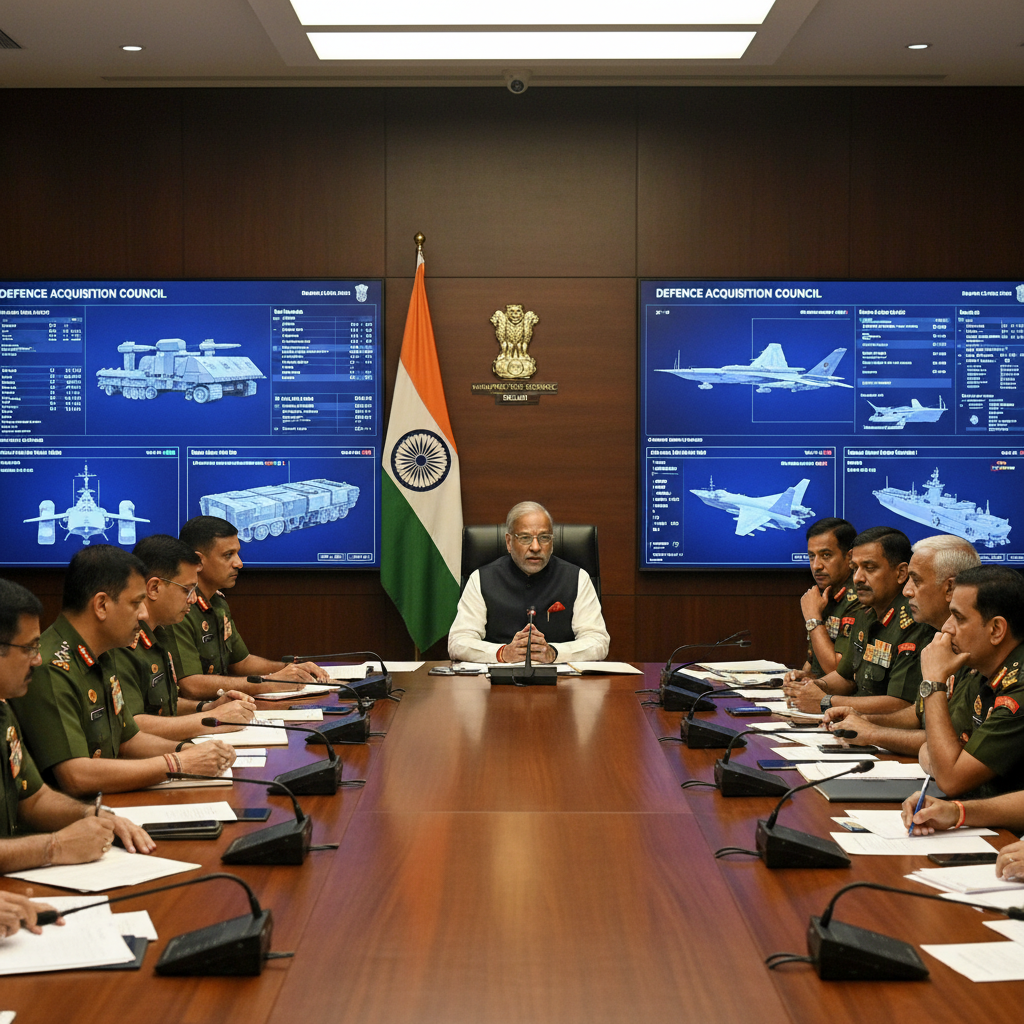
India has greenlit defence acquisitions totaling approximately $25 billion, a move that underscores the nation's ongoing efforts to strengthen its military capabilities in a complex geopolitical landscape. The Defence Acquisition Council (DAC), chaired by Defence Minister Rajnath Singh, approved the significant procurement package, which includes advanced weaponry and systems designed to enhance India's defensive posture. This decision arrives amidst escalating regional tensions and a growing need for India to maintain a credible deterrent against potential threats.
The approved acquisitions encompass a range of military hardware, with a notable emphasis on bolstering India's air defence capabilities. Among the key procurements is the acquisition of additional Russian-made S-400 long-range missile systems. The S-400, known for its advanced tracking and interception capabilities, is considered one of the most sophisticated air defence systems in the world. India's initial acquisition of the S-400 has already significantly enhanced its ability to protect its airspace from aerial threats, and the addition of more systems will further strengthen this defensive shield.
KEY FACTS
- Defence purchases worth approximately $25 billion have been approved.
- The approvals were granted by the Defence Acquisition Council.
- The purchases include additional Russian-made S-400 missile systems.
- The ministry has cleared 55 proposals worth 6.73 trillion rupees in the 2025-26 financial year so far.
- Capital procurement contracts worth 2.28 trillion rupees have been signed in the fiscal year.
The decision to procure additional S-400 systems highlights India's continued strategic partnership with Russia in the defence sector. Despite pressure from the United States and other Western nations to reduce its reliance on Russian military equipment, India has maintained its commitment to procuring advanced weaponry from Russia, citing its reliability and effectiveness. This decision reflects India's independent foreign policy and its determination to pursue its national interests, even in the face of external pressure.
The procurement of the S-400 missile systems is part of a broader effort by India to modernize its armed forces and enhance its overall defence capabilities. In recent years, India has significantly increased its defence spending, driven by concerns about regional security and the need to maintain a credible deterrent against potential adversaries. This increased spending has enabled India to acquire a wide range of advanced military equipment from various countries, including the United States, France, Israel, and Russia.
The Indian Ministry of Defence has been actively working to streamline the procurement process and promote indigenous defence production. The government has implemented several policy initiatives aimed at reducing reliance on foreign suppliers and encouraging domestic defence companies to develop and manufacture advanced military equipment. These initiatives include providing financial incentives, simplifying regulatory procedures, and promoting technology transfer.
As per government data, the ministry has cleared 55 proposals worth 6.73 trillion rupees ($71 billion) in the 2025-26 financial year so far. This figure underscores the scale of India's defence modernization efforts and the government's commitment to equipping its armed forces with the latest weaponry and technology. The approved proposals cover a wide range of military equipment, including aircraft, warships, missiles, and electronic warfare systems.
By The Numbers
Capital procurement contracts worth 2.28 trillion rupees ($25 billion) have been signed in the fiscal year, according to official sources. This figure represents a significant increase compared to previous years, reflecting the accelerated pace of defence acquisitions. The signed contracts cover a variety of military equipment, including aircraft, missiles, and electronic warfare systems.
The acquisition of advanced military equipment is crucial for India to maintain its strategic edge in the region. India faces a complex security environment, characterized by ongoing border disputes, cross-border terrorism, and increasing competition for resources. To effectively address these challenges, India needs to have a well-equipped and technologically advanced military capable of deterring potential adversaries and protecting its national interests.
Analysts note that the procurement of additional S-400 missile systems is a significant development that will further enhance India's air defence capabilities. The S-400 is capable of engaging a wide range of aerial targets, including aircraft, missiles, and drones, at ranges of up to 400 kilometers. This capability will provide India with a significant advantage in any potential conflict.
The decision to procure additional S-400 systems also reflects India's growing strategic partnership with Russia. Russia has been a long-standing supplier of military equipment to India, and the two countries have a close relationship based on mutual trust and shared interests. Despite pressure from the United States to reduce its reliance on Russian military equipment, India has maintained its commitment to procuring advanced weaponry from Russia.
The procurement of advanced military equipment is not without its challenges. India faces several obstacles in its efforts to modernize its armed forces, including budgetary constraints, bureaucratic delays, and a lack of indigenous defence manufacturing capabilities. To overcome these challenges, the government needs to continue to prioritize defence spending, streamline the procurement process, and promote indigenous defence production.
The Indian government has been actively working to address these challenges. In recent years, the government has increased defence spending, simplified the procurement process, and implemented several policy initiatives aimed at promoting indigenous defence production. These initiatives include providing financial incentives, simplifying regulatory procedures, and promoting technology transfer.
Reports indicate that the government's efforts to promote indigenous defence production are beginning to bear fruit. Several Indian defence companies have successfully developed and manufactured advanced military equipment, including missiles, electronic warfare systems, and naval vessels. These companies are playing an increasingly important role in India's defence modernization efforts.
The Indian government is also working to strengthen its defence ties with other countries. In recent years, India has signed several defence agreements with countries such as the United States, France, Israel, and Japan. These agreements are aimed at promoting defence cooperation, technology transfer, and joint military exercises.
The strengthening of India's defence capabilities is essential for maintaining peace and stability in the region. India is a major power in the Indo-Pacific region, and its actions have a significant impact on the security environment. By maintaining a strong and credible military, India can deter potential adversaries and contribute to regional stability.
The recent approval of the $25 billion defence procurement package is a significant step forward in India's efforts to modernize its armed forces and enhance its national security. The acquisition of advanced military equipment, including additional S-400 missile systems, will significantly enhance India's defensive capabilities and contribute to regional stability. The government's commitment to promoting indigenous defence production and strengthening defence ties with other countries will further bolster India's position as a major power in the Indo-Pacific region.
"Capital procurement contracts worth 2.28 trillion rupees ($25 billion) have been signed in the fiscal year" — official sources
The long-term implications of this procurement package extend beyond immediate military enhancements. It signals a clear intent to project power and safeguard India's growing economic and strategic interests. The S-400 acquisition, in particular, provides a robust deterrent capability, allowing India to respond effectively to potential aerial threats. This strengthens India's position in ongoing geopolitical dynamics and contributes to a more balanced regional power equation.
Furthermore, the focus on indigenous defence production, coupled with strategic partnerships, aims to create a self-reliant defence industry. This will not only reduce dependence on foreign suppliers but also stimulate economic growth and technological innovation within India. The ripple effects of this investment are expected to be felt across various sectors, contributing to overall national development and security.
The approval of these defence purchases reflects a proactive approach to national security, taking into account the evolving geopolitical landscape and emerging threats. It demonstrates a commitment to equipping the armed forces with the necessary tools to protect India's sovereignty and promote regional stability. This investment in defence capabilities is a crucial component of India's broader strategy to secure its future and assert its role as a responsible global power.