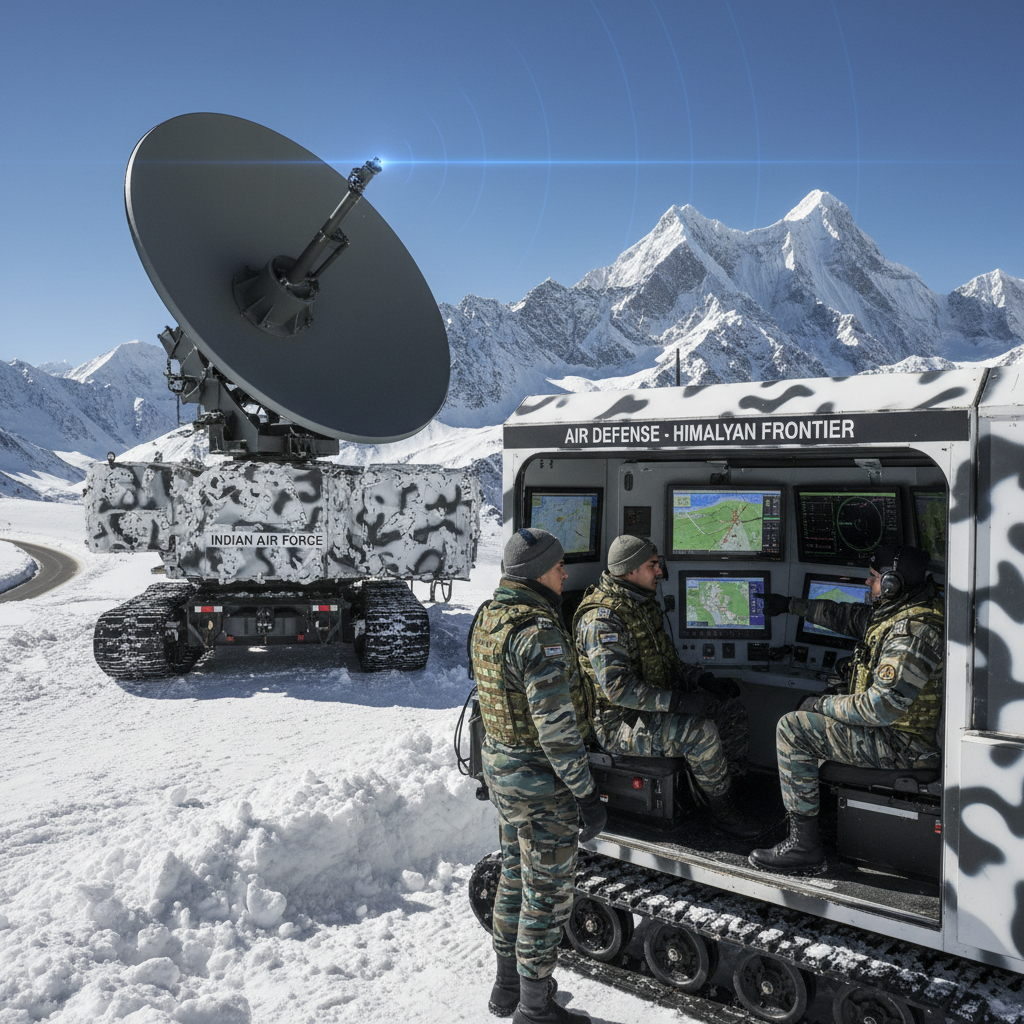
In a move poised to significantly strengthen India's air defence capabilities, the Ministry of Defence finalized a capital acquisition contract with Bharat Electronics Limited (BEL) on March 31, 2026. The agreement, valued at approximately ₹1,950 crore, encompasses the procurement of two Mountain Radars, along with associated equipment and essential infrastructure, for the Indian Air Force. This development underscores the nation's commitment to bolstering its security apparatus through indigenous technological advancements.
The acquisition of these Mountain Radars represents a crucial step in modernizing India's defence infrastructure, particularly in strategically important mountainous regions. These radars are specifically designed to operate effectively in challenging high-altitude environments, providing enhanced surveillance and early warning capabilities against potential aerial threats. The deployment of these systems will augment the Indian Air Force's ability to detect and track aircraft, drones, and other airborne objects, thereby safeguarding national airspace and critical assets.
KEY FACTS
- Contract signed on March 31, 2026, with BEL.
- Contract value is approximately ₹1,950 crore.
- Procurement includes two Mountain Radars.
- Radars designed and developed by DRDO's ERDE.
- Aims to boost air defence and national security.
This contract is not merely a transaction; it is a tangible manifestation of the government's unwavering commitment to the Aatmanirbhar Bharat (Self-Reliant India) initiative and the Make in India program. By prioritizing the procurement of indigenously developed defence equipment, the government aims to reduce dependence on foreign suppliers and foster a vibrant domestic defence industry. This strategic shift is expected to create employment opportunities, stimulate technological innovation, and contribute to the overall economic growth of the nation.
The Mountain Radars, the core of this agreement, have been meticulously designed and developed by the Electronics and Radar Development Establishment (ERDE), a premier laboratory under the Defence Research and Development Organisation (DRDO). DRDO's involvement ensures that the radars incorporate cutting-edge technology and are tailored to meet the specific operational requirements of the Indian Air Force. This indigenous development not only enhances self-reliance but also provides a strategic advantage by ensuring that the technology remains within the country's control.
The significance of this acquisition extends beyond immediate operational benefits. It represents a long-term investment in India's technological capabilities and its ability to independently address its security challenges. By fostering a culture of indigenous innovation and production, the government aims to create a sustainable ecosystem for defence manufacturing, making India a net exporter of defence equipment in the future.
By The Numbers
The integration of these Mountain Radars into the Indian Air Force's existing air defence network will significantly enhance its overall effectiveness. The radars will provide critical early warning capabilities, enabling the Air Force to respond swiftly and decisively to potential threats. This enhanced situational awareness will be particularly valuable in mountainous regions, where terrain can often obscure radar signals and create blind spots.
The historical context of India's defence procurement policies is crucial to understanding the significance of this deal. For decades, India has relied heavily on foreign suppliers for its defence needs, making it vulnerable to geopolitical pressures and supply chain disruptions. The Aatmanirbhar Bharat initiative represents a deliberate effort to reverse this trend and build a self-reliant defence industry capable of meeting the nation's security requirements.
The development and deployment of indigenous defence technologies like the Mountain Radars are also strategically important in the context of regional security dynamics. With evolving geopolitical landscapes and increasing security challenges, India needs to maintain a credible deterrent capability to safeguard its interests and protect its sovereignty. The acquisition of these radars contributes to this objective by enhancing the nation's ability to monitor and respond to potential threats in its immediate neighborhood.
The contract with BEL also highlights the growing importance of public-private partnerships in the Indian defence sector. BEL, a leading public sector undertaking, has played a pivotal role in developing and manufacturing a wide range of defence equipment for the Indian armed forces. By leveraging the expertise and capabilities of companies like BEL, the government can accelerate the pace of indigenization and reduce dependence on foreign sources.
The successful development and deployment of the Mountain Radars will serve as a testament to the capabilities of Indian scientists and engineers. It will also inspire confidence in the nation's ability to design and manufacture advanced defence systems, further strengthening the Aatmanirbhar Bharat initiative. This achievement will encourage other domestic companies to invest in research and development, leading to a virtuous cycle of innovation and growth in the defence sector.
The infrastructure component of the contract is also noteworthy. The establishment of associated infrastructure for the Mountain Radars will create additional employment opportunities and contribute to the economic development of the regions where the radars are deployed. This infrastructure will include facilities for maintenance, repair, and overhaul of the radars, ensuring their long-term operational readiness.
"The contract aligns with the government's Aatmanirbhar Bharat and Make in India initiatives." — PIB
The acquisition of these Mountain Radars is expected to have a positive impact on the morale of the Indian Air Force. By providing them with state-of-the-art equipment, the government is demonstrating its commitment to equipping them with the tools they need to effectively defend the nation's airspace. This will boost their confidence and enhance their ability to perform their duties with professionalism and dedication.
The long-term implications of this contract are far-reaching. It sets a precedent for future defence procurements, signaling the government's intention to prioritize indigenous solutions whenever possible. This will create a level playing field for domestic companies and encourage them to invest in research and development, leading to a more competitive and innovative defence industry.
The successful implementation of this contract will also enhance India's credibility as a responsible and reliable defence partner. By demonstrating its ability to develop and manufacture advanced defence equipment, India can strengthen its relationships with other countries and promote regional stability. This will also open up opportunities for exporting defence equipment to friendly nations, further boosting the domestic defence industry.
The focus on indigenous development also mitigates the risks associated with relying on foreign suppliers, such as delays in delivery, technology transfer restrictions, and geopolitical considerations. By controlling the design and manufacturing process, India can ensure that its defence equipment meets its specific requirements and is not subject to external interference.
As per government data, the emphasis on Aatmanirbhar Bharat is steadily increasing the percentage of domestically produced defence equipment in the Indian armed forces' inventory. This trend is expected to continue in the coming years, as the government implements further policies to promote indigenous manufacturing and reduce dependence on foreign sources. Analysts note that this shift is crucial for ensuring India's long-term security and strategic autonomy.
The deployment of these Mountain Radars will not only enhance India's air defence capabilities but also contribute to the overall security of the region. By providing early warning of potential threats, the radars will help to deter aggression and maintain stability in the region. This will create a more secure environment for economic development and regional cooperation.
The Ministry of Defence's decision to procure these Mountain Radars from BEL is a strategic move that aligns with the nation's long-term security interests and its commitment to self-reliance. This contract represents a significant step forward in modernizing India's defence infrastructure and promoting the growth of its domestic defence industry. The successful implementation of this project will have a lasting impact on India's security and its role in the region.



