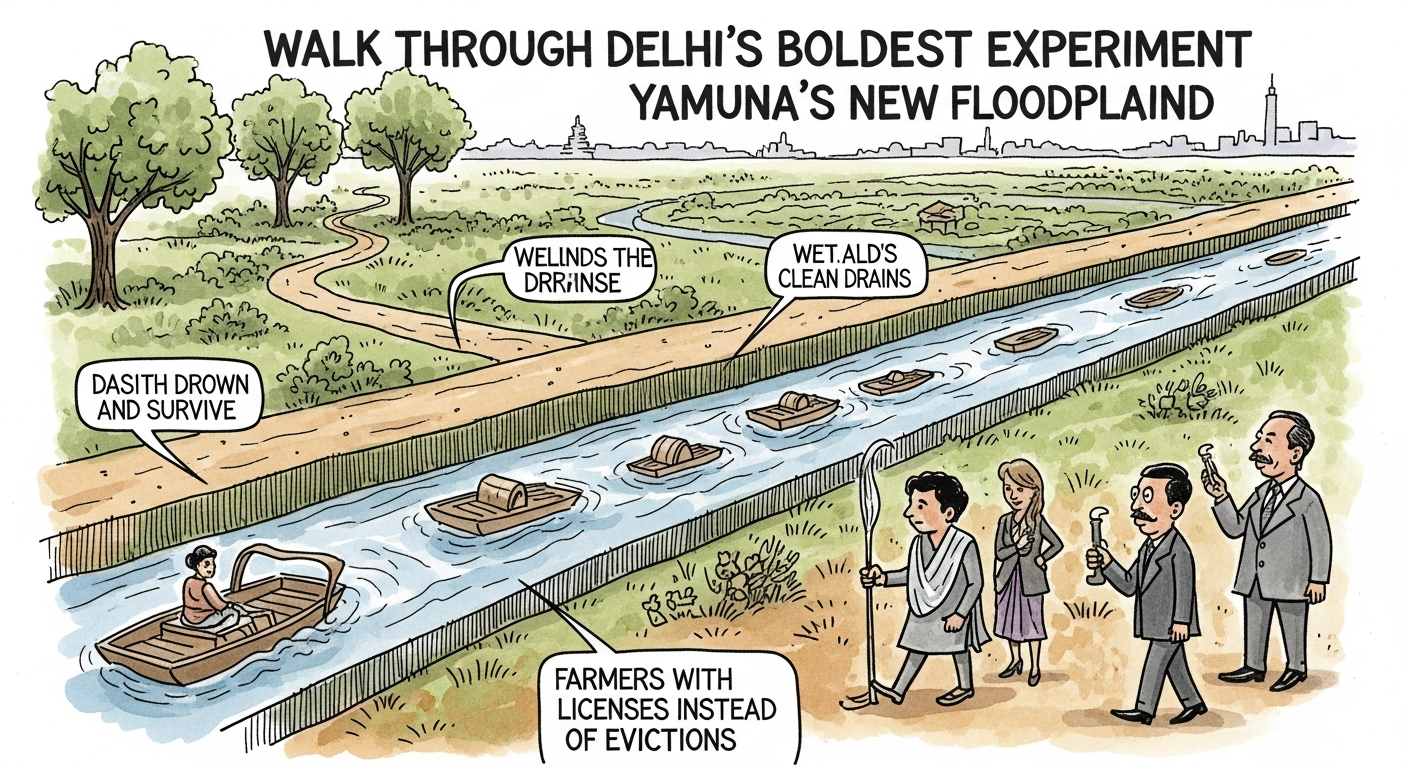
Start at the ITO barrage and walk south: the eleven opened kilometres read as a manifesto against the embankment century — no concrete, terraced wetlands, buffer forest, and pavilions stencilled with 2023's high-water marks like a dare.
The design premise inverts everything Indian rivers were given: instead of walls pressed tighter, sacrificial ground that floods on purpose — roughly 40 percent more accommodation volume in the corridor, recharging east Delhi's aquifer on the way through. The paths are engineered to disappear underwater and re-emerge usable; this arriving monsoon is their first examination.
The quiet machinery is 210 acres of treatment wetlands polishing drain outfalls — not the interceptor-sewer cure the river still awaits, but the tertiary stage those projects lack.
The social ledger breaks precedent too: the displaced nurseries and seasonal farmers hold cultivation licences in designated terrace zones — inadequate say critics, the first priced eviction in Delhi infrastructure say its drafters. Both can be true.
Ten more kilometres are under works upstream. If the paths survive their drowning, Indian cities get a template. Walk it before the water does — and read the file on our cities desk.



