The trade war you didn't feel is the one that worked out. Washington's tariff review menaced Indian generics for six months; the carve-out arrived without a single street march — because the lobbying was done by American hospital bills.
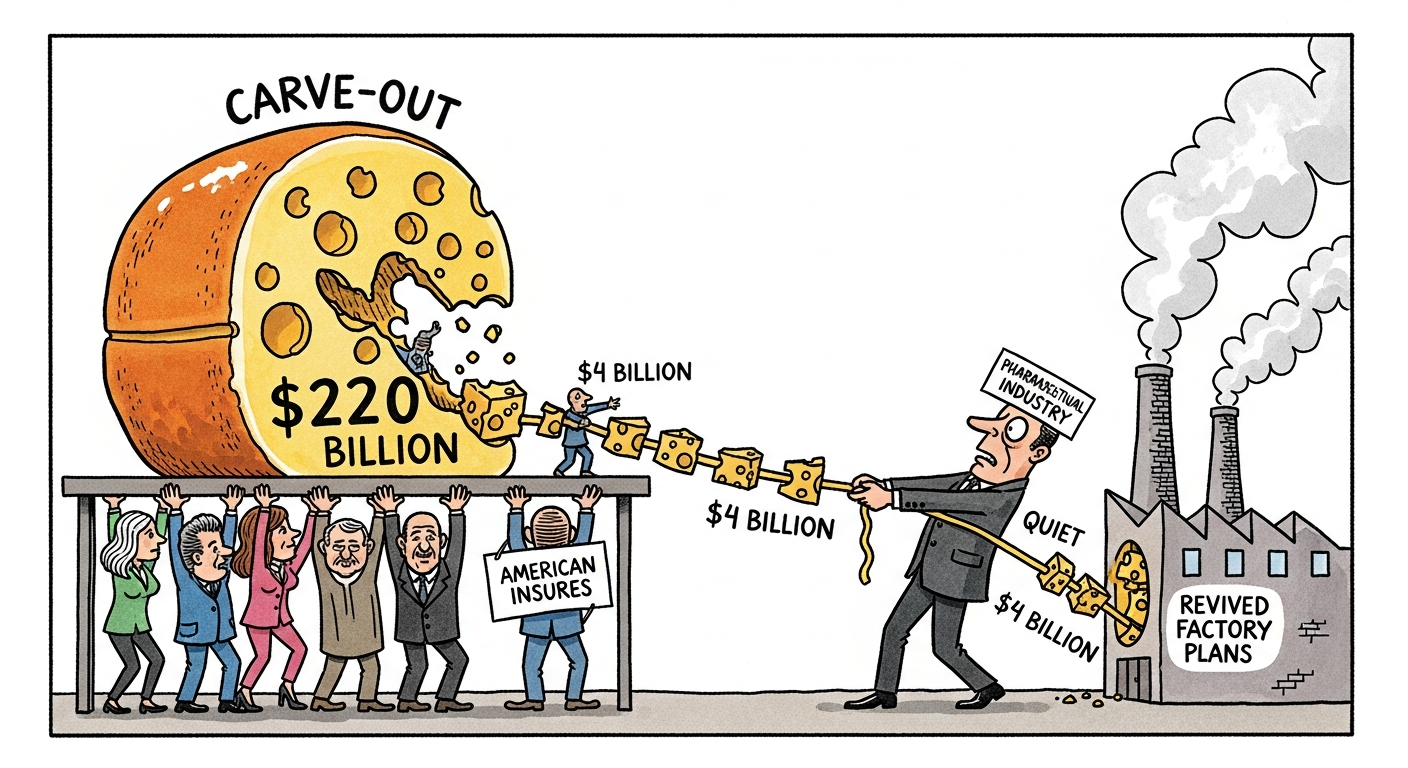
The decisive number: Indian generics save the US system an estimated $220 billion a year. A 25 percent tariff would have added billions in costs while worsening the shortages the review claimed to fix; the review's own economists couldn't model a winning scenario. Insurers, hospital chains and distributors — for whom Indian supply is forty percent of volume — did the rest.
The aftermath is measurable: roughly $4 billion in revived US manufacturing plans by Indian drugmakers, greenfield injectables plants un-shelved within three weeks.
The transferable lesson sits in the still-open electronics file: India-assembled devices lack an equivalent domestic American lobby, and the September ministerial will be argued on supply-chain security, not consumer prices.
For your chemist's counter, the outcome is a non-event — which was the entire point. The invisible wins are the ones worth reading about: our world desk keeps score.