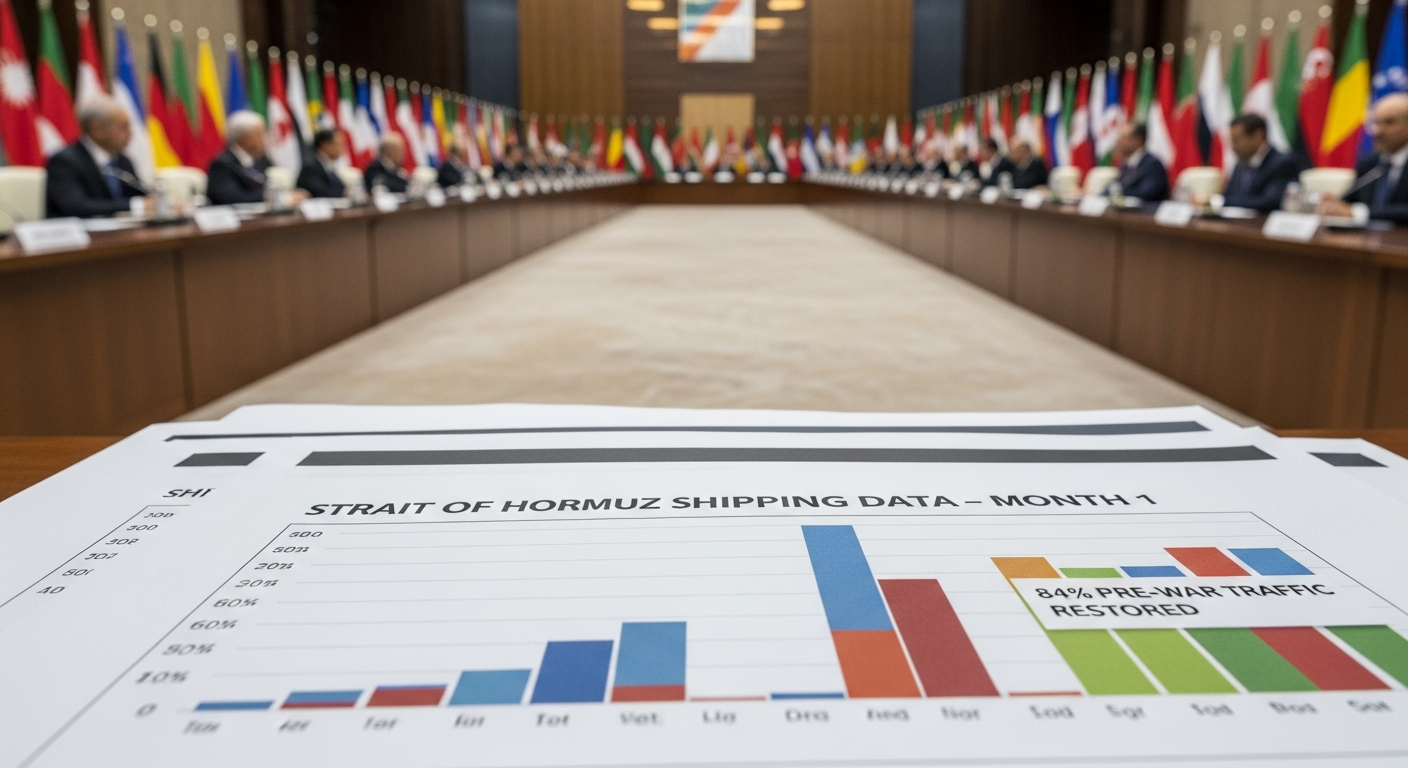
The United Nations-administered convoy corridor through the Strait of Hormuz completed its first full month of operation on Sunday with 412 escorted transits and tanker traffic at 84 percent of pre-war volume, according to the UN maritime coordination cell's monthly report.
The corridor — a 40-nautical-mile demilitarised lane monitored by a seven-nation naval group under UN mandate — has held through three reported ceasefire violations on the Iran-Israel front and one unattributed drone approach that triggered a six-hour suspension in late June.
Freight and insurance markets tell a more cautious story than the transit numbers. War-risk premia remain at four times pre-February levels, and two of the three largest container lines continue to route Europe-bound traffic around the Cape, adding eleven days. 'The corridor works until the day it doesn't,' one London underwriter told this paper. 'We price the second day.'
For India, the corridor's first month has meant restored LPG shipments — imports through the strait are back above 90 percent of normal — and the effective end of the fuel-queue economy of March. New Delhi contributes two frigates to the escort rotation, its largest operational naval deployment west of the Arabian Sea.
The corridor's mandate runs to December, renewable by Security Council vote. Diplomats in New York describe the renewal as 'probable but hostage' — to a war that has quieted without ending.