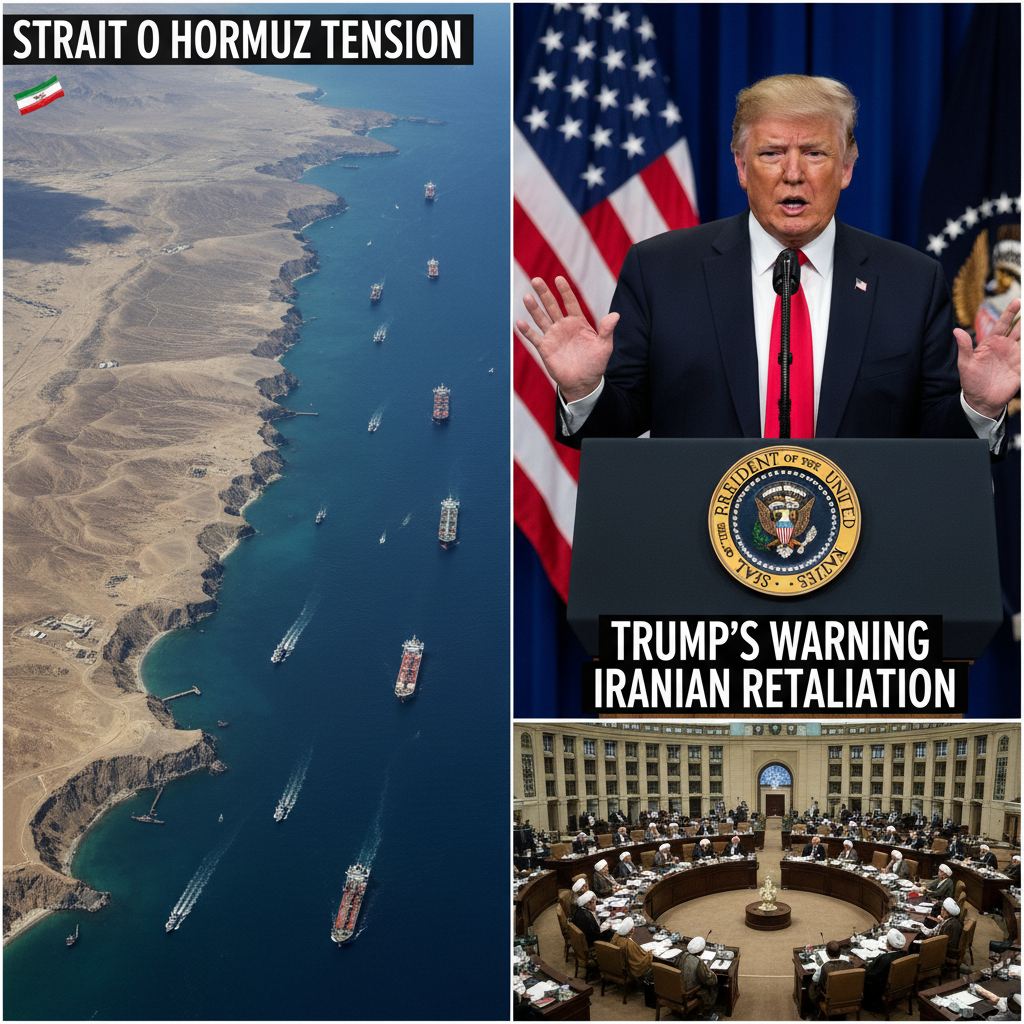
Former President Donald Trump has issued stark warnings to Iran, threatening to target the country's energy infrastructure if Tehran fails to reopen the strategically vital Strait of Hormuz within a five-day window, according to reports from multiple international news outlets.
The ultimatum comes as part of a broader 15-point deal proposal that Trump has presented to Iranian leadership, though specific details of the comprehensive agreement remain undisclosed. The former president has simultaneously postponed planned energy strikes against Iran for five days, creating a narrow diplomatic opening amid escalating tensions.
Iranian officials have responded with defiance and skepticism. The country's parliament speaker dismissed Trump's diplomatic overtures, suggesting that the former president is attempting to use the prospect of negotiations to extricate himself from what Tehran views as a political quagmire, according to official sources.
The Strait of Hormuz represents one of the world's most critical maritime chokepoints, with approximately one-fifth of global oil shipments passing through the narrow waterway between Iran and the Arabian Peninsula. Any disruption to this vital shipping lane would have immediate and far-reaching consequences for global energy markets and the broader international economy.
Iran's vow to retaliate against any military action underscores the volatile nature of current tensions. The Islamic Republic has historically demonstrated its capacity to disrupt regional stability through proxy forces and asymmetric warfare tactics, particularly in response to direct military threats.
The five-day timeline creates an exceptionally compressed diplomatic window, reminiscent of similar high-stakes negotiations that have characterized U.S.-Iran relations over the past decade. Previous attempts at rapid diplomatic resolution between Washington and Tehran have often collapsed due to fundamental disagreements over regional influence, nuclear capabilities, and sanctions relief.
Trump's approach represents a significant departure from traditional diplomatic protocols, combining immediate military threats with comprehensive deal-making proposals. This strategy reflects his characteristic preference for high-pressure negotiation tactics, previously employed in various international contexts during his presidency.
The energy sector remains Iran's economic lifeline, generating crucial revenue despite years of international sanctions. Any military action targeting these facilities would likely trigger broader regional instability and potentially draw in other major powers with interests in Middle Eastern energy supplies.
Regional allies and international observers are closely monitoring developments, as any escalation could rapidly expand beyond bilateral U.S.-Iran tensions to encompass broader Middle Eastern security dynamics. The compressed timeline leaves little room for traditional diplomatic mediation efforts that might otherwise help de-escalate such confrontations.
The Iranian parliament speaker's characterization of Trump's diplomatic overtures as political maneuvering reflects Tehran's deep skepticism about American intentions, rooted in decades of contentious bilateral relations and previous failed negotiation attempts.