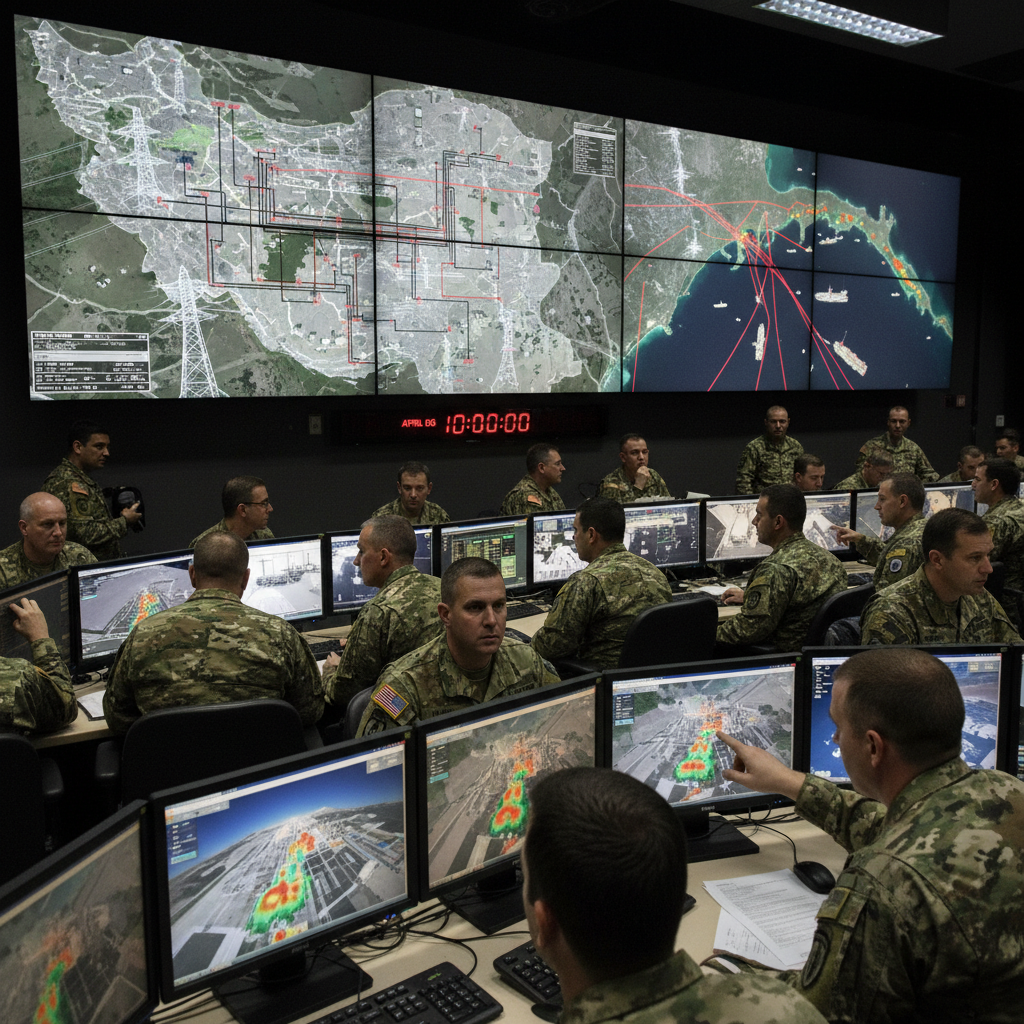
President Donald Trump has postponed planned United States military strikes on Iranian power grid infrastructure until April 6, according to reports from Al Jazeera and other news outlets, as the administration pursues diplomatic channels while maintaining military pressure on Tehran. The delay signals a calculated recalibration of American strategy in the Persian Gulf, where escalating tensions have brought the two nations to the brink of direct military confrontation.
The postponement comes amid what sources describe as ongoing talks between Washington and Tehran, with Trump publicly expressing optimism about reaching a comprehensive deal with Iran. This diplomatic push unfolds against a backdrop of continued Iranian missile and drone attacks that have targeted regional allies and commercial shipping, creating a volatile security environment that has rattled global energy markets and tested American resolve in the region.
KEY FACTS
- US military strikes on Iranian power grid postponed until April 6
- Decision made amid ongoing diplomatic talks between Washington and Tehran
- Iran continues missile and drone attacks despite negotiation efforts
- Strait of Hormuz remains focal point of US pressure campaign
- Regional tensions affecting global energy market stability
The Strait of Hormuz has emerged as a critical pressure point in the escalating confrontation, with Trump threatening military action to force Iran to reopen the strategically vital waterway. This narrow passage, through which approximately 21 percent of global petroleum liquids transit, has become a chokepoint in the broader geopolitical struggle between Washington and Tehran. The strait's closure or disruption would send shockwaves through international energy markets and could trigger a broader regional conflict.
Trump's approach reflects a familiar pattern of combining maximum pressure tactics with diplomatic overtures, a strategy the administration has employed throughout its tenure in dealing with adversarial nations. The postponement of military strikes while maintaining the threat of action represents an attempt to extract concessions from Iran without immediately escalating to full-scale military confrontation. This delicate balance aims to preserve American credibility while creating space for potential breakthrough negotiations.
The Iranian missile and drone campaign that continues despite the talks represents Tehran's own calculated response to American pressure. These attacks, targeting both military and civilian infrastructure across the region, demonstrate Iran's capacity to project power beyond its borders while avoiding direct confrontation with American forces. The persistence of these operations even as diplomatic channels remain open suggests that Iran, like the United States, is pursuing a dual-track strategy of pressure and engagement.
By The Numbers
The targeting of Iran's power grid infrastructure represents a significant escalation in American military planning, moving beyond the precision strikes on military installations that have characterized previous confrontations. Power grids constitute critical civilian infrastructure, and attacks on such targets would likely have far-reaching humanitarian consequences while potentially triggering broader regional retaliation. The consideration of such targets reflects the administration's assessment that conventional military pressure has proven insufficient to achieve its strategic objectives.
Historical precedent offers mixed lessons for the current standoff. The 2019 downing of an American drone by Iranian forces brought the two nations to a similar precipice, with Trump initially ordering military strikes before calling them off at the last minute. That episode demonstrated both the volatility of the current situation and the preference of both sides to avoid full-scale conflict despite their fundamental disagreements over regional influence and nuclear policy.
"This decision comes as Trump talks up a deal with Tehran amidst continued Iranian missile and drone attacks" — according to multiple news outlets
The timing of the postponement carries significant implications for regional allies who have found themselves caught between American pressure for confrontation and their own economic interests in maintaining stable relations with Iran. Gulf states, in particular, have expressed concern about becoming theaters for proxy conflicts while their economies remain vulnerable to disruptions in energy production and shipping. The delay provides these nations with additional time to prepare for potential escalation while pursuing their own diplomatic initiatives.
Iran's nuclear program remains an underlying factor in the current crisis, though it has taken a backseat to immediate concerns about regional security and freedom of navigation. The collapse of the Joint Comprehensive Plan of Action in 2018 created a vacuum in nuclear diplomacy that both sides have struggled to fill with meaningful engagement. Any comprehensive deal that emerges from current talks would likely need to address both nuclear restrictions and regional military activities to achieve lasting stability.
The postponement also reflects domestic political considerations within the United States, where public opinion remains wary of new military commitments in the Middle East following decades of involvement in Iraq and Afghanistan. Trump's decision to delay military action while pursuing negotiations may represent an acknowledgment of these political realities, even as he maintains pressure on Iran through economic sanctions and military positioning.
Intelligence assessments of Iranian capabilities have likely influenced the timing and scope of American military planning. Iran's development of asymmetric warfare capabilities, including advanced missile technology and proxy networks throughout the region, has complicated traditional military calculations. The postponement may reflect ongoing assessments of how Iran might respond to attacks on its power infrastructure and what cascading effects such strikes might trigger across the broader Middle East.
The international community has watched these developments with growing concern, as any military confrontation between the United States and Iran could destabilize global energy markets and trigger broader regional conflicts. European allies have consistently advocated for diplomatic solutions while supporting American concerns about Iranian regional activities. China and Russia, meanwhile, have positioned themselves as alternative partners for Iran, complicating American efforts to maintain international pressure.
Market reactions to the postponement have been mixed, with energy prices reflecting both relief at the delay and continued uncertainty about long-term stability in the region. The threat of military action against Iranian power infrastructure had already contributed to volatility in oil and gas markets, with traders pricing in potential supply disruptions. The April 6 deadline now provides a new focal point for market speculation and diplomatic activity.
As negotiations continue, both sides face pressure from domestic constituencies and regional allies to demonstrate strength while avoiding catastrophic escalation. The success of any diplomatic breakthrough will depend largely on whether fundamental disagreements over regional influence, nuclear policy, and economic sanctions can be reconciled through negotiated agreements rather than military confrontation. The postponement of strikes provides crucial time for such diplomacy, but it also maintains the specter of military action that has defined this crisis from its inception.



