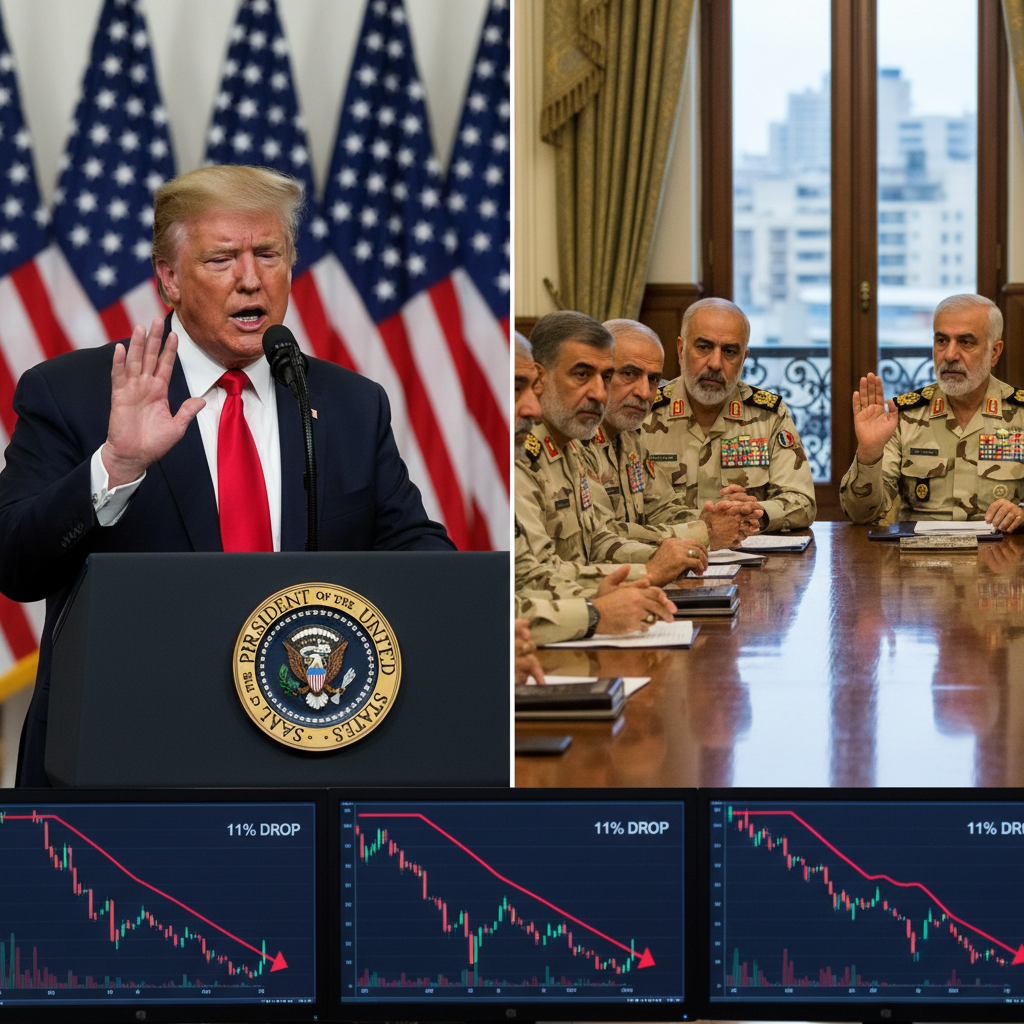
President Donald Trump claimed that the United States is actively engaged in negotiations with Iran to resolve ongoing hostilities, a statement that Tehran swiftly and categorically denied, highlighting the volatile nature of U.S.-Iran relations in the current geopolitical landscape.
The announcement, which caught international observers off guard, immediately triggered significant market reactions as oil prices dropped by more than 11 percent following Trump's statement. The dramatic price movement underscores the profound impact that U.S.-Iran tensions have on global energy markets, with traders responding quickly to any signs of potential de-escalation in the region.
KEY FACTS
- Oil prices dropped more than 11% following Trump's announcement
- Trump postponed strikes on Iranian power plants for five days
- Iran's military advisor Mohsen Rezaei issued new warnings to the U.S.
- Tehran categorically denied any ongoing negotiations with Washington
- The announcement came amid heightened regional tensions
Adding another layer of complexity to the situation, Trump revealed that he had postponed planned strikes on Iranian power plants for a period of five days. This temporary restraint suggests potential behind-the-scenes diplomatic maneuvering, even as public statements from both nations appear contradictory. The decision to delay military action indicates that despite escalating rhetoric, there may be channels of communication that both sides are reluctant to completely sever.
Iran's response was swift and unambiguous, with officials in Tehran rejecting Trump's claims about ongoing negotiations. The denial came alongside a warning from Iran's new military advisor, Mohsen Rezaei, who issued fresh threats to the United States. This appointment of Rezaei, a prominent figure in Iran's military establishment, signals Tehran's continued commitment to its confrontational stance despite any potential diplomatic overtures.
By The Numbers
The conflicting narratives between Washington and Tehran reflect the deep mistrust that has characterized U.S.-Iran relations since the United States withdrew from the Joint Comprehensive Plan of Action in 2018. The current escalation follows a pattern of action and counter-action that has brought the two nations to the brink of direct military confrontation multiple times over the past several years.
The market's immediate response to Trump's announcement demonstrates the global economic stakes involved in Middle Eastern stability. Energy markets remain highly sensitive to any developments in the Persian Gulf region, which contains some of the world's most critical shipping lanes and oil production facilities. The 11 percent drop in oil prices reflects traders' assessment that diplomatic engagement, even if disputed, reduces the immediate risk of military action that could disrupt global energy supplies.
Historical precedent suggests that public denials of diplomatic contact do not necessarily preclude behind-the-scenes communications between adversaries. During previous crises, both nations have maintained unofficial channels even while engaging in public confrontation. However, the appointment of hardline figures like Rezaei to key military positions indicates that Iran remains prepared for continued escalation despite any diplomatic possibilities.
The five-day postponement of strikes on Iranian power plants represents a significant tactical decision that could provide space for diplomatic initiatives to develop. Infrastructure targets like power plants would represent a major escalation in any conflict, potentially affecting civilian populations and crossing traditional red lines in military engagement. The temporary delay suggests recognition of the grave consequences such actions could precipitate across the region.