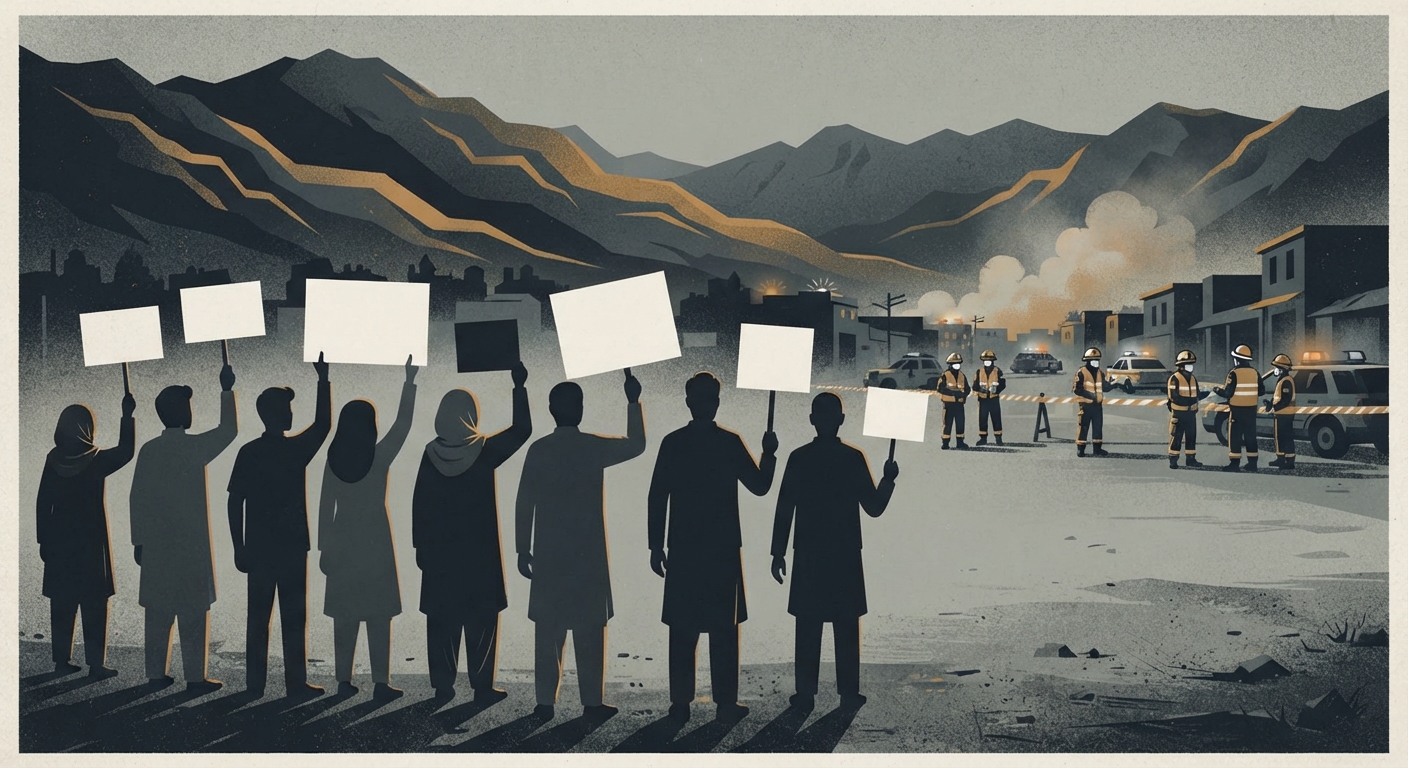
SWAT / NEW DELHI — In a grim reminder of northwestern Pakistan's volatile security landscape, a suicide bomber targeted a major anti-militancy gathering in Kabal, Swat district, Khyber Pakhtunkhwa on Sunday, August 2, 2026. The attack unfolded as hundreds of local residents, civil society leaders, and law enforcement personnel gathered under the banner of the Swat Aman Jirga to advocate for regional peace and demand resolute state action against surging militant violence.
Evolving Casualty Figures Highlight Severe Blast Impact
Initial reports published by regional media outlets detailed an immediate death toll of at least seven individuals alongside scores of injured. An updated report from NDTV subsequently revised the casualty count upward to 13 killed and 22 injured as emergency medical teams struggled to treat critically wounded victims in local medical facilities. Later reporting by Associated Press confirmed that at least 14 people lost their lives, including security personnel, while more than two dozen others suffered injuries.
District police said the explosion struck near a police station while demonstrators were chanting anti-militant slogans and demanding peace. Rescue teams moved the wounded to hospitals as police and other agencies secured the area. Investigators had not publicly assigned responsibility when the first reports were published.
Cruel Symbolism of Targeting a Peace Jirga
The choice of target underscores a calculated strategy aimed at silencing grassroots resistance to armed extremism. The Swat Aman Jirga represents an indigenous civil movement comprising elders, business leaders, and local residents who have consistently raised their voices against the re-emergence of militant networks in the scenic Swat Valley.
By striking an assembly specifically convened to demand non-violence and state protection, perpetrators aim to signal that peace mobilization itself carries a fatal cost, attempting to instill widespread public paralysis across Khyber Pakhtunkhwa.
Security analysts note that targeting peaceful assemblies reflects an effort to undermine public trust in local police authorities who were coordinating security alongside civilian jirga organizers. Official sources have not formally named or confirmed any specific militant organization responsible for the attack, and investigative authorities continue to process forensic evidence from the blast scene.
Broader Context of Pakistan's Resurgent Militancy
Sunday's tragedy in Kabal occurs against the backdrop of a prolonged surge in violent attacks across Pakistan's northwestern belt. Over the past three years, the security situation in Khyber Pakhtunkhwa and neighboring Balochistan has steadily eroded, marked by frequent strikes on security checkpoints, civil infrastructure, and community leaders.
Multiple factors contribute to this persistent volatility:
- Cross-Border Dynamics: Porous regional borders have allowed armed factions to maneuver, regroup, and execute attacks across provincial frontiers.
- Capacity Constraints: Local law enforcement units face severe operational strains and intelligence deficits when confronting highly mobile covert networks.
- Socio-Economic Strains: Economic challenges within Pakistan have complicated state efforts to sustain comprehensive counter-insurgency rehabilitation programs.
Implications for Regional Stability and India
For New Delhi and the broader South Asian region, escalating instability within Pakistan presents complex strategic concerns. Modern security frameworks recognize that transnational terror infrastructure and extremist ideologies rarely remain strictly contained within national borders.
A destabilized neighborhood increases the risk of regional security spillovers, potential displacement, and the proliferation of untracked conventional weapons across South Asia. Analysts emphasize that long-term regional trade, connectivity, and diplomatic stability depend heavily on law, order, and the complete dismantling of violent non-state actors operating anywhere in the region.
As emergency teams in Swat attend to the wounded and families grieve those killed in Kabal, the atrocity serves as a stark reminder of the immense courage required by ordinary citizens standing up against violent extremism in South Asia.