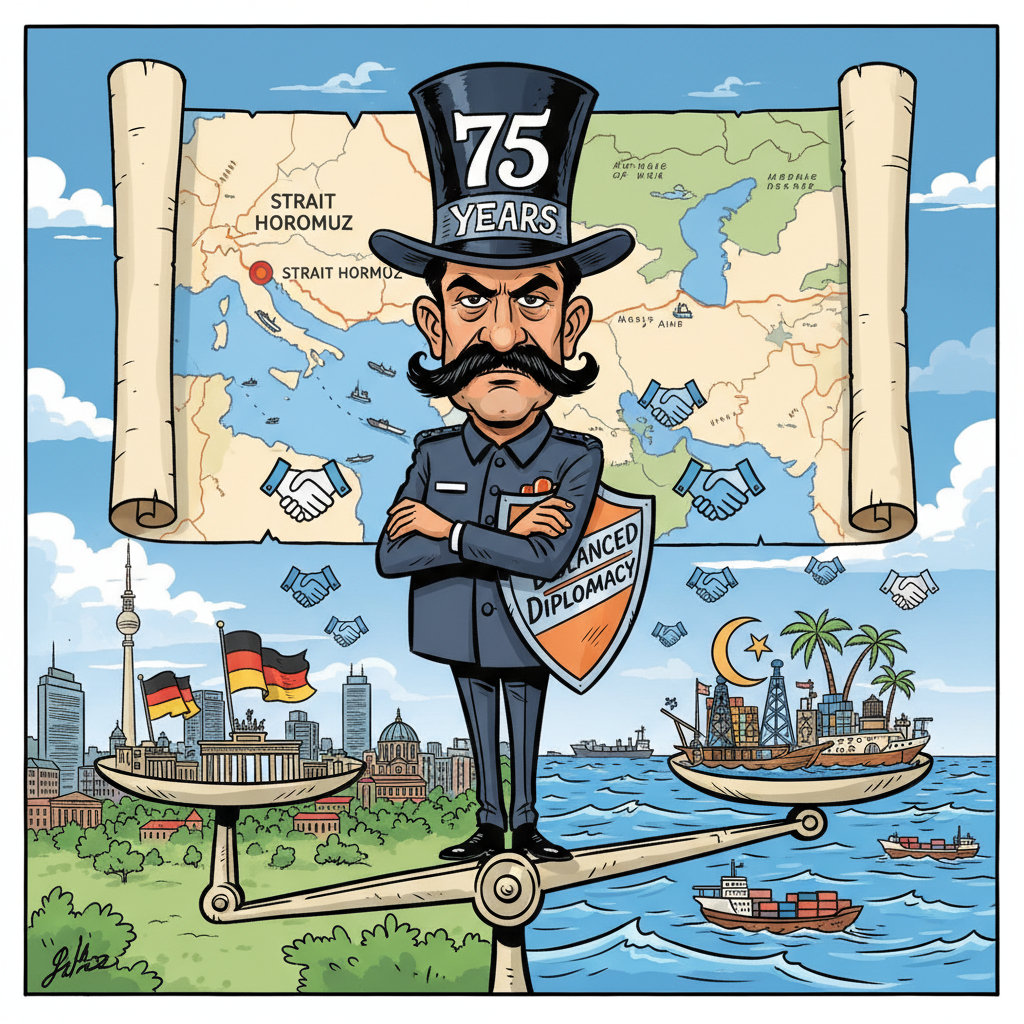
Defence Minister Rajnath Singh's recent visit to Germany has underscored India's emergence as a pivotal diplomatic force on the global stage, with the minister highlighting the nation's carefully calibrated approach to international relations under Prime Minister Narendra Modi's leadership. Speaking at an Indian community event in Berlin on April 22, 2026, Singh articulated India's unique position as a nation capable of maintaining strategic balance while advancing its national interests.
The visit comes at a particularly significant juncture, marking 75 years of diplomatic relations between India and Germany, two democracies that have built their partnership on mutual trust and shared values. Singh's emphasis on India's balanced diplomacy reflects a broader strategic doctrine that has enabled New Delhi to navigate complex international waters while maintaining its sovereign decision-making capabilities.
KEY FACTS
- India-Germany diplomatic relations complete 75 years in 2026
- Multiple Indian ships successfully transited through Strait of Hormuz under current diplomatic framework
- Defence Minister's Berlin visit occurred on April 22, 2026
- India maintains balanced diplomatic approach across global conflicts including West Asia crisis
- Enhanced defence industrial partnerships proposed between both nations
Strategic Maritime Diplomacy Success
One of the most concrete examples of India's diplomatic effectiveness cited by Singh was the successful facilitation of multiple Indian ship passages through the strategically crucial Strait of Hormuz. This achievement demonstrates the practical benefits of India's non-aligned approach, allowing Indian vessels to maintain commercial operations even amid regional tensions that have disrupted other nations' maritime activities.
The Strait of Hormuz, through which approximately 20 percent of global oil transit occurs, has been a flashpoint for international tensions. India's ability to maintain safe passage for its vessels through this critical chokepoint speaks to the effectiveness of its diplomatic engagement with all regional stakeholders, including Iran and Gulf Cooperation Council nations.
"India has consistently maintained a balanced diplomatic approach under PM Modi" — Defence Minister Rajnath Singh, addressing Indian community in Berlin
This diplomatic success extends beyond mere commercial interests. It reflects India's strategic autonomy in foreign policy, where New Delhi has resisted pressure to take sides in regional conflicts while ensuring its economic and security interests remain protected. Such an approach has become increasingly valuable as global supply chains face disruption from geopolitical tensions.
India's Emerging Role as Global Mediator
Singh's remarks about India's potential greater role in resolving global conflicts, particularly the West Asia crisis, signal a significant evolution in the country's international positioning. This represents a departure from India's traditionally reactive diplomatic stance toward a more proactive engagement model where New Delhi positions itself as a solution provider rather than merely a stakeholder.
By The Numbers
The timing of these assertions is particularly noteworthy, coming at a moment when traditional mediating powers face credibility challenges in various conflict zones. India's growing economic heft, coupled with its historical non-aligned credentials, positions it uniquely to serve as an honest broker in international disputes. The country's successful mediation efforts in various bilateral disputes over the past decade have established precedents for such expanded roles.
India's approach to the West Asia crisis exemplifies this balanced methodology. Rather than choosing sides based on alliance structures, New Delhi has maintained constructive relationships with all parties while advocating for peaceful resolution mechanisms. This strategy has yielded tangible benefits, as evidenced by the safe passage of Indian vessels and the protection of Indian nationals in conflict zones.
Defence Industrial Partnership Expansion
Singh's call for enhanced India-Germany defence industrial partnerships reflects a broader transformation in India's defence manufacturing landscape. Under the Modi administration's 'Make in India' initiative, the country has significantly expanded its defence production capabilities while seeking technology transfer agreements with advanced manufacturing nations.
Germany's prowess in precision engineering, automotive technology, and advanced manufacturing systems aligns well with India's defence modernization requirements. The proposed partnership expansion could encompass areas ranging from naval systems and armored vehicles to aerospace technologies and electronic warfare systems.
This initiative also supports India's ambition to become a major defence exporter, having already achieved record-breaking defence exports in recent years. The integration of German technological expertise with Indian manufacturing capabilities could create a formidable partnership that serves both nations' strategic interests while contributing to global defence innovation.
The defence industrial collaboration assumes additional significance given the current global security environment, where supply chain resilience and technological sovereignty have become paramount concerns. India's balanced diplomatic approach enables it to engage with multiple technology partners simultaneously, ensuring diversified access to critical defence technologies.
Democratic Partnership Framework
The 75-year milestone in India-Germany relations represents more than mere diplomatic longevity; it symbolizes the enduring strength of democratic partnerships built on shared values and mutual respect. Both nations have navigated significant historical transitions while maintaining their democratic foundations, creating a solid basis for expanded cooperation.
Germany's position as Europe's economic powerhouse and India's status as the world's most populous democracy create natural synergies for collaboration across multiple domains. From renewable energy and digital governance to space cooperation and climate action, the partnership framework extends well beyond traditional diplomatic boundaries.
The emphasis on trust-based relationships, as highlighted by Singh, reflects a mature diplomatic understanding where both nations recognize their complementary strengths. Germany's advanced industrial base and technological capabilities complement India's large market, skilled workforce, and strategic geographic position.
Singh's articulation of India's balanced diplomacy during this landmark visit reinforces the country's commitment to strategic autonomy while demonstrating its readiness to assume greater global responsibilities. As international order faces multiple challenges, India's approach of maintaining principled engagement with all stakeholders while protecting its national interests offers a pragmatic model for middle powers navigating complex geopolitical landscapes. The success of this diplomatic philosophy, evidenced by concrete achievements like safe maritime passage and expanding international partnerships, positions India as an increasingly influential voice in global affairs.



