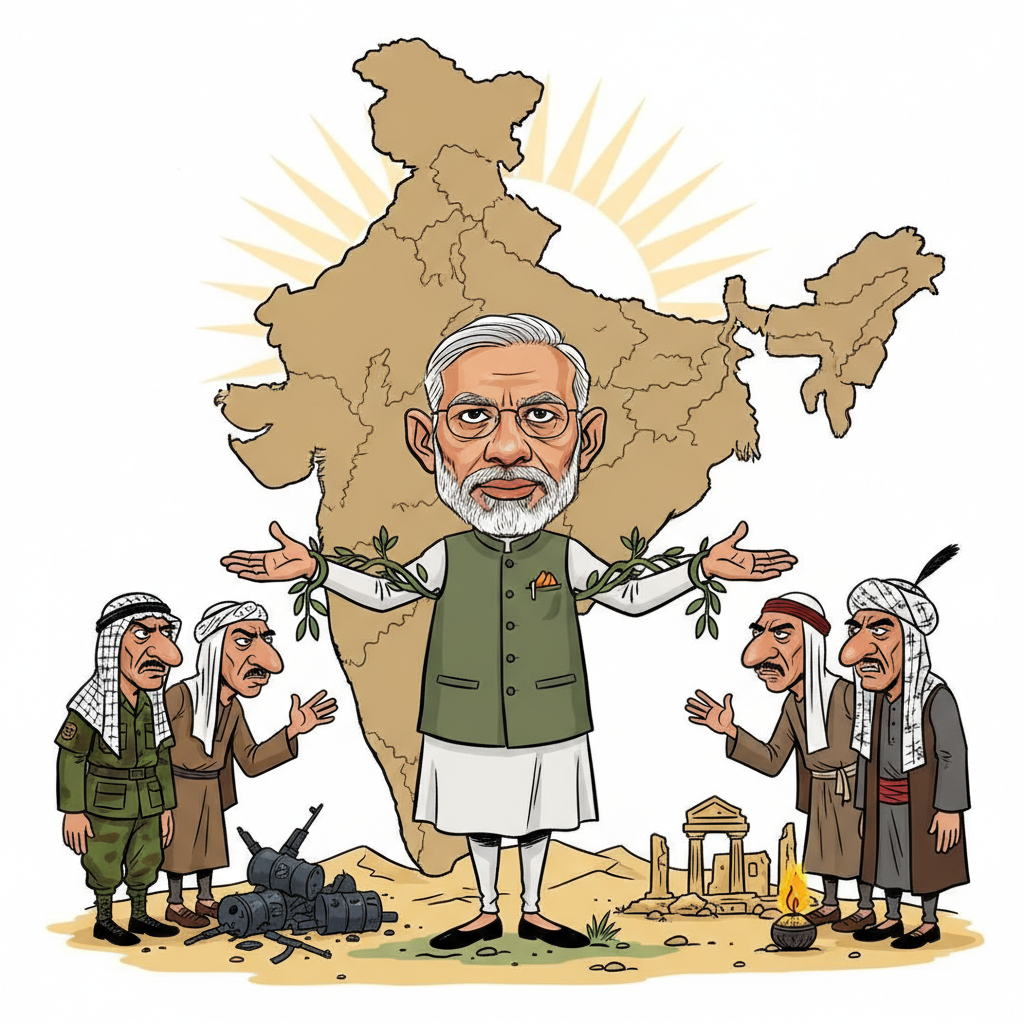
The escalating conflict in the Middle East has prompted a strong response from India, with Prime Minister Narendra Modi advocating for diplomacy and restraint to navigate the complex situation. The Prime Minister has voiced deep concern over the repercussions of the crisis, not only for regional stability but also for the global economy and the safety of Indian nationals residing in the affected areas. With nearly 10 million Indians working and living in Gulf countries, and thousands more serving as seafarers in the region, the stakes are exceptionally high for India.
Modi's call for national unity underscores the gravity of the situation and the need for a cohesive approach to address the challenges posed by the conflict. The government's focus remains on ensuring the safety and well-being of Indian citizens abroad, while also working to mitigate the broader impact of the crisis on India's economic interests and strategic partnerships. The emphasis on diplomacy reflects India's long-standing commitment to peaceful resolution of conflicts and its role as a responsible global stakeholder.
KEY FACTS
- Nearly 10 million Indians reside in Gulf countries.
- Thousands of Indian seafarers operate in the Middle East region.
- Over 375,000 Indians have been safely evacuated from conflict zones in the past.
- More than 700 medical students were evacuated from Iran.
- The government is providing medical and financial support to Indian nationals in affected areas.
The Prime Minister's statement highlights the interconnectedness of the global landscape and the vulnerability of nations to geopolitical instability. The conflict's potential to disrupt supply chains and impact global economic growth is a significant concern for India, which relies on the Middle East for a substantial portion of its energy needs and trade. The government is closely monitoring the situation and taking proactive measures to safeguard India's economic interests and ensure the smooth flow of essential goods and services.
India's historical ties with the Middle East region further complicate the situation. For centuries, India has maintained strong cultural, economic, and political links with various countries in the region. These relationships are built on mutual respect and shared interests, and India has consistently played a constructive role in promoting peace and stability in the Middle East. The current crisis presents a unique challenge to India's diplomatic efforts, requiring a delicate balancing act to protect its interests while upholding its commitment to peaceful conflict resolution.
The government's response to the Middle East conflict is also shaped by its past experiences in managing similar crises. Over the years, India has successfully evacuated hundreds of thousands of its citizens from conflict zones around the world, demonstrating its capacity to respond effectively to emergencies and protect its diaspora. The evacuation of over 375,000 Indians from conflict zones, including over 700 medical students from Iran, serves as a testament to the government's commitment to the safety and well-being of its citizens abroad. These operations require meticulous planning, coordination, and logistical support, and they often involve close collaboration with other countries and international organizations.
The current situation demands a multi-faceted approach that combines diplomatic engagement, humanitarian assistance, and economic resilience. India is actively engaging with key stakeholders in the region and beyond to promote de-escalation and find a peaceful resolution to the conflict. The government is also providing medical and financial support to Indian nationals affected by the crisis, ensuring that they have access to essential services and resources. Furthermore, India is taking steps to strengthen its economic resilience and diversify its supply chains to mitigate the impact of potential disruptions.
By The Numbers
The Prime Minister's emphasis on national unity is particularly relevant in the context of the Middle East conflict. India is a diverse nation with a large Muslim population, and it is crucial to maintain social harmony and prevent the spread of misinformation or divisive narratives. The government has a responsibility to ensure that all citizens are treated equally and that their rights are protected, regardless of their religious or ethnic background. Promoting interfaith dialogue and fostering a sense of shared national identity are essential to building a strong and resilient society.
The conflict in the Middle East also has implications for India's counter-terrorism efforts. The rise of extremist groups in the region poses a direct threat to India's security, and the government is working closely with its partners to combat terrorism and prevent the spread of radical ideologies. Strengthening intelligence sharing, enhancing border security, and countering online radicalization are key priorities in India's counter-terrorism strategy. The government is also committed to working with the international community to address the root causes of terrorism, such as poverty, inequality, and political marginalization.
The situation in the Middle East is constantly evolving, and India must remain vigilant and adaptable in its response. The government is closely monitoring the developments on the ground and adjusting its policies and strategies as needed. Maintaining open lines of communication with all relevant stakeholders, including regional governments, international organizations, and civil society groups, is crucial to ensuring that India's response is effective and well-coordinated.
India's approach to the Middle East conflict is guided by its long-standing principles of non-alignment, peaceful coexistence, and respect for international law. India has consistently advocated for a just and comprehensive resolution to the Israeli-Palestinian conflict, and it supports the establishment of a sovereign and independent Palestinian state. India also believes that all countries in the region have the right to live in peace and security, and it is committed to working with its partners to promote stability and prosperity in the Middle East.
The economic consequences of the conflict extend beyond energy security and trade. Remittances from Indian workers in the Gulf countries are a significant source of income for many families in India, and disruptions to these flows could have a negative impact on the Indian economy. The government is taking steps to mitigate this risk by promoting alternative sources of employment and income for Indian workers and by providing financial assistance to families affected by the crisis.
The government's efforts to support Indian nationals in affected areas include providing medical care, financial assistance, and consular services. Indian embassies and consulates in the region are working around the clock to assist Indian citizens who need help, and the government has established helplines and emergency response teams to provide immediate assistance. The safety and well-being of Indian citizens abroad remains the government's top priority.
"The situation is deeply concerning, highlighting its effects on global stability, supply chains, and human lives." — Times of Oman
The Prime Minister's call for diplomacy and restraint reflects India's commitment to peaceful conflict resolution and its belief that dialogue and negotiation are the best ways to address complex challenges. India has a long history of promoting peace and stability in the Middle East, and it is committed to continuing its efforts to find a lasting solution to the current crisis. The government is working closely with its partners in the region and beyond to promote de-escalation and create a conducive environment for dialogue and negotiation.
India's role as a responsible global stakeholder is further underscored by its active participation in international forums and its commitment to upholding international law. India is a strong supporter of the United Nations and other multilateral institutions, and it believes that these organizations play a crucial role in maintaining peace and security around the world. The government is committed to working with the international community to address the challenges posed by the Middle East conflict and to promote a more just and equitable world order.
The long-term implications of the Middle East conflict are far-reaching and uncertain. The crisis has the potential to reshape the political landscape of the region and to exacerbate existing tensions and conflicts. India must remain prepared to adapt to these changes and to play a constructive role in shaping the future of the Middle East. This requires a long-term strategic vision, a commitment to diplomacy and engagement, and a willingness to work with all stakeholders to promote peace and stability.
Ultimately, the success of India's efforts to navigate the Middle East conflict will depend on its ability to maintain its strategic autonomy, to protect its national interests, and to uphold its values of peace, justice, and non-violence. The government is committed to pursuing these goals and to working with its partners to create a more peaceful and prosperous world for all.



