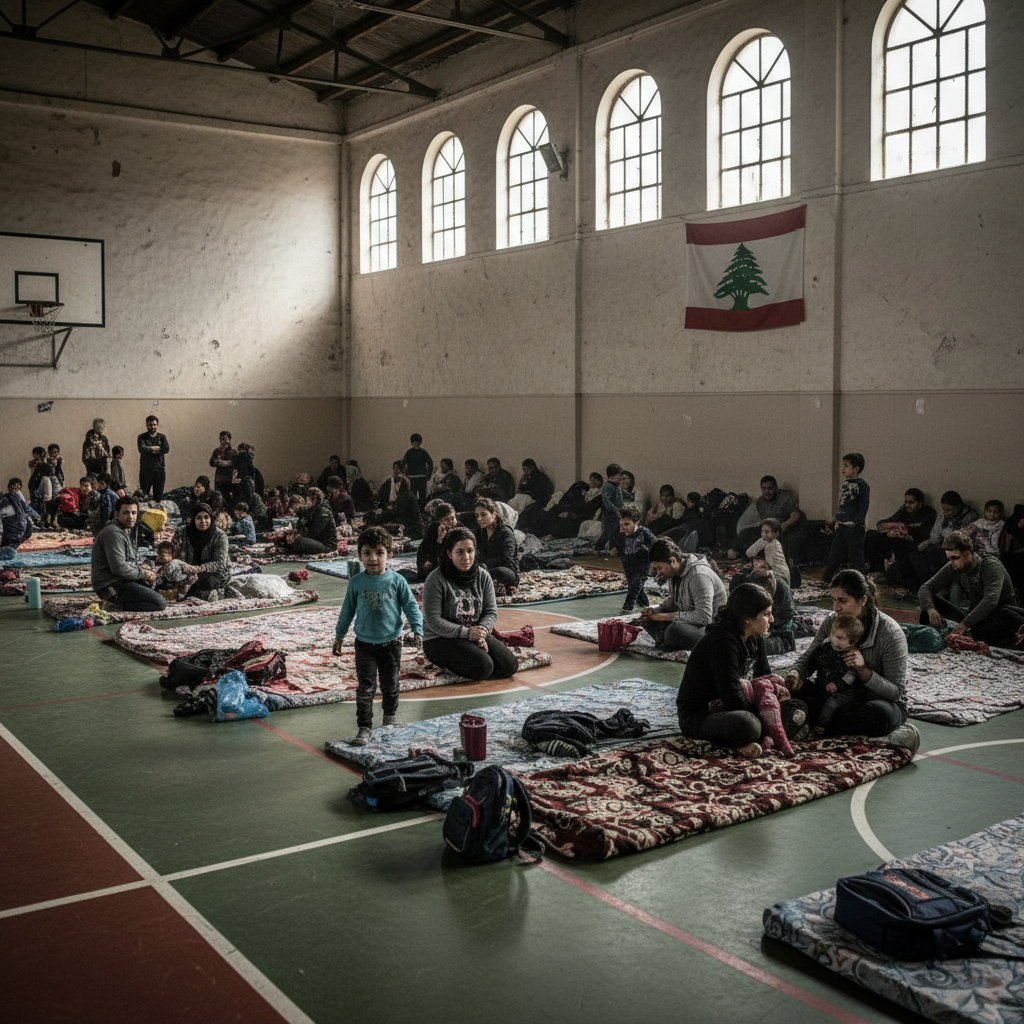
Lebanon faces its most severe displacement crisis in decades as the Israeli military campaign against Iran-backed Hezbollah continues to expand across the country, forcing approximately 800,000 people from their homes. The escalating conflict has created a humanitarian emergency that threatens to destabilize the already fragile nation, according to Reuters reports.
The human toll continues to mount as Lebanese authorities report nearly 600 people have been killed in the fighting, including more than 80 children. Families across the country have been forced to abandon their homes, often with little more than the clothes on their backs, seeking shelter in schools, community centers, and any available safe spaces.
KEY FACTS
- Approximately 800,000 people displaced across Lebanon
- Nearly 600 people killed, including more than 80 children
- Families experiencing journeys up to 18 hours without breaks
- Schools and public buildings converted to emergency shelters
- Israeli campaign targeting Iran-backed Hezbollah expanding nationwide
The displacement represents nearly one-seventh of Lebanon's total population, highlighting the extraordinary scale of the current crisis. Many of those fleeing have endured grueling journeys lasting up to 18 hours without breaks, as they attempt to reach safer areas away from the intensifying bombardment. The mass exodus has overwhelmed Lebanon's limited infrastructure and social services, which were already strained by years of economic collapse and political instability.
This latest conflict echoes the devastating 2006 war between Israel and Hezbollah, which displaced over one million Lebanese and resulted in significant destruction across the country. However, the current crisis unfolds against a backdrop of Lebanon's worst economic collapse since the 1850s, leaving the government with severely limited resources to respond to the humanitarian emergency.
By The Numbers
The targeting of Hezbollah, which maintains significant military capabilities and political influence in Lebanon, has drawn the conflict into densely populated areas where the group operates. Unlike previous conflicts that were largely confined to southern Lebanon, the current campaign appears to be expanding geographically, affecting communities across multiple regions and forcing civilians from areas previously considered safe.
Schools throughout Lebanon have been converted into makeshift shelters, disrupting the education system and placing additional strain on public resources. The Lebanese education ministry has suspended classes in many areas, affecting hundreds of thousands of students whose academic year has been thrown into uncertainty. These improvised shelters lack adequate sanitation facilities, medical care, and privacy for the thousands of families seeking refuge.
The economic implications of the displacement crisis are staggering for a country already grappling with hyperinflation, banking sector collapse, and widespread poverty. Lebanon's currency has lost over 90 percent of its value since 2019, and the government has struggled to provide basic services even under normal circumstances. The sudden influx of displaced persons into host communities has further strained resources and threatens to exacerbate existing tensions.
International humanitarian organizations have begun mobilizing emergency assistance, but access remains challenging due to ongoing military operations. The displacement has created urgent needs for food, water, medical supplies, and temporary housing materials, requirements that far exceed Lebanon's current capacity to provide adequate relief.
The psychological trauma inflicted on displaced families, particularly children, represents another dimension of the crisis that will require long-term attention. Many of those fleeing have witnessed violence and destruction, experiences that mental health experts warn could have lasting effects on an entire generation of Lebanese youth.
Hezbollah's deep integration into Lebanese society complicates both the military campaign and humanitarian response efforts. The organization operates extensive social services including hospitals, schools, and agricultural programs, particularly in areas with significant Shia populations. The targeting of these facilities and the areas they serve has displaced not only combatants but entire civilian communities dependent on these services.
The current crisis occurs as Lebanon continues to host approximately 1.5 million Syrian refugees who fled their country's civil war over the past decade. This existing refugee population has placed continuous pressure on Lebanon's infrastructure and resources, creating competition for services and employment that has occasionally sparked social tensions. The addition of nearly 800,000 newly displaced Lebanese citizens threatens to overwhelm an already overburdened system.
Regional powers are closely monitoring the situation, with concerns that the expanding conflict could draw in additional actors and further destabilize the Middle East. Iran's support for Hezbollah has made the group a key proxy in the broader regional confrontation between Tehran and its adversaries, while other regional states worry about the spillover effects of a prolonged conflict in Lebanon.
The displacement crisis also threatens to undermine Lebanon's delicate sectarian balance, as families from different religious communities are forced to relocate to areas where they may be minorities. This demographic reshuffling could have long-term political implications in a country where electoral representation and government positions are allocated according to religious affiliation.
Medical facilities in areas receiving displaced persons report being overwhelmed by the sudden influx of patients, many requiring treatment for injuries sustained during their flight or suffering from chronic conditions that went untreated during their displacement. The healthcare system, already weakened by the economic crisis and the departure of medical professionals emigrating abroad, faces unprecedented pressure.
Agricultural areas in southern Lebanon, traditionally important for the country's food security, have been abandoned as farmers flee the fighting. This disruption comes at a critical time in the growing season and threatens to worsen food insecurity in a country that imports approximately 80 percent of its food needs. The destruction of agricultural infrastructure and the displacement of farming communities could have lasting effects on rural livelihoods and food production capacity.



