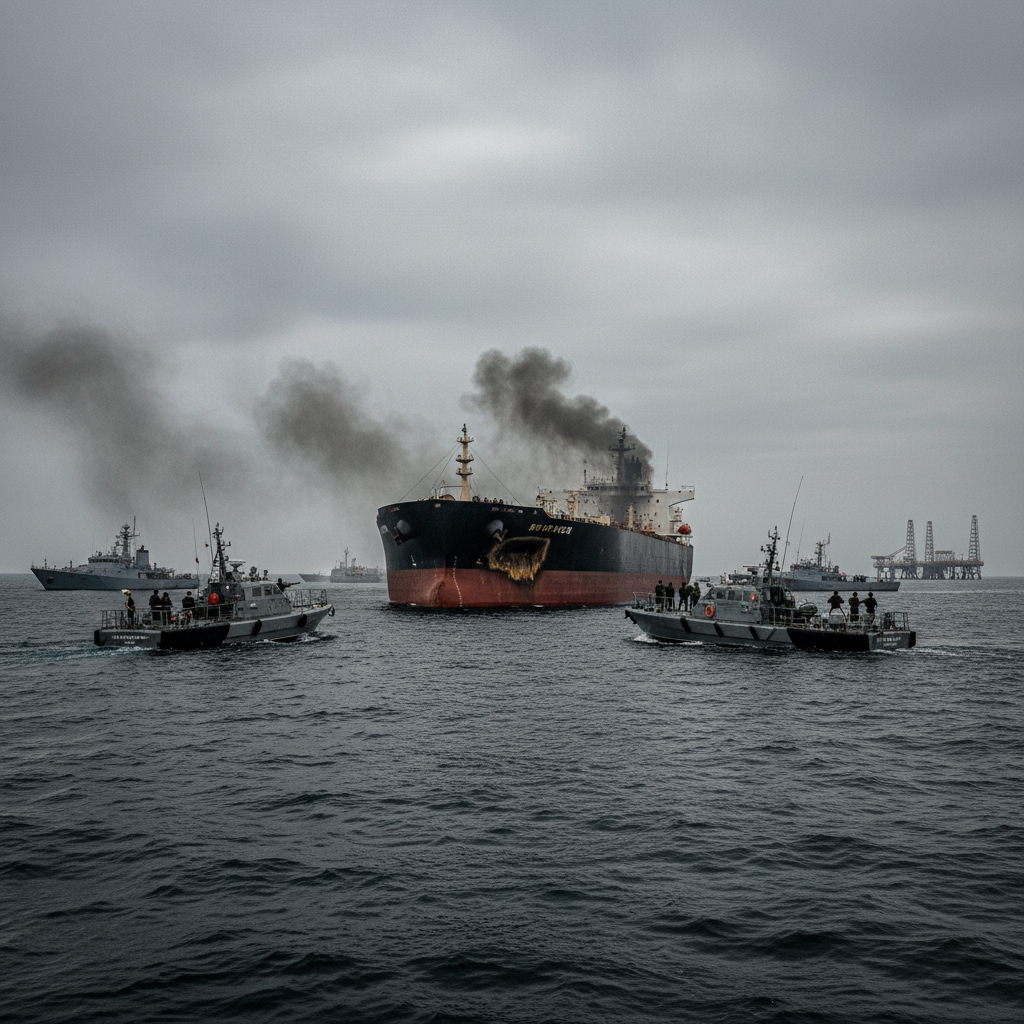
The conflict with Iran has entered its second week with a dramatic escalation in attacks across the Middle East, as Iranian forces target critical oil and transport infrastructure while expanding their range of operations beyond traditional regional boundaries.
The Iranian Revolutionary Guard announced it had successfully struck a US tanker in the northern Gulf, marking a significant escalation in naval warfare tactics. This attack represents the latest in a series of coordinated strikes against maritime targets that have raised concerns about global energy security and supply chain disruptions.
KEY FACTS
- Iran war now in its second week of escalating hostilities
- Iranian Revolutionary Guard claims successful strike on US tanker in northern Gulf
- One Iranian missile intercepted over Turkish territory
- US Senate voted down resolution limiting President Trump's war authority
- Multiple oil and transport facilities targeted across Middle East region
The scope of Iranian operations has expanded significantly, with reports indicating systematic targeting of oil and transport facilities across multiple Middle Eastern nations. This strategic approach suggests a coordinated campaign designed to disrupt regional economic stability and pressure international stakeholders to seek diplomatic solutions.
Perhaps most concerning for international observers was the interception of an Iranian missile over Turkish territory. This incident has immediately raised questions about NATO's potential role in the conflict, given Turkey's status as a member of the Atlantic alliance. The missile's trajectory over a NATO member state represents a potential trigger for Article 5 collective defense provisions, though no formal invocation has been announced.
The Turkish incident highlights the growing risk of conflict spillover beyond traditional Middle Eastern boundaries. Historical precedent suggests that regional conflicts involving major powers often expand beyond their initial geographic scope, particularly when missile technology allows for long-range strikes. The Cold War proxy conflicts of the 1980s provide numerous examples of how regional disputes can quickly evolve into broader international crises.
By The Numbers
In Washington, political divisions over war powers have become apparent as the US Senate voted down a resolution that would have limited President Trump's authority to conduct military operations against Iran. This legislative action reflects the ongoing constitutional tension between executive and congressional war powers that has characterized American foreign policy debates since the Vietnam War era.
The Senate vote carries significant implications for the conduct of the conflict. Without legislative constraints, the executive branch maintains broad discretionary authority over military operations, potentially allowing for more aggressive or sustained military action. This dynamic has historically led to prolonged military engagements when diplomatic solutions prove elusive.
"The Iranian Revolutionary Guard says it has hit a US tanker in the northern part of the Gulf" — Reuters
The targeting of oil infrastructure represents a particularly concerning development given the global energy market's vulnerability to Middle Eastern supply disruptions. Historical precedent from the Iran-Iraq War of the 1980s, known as the "Tanker War," demonstrates how attacks on energy infrastructure can rapidly escalate into broader international interventions as major powers seek to protect vital economic interests.
Current attacks on oil and transport facilities suggest Iran is employing an asymmetric warfare strategy designed to maximize economic and political pressure while avoiding direct confrontation with superior conventional forces. This approach mirrors tactics used during previous regional conflicts, where smaller powers have successfully leveraged economic disruption to achieve disproportionate political influence.
The naval dimension of the conflict presents particular challenges for international maritime security. The northern Gulf represents one of the world's most critical shipping lanes for energy exports, with approximately 20 percent of global oil supplies transiting through the Strait of Hormuz. Any sustained disruption to maritime traffic in this region would have immediate global economic consequences.
NATO's potential involvement remains a critical unknown variable in the conflict's trajectory. Turkey's unique position as both a NATO member and a regional power with complex relationships throughout the Middle East creates particular diplomatic challenges. The alliance has historically been reluctant to invoke Article 5 for incidents that members perceive as tangential to core European security interests.
The missile interception over Turkey also raises technical questions about regional missile defense capabilities. The successful interception suggests that existing defense systems remain effective against current Iranian missile technology, though the incident demonstrates Iran's willingness to risk escalation with NATO forces.
Energy markets have already begun reflecting the uncertainty created by the expanding conflict. Oil futures typically respond quickly to Middle Eastern military developments, with even temporary supply concerns capable of driving significant price volatility. The systematic targeting of multiple facilities suggests Iranian strategy is specifically designed to maximize market uncertainty.
Regional allies face difficult strategic calculations as the conflict intensifies. Traditional US partners in the Gulf must balance their security relationships with Washington against their economic interests and geographic proximity to Iran. This dynamic has historically created complex diplomatic pressures that can either escalate or constrain military actions depending on alliance cohesion.
The current escalation pattern suggests the conflict may be entering a more sustained phase rather than moving toward rapid resolution. The expansion of targeting beyond immediate military objectives to include economic infrastructure indicates both sides are preparing for prolonged engagement rather than seeking immediate diplomatic solutions.
International diplomatic efforts face significant challenges given the current trajectory of military escalation. The involvement of NATO territory complicates traditional mediation frameworks, while domestic political constraints in Washington may limit flexibility for negotiated settlements. The historical pattern of Middle Eastern conflicts suggests that without active international mediation, military escalation often continues until one side faces unsustainable costs or external pressures force diplomatic engagement.



