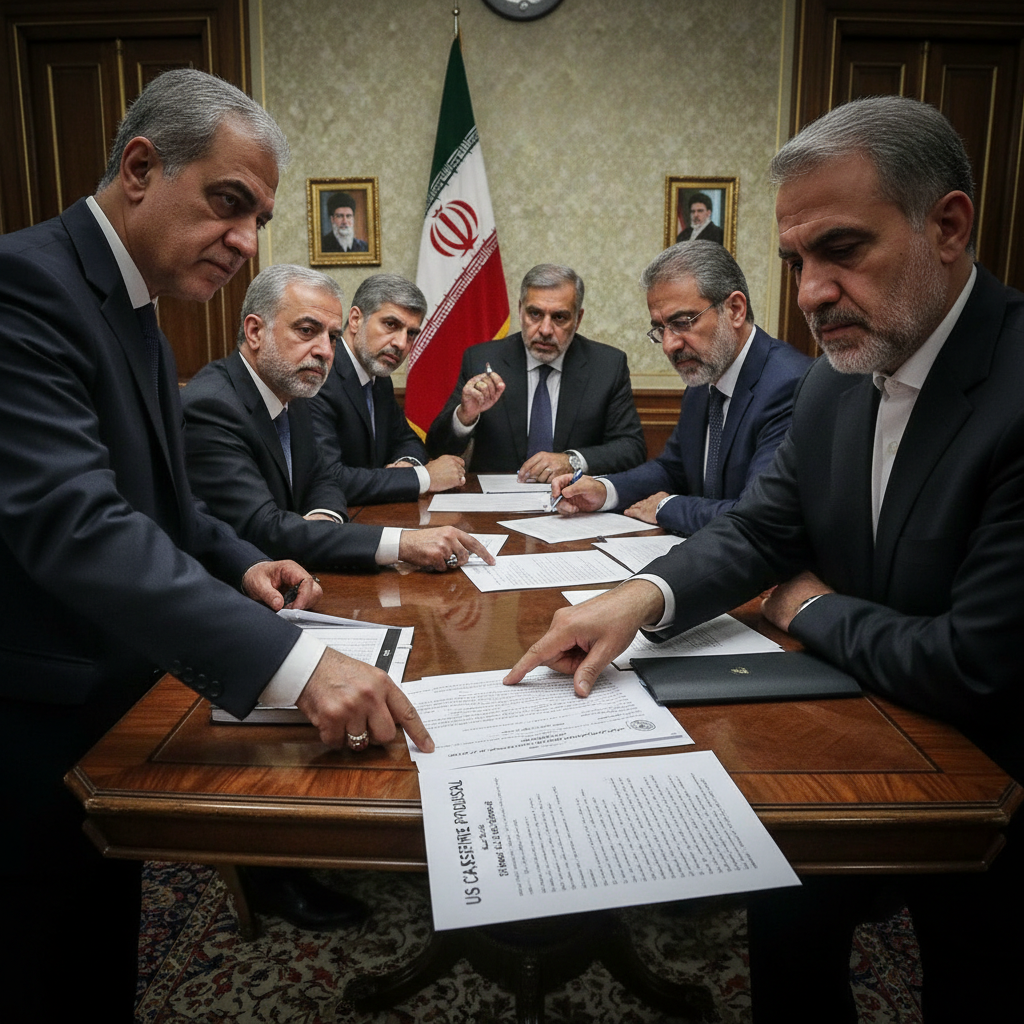
Iran has firmly rejected a ceasefire proposal from the United States, dealing a significant blow to diplomatic efforts to de-escalate mounting tensions in the Middle East as strikes continue across the region. The rejection underscores the deep mistrust between Tehran and Washington and raises concerns about further military confrontation in one of the world's most volatile regions.
According to Reuters, a senior Iranian official characterized Iran's initial response to the US proposal as 'not positive,' signaling Tehran's unwillingness to engage with the American diplomatic initiative. The proposal reportedly encompassed a comprehensive package including sanctions relief, a rollback of Iran's nuclear program, and measures to reopen the strategically vital Strait of Hormuz to international shipping.
The Iranian government's dismissal of the ceasefire plan reflects the Islamic Republic's deep skepticism about American intentions in the region. Iranian officials view the US peace proposal not as a genuine attempt at conflict resolution, but rather as a strategic maneuver that could precede military escalation. This interpretation aligns with decades of Iranian foreign policy doctrine that views American diplomatic overtures with suspicion, particularly when they come amid periods of heightened military tension.
KEY FACTS
- Iran rejected US ceasefire proposal including sanctions relief and nuclear rollback provisions
- Senior Iranian official described initial response as 'not positive' according to Reuters
- Iran views US peace plan as potential precursor to military escalation
- Non-hostile ships can pass safely through Strait of Hormuz, Iran states
- Regional strikes continue amid diplomatic breakdown between Tehran and Washington
The Strait of Hormuz has emerged as a critical flashpoint in the current crisis, with Iran's position on shipping passage becoming a key indicator of the country's strategic intentions. Despite the broader rejection of the ceasefire proposal, Iran has stated that non-hostile ships can pass safely through the strait, a declaration that carries significant implications for global energy markets and international commerce. This waterway serves as a chokepoint for approximately one-fifth of the world's petroleum liquids, making any disruption to shipping a matter of international concern.
The timing of Iran's rejection comes at a particularly sensitive moment for regional stability. The ongoing strikes across the Middle East have created a complex web of military actions and retaliations that threaten to spiral into a broader conflict. The failure of diplomatic engagement raises questions about alternative pathways to de-escalation and the potential for international mediation through multilateral channels.
Historical precedent suggests that Iranian rejections of American diplomatic initiatives often reflect deeper structural issues in bilateral relations rather than simply disagreement over specific terms. The legacy of the 1979 Iranian Revolution, the subsequent hostage crisis, and decades of mutual antagonism have created institutional barriers to trust-building that extend beyond individual policy proposals or political administrations.
By The Numbers
The nuclear dimension of the rejected proposal carries particular significance given the history of international negotiations over Iran's atomic program. Previous agreements, most notably the Joint Comprehensive Plan of Action signed in 2015 and later abandoned by the Trump administration in 2018, demonstrated both the potential for diplomatic breakthrough and the fragility of such arrangements in the face of changing political dynamics.
Iran's current nuclear capabilities have expanded significantly since the collapse of the JCPOA, with the country enriching uranium to levels approaching weapons-grade concentrations. The inclusion of nuclear rollback provisions in the rejected ceasefire proposal reflects American recognition that any sustainable peace arrangement must address Tehran's atomic ambitions, while Iran's rejection suggests the Islamic Republic views its nuclear program as a non-negotiable strategic asset.
"Iran's initial response to the U.S. proposal was 'not positive'" — Senior Iranian official to Reuters
The sanctions relief component of the proposal represents another critical element that has shaped Iranian calculations. The comprehensive sanctions regime implemented by the United States has significantly constrained Iran's economy, limiting access to international banking systems, restricting oil exports, and hampering technological development. While sanctions relief could provide substantial economic benefits to Iran, Tehran's leadership appears unwilling to accept what it perceives as conditional concessions that might limit its regional influence or strategic autonomy.
Regional allies and adversaries are closely monitoring the diplomatic breakdown for signals about future security arrangements in the Middle East. Gulf Arab states, which have historically viewed Iranian expansion with alarm, may interpret the rejection as confirmation of their assessments about Tehran's unwillingness to compromise on regional issues. Conversely, countries that have maintained diplomatic ties with Iran may see opportunities to position themselves as alternative mediators in future negotiations.
The continuation of strikes amid the diplomatic impasse creates additional complications for international efforts to contain the conflict. Military actions tend to generate their own momentum, making political solutions increasingly difficult as casualties mount and positions harden on all sides. The cycle of action and retaliation that characterizes the current situation has historically proven resistant to external diplomatic intervention, particularly when fundamental strategic interests are perceived to be at stake.
Intelligence assessments from various international sources suggest that Iran's rejection may be influenced by calculations about American domestic political constraints and international coalition-building capabilities. Iranian strategic planners have historically demonstrated sophisticated understanding of American political cycles and may believe that current circumstances provide leverage that would not be available under different conditions.
The role of proxy forces and regional allies in the current conflict adds another layer of complexity to potential resolution efforts. Iran's network of partnerships across the Middle East means that any ceasefire arrangement would need to account for multiple actors with varying degrees of autonomy from Tehran's direct control. The rejection of the American proposal may reflect concerns about Iran's ability to enforce compliance among its regional partners, or alternatively, resistance from those partners to arrangements that might constrain their own operations.
Economic factors underlying the current crisis extend beyond immediate sanctions concerns to broader questions about regional economic integration and energy security. Iran's position as a major hydrocarbon producer gives it significant leverage in global energy markets, but also creates vulnerabilities that can be exploited through targeted economic pressure. The interplay between military tensions and economic calculations shapes Iranian decision-making in ways that purely political or security-focused proposals may not adequately address.
The international community's response to Iran's rejection will likely determine the trajectory of future diplomatic efforts. Multilateral institutions, including the United Nations and regional organizations, may seek to fill the vacuum created by the breakdown in bilateral US-Iran engagement. However, the effectiveness of such efforts will depend on the willingness of major powers to coordinate their approaches and the ability to craft proposals that address the fundamental security concerns driving the current confrontation.



