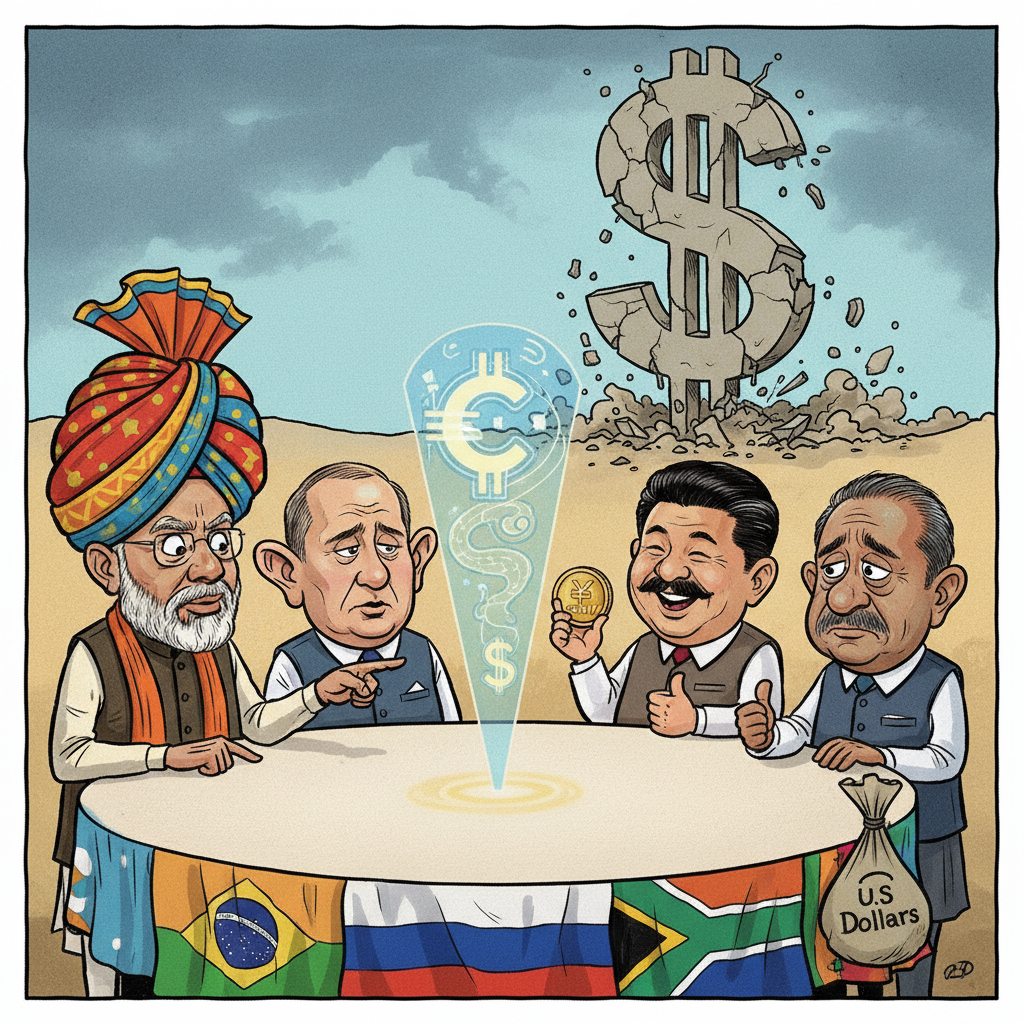
In a move that could reshape the landscape of international finance, India has formally proposed linking the official digital currencies of the BRICS nations – Brazil, Russia, India, China, and South Africa. The proposal, spearheaded by the Reserve Bank of India (RBI), aims to facilitate seamless cross-border transactions and significantly decrease the bloc's dependence on the US dollar. This initiative is poised to be a key agenda item at the upcoming 2026 BRICS summit, potentially marking a pivotal moment in the global economic order.
The rationale behind this ambitious proposal stems from a confluence of factors. Firstly, the BRICS nations, collectively representing a substantial portion of the global economy, seek greater autonomy in their financial dealings. The current reliance on the US dollar for international trade subjects these economies to fluctuations in US monetary policy and potential geopolitical pressures. By establishing a viable alternative through interconnected digital currencies, the BRICS bloc aims to insulate itself from these external vulnerabilities and foster greater economic stability.
KEY FACTS
- RBI proposed linking BRICS digital currencies.
- Proposal to be included in 2026 BRICS summit agenda.
- BRICS accounted for 40.2% of world economy (PPP) in 2024.
- IMF projects BRICS share to be 40.7% in 2025.
- Several BRICS nations are developing CBDCs.
Secondly, the rapid advancement of digital technologies and the emergence of central bank digital currencies (CBDCs) provide a technological foundation for this initiative. Several BRICS countries are already in various stages of developing and piloting their own CBDCs. Linking these digital currencies would create a unified payment system, streamlining international transactions and reducing transaction costs. This enhanced efficiency could significantly boost trade and investment flows within the BRICS bloc.
The geopolitical implications of this move are far-reaching. For decades, the US dollar has enjoyed unparalleled dominance as the world's reserve currency, granting the United States significant economic and political leverage. The BRICS initiative represents a concerted effort to challenge this dominance and create a more multipolar financial system. By reducing their reliance on the dollar, the BRICS nations aim to assert greater control over their economic destinies and promote a more equitable global order.
However, the path towards interconnected BRICS digital currencies is not without its challenges. Each member nation has its own unique economic and regulatory landscape, and harmonizing these diverse systems will require careful negotiation and compromise. Issues such as data privacy, cybersecurity, and regulatory compliance will need to be addressed to ensure the stability and security of the interconnected digital currency system. Furthermore, gaining widespread acceptance and adoption of the new system will require building trust and confidence among businesses and consumers.
The historical context of this initiative is crucial to understanding its significance. The BRICS bloc was formed in 2009 with the aim of promoting greater cooperation and coordination among emerging economies. Over the years, the bloc has expanded its scope of activities to include areas such as trade, investment, and development finance. The proposal to link digital currencies represents a natural progression of this agenda, reflecting a growing desire among BRICS nations to assert their collective influence on the global stage. The creation of the New Development Bank (NDB), also known as the BRICS bank, was an earlier example of this desire to create alternative financial institutions.
By The Numbers
The development of CBDCs within the BRICS nations is progressing at varying speeds. China, for instance, has been at the forefront of CBDC development, with its digital yuan already being piloted in several cities. Russia has also made significant strides in developing its digital ruble, while India is actively exploring the potential of a digital rupee. Brazil and South Africa are also conducting research and development in this area. The varying levels of progress among BRICS nations highlight the need for a flexible and adaptable framework for linking their digital currencies.
The potential benefits of interconnected BRICS digital currencies extend beyond reducing dollar dependence. The new system could also facilitate greater financial inclusion, particularly in developing countries where access to traditional banking services is limited. Digital currencies can provide a more accessible and affordable means of payment for individuals and businesses, fostering economic growth and development. Furthermore, the increased transparency and traceability of digital transactions could help combat illicit financial flows and promote greater accountability.
The response from the United States and other Western powers to this initiative remains to be seen. While some may view it as a legitimate effort to diversify the global financial system, others may perceive it as a challenge to US hegemony. The US government is likely to closely monitor the development of interconnected BRICS digital currencies and may take steps to mitigate any potential risks to its economic and political interests. This could involve strengthening its own financial institutions, promoting the use of the US dollar, or engaging in diplomatic efforts to dissuade other countries from joining the BRICS initiative.
The success of the BRICS digital currency initiative will depend on a number of factors, including the political will of the member nations, the technical feasibility of linking their digital currencies, and the acceptance of the new system by businesses and consumers. If successful, this initiative could have profound implications for the global financial system, potentially leading to a more multipolar and equitable world order.
The proposal also aligns with India's broader vision of promoting a more inclusive and representative global governance structure. India has long advocated for reforms to international institutions such as the United Nations and the World Bank to better reflect the changing realities of the 21st century. The BRICS initiative can be seen as a complementary effort to create alternative institutions and mechanisms that promote greater cooperation and coordination among emerging economies.
The long-term implications of this move are significant. A successful implementation of interconnected BRICS digital currencies could pave the way for other regional blocs to follow suit, leading to a fragmentation of the global financial system. This could create both opportunities and challenges for businesses and investors, requiring them to adapt to a more complex and diverse financial landscape. However, it also presents an opportunity for greater financial innovation and competition, potentially leading to more efficient and effective financial services.
"The move is seen as a geopolitical strategy to alter international trade among large emerging economies." — Reuters
The focus on digital currencies also reflects a broader trend towards digitalization across various sectors of the economy. India, in particular, has made significant strides in promoting digital payments and financial inclusion through initiatives such as the Unified Payments Interface (UPI). The linking of BRICS digital currencies would further accelerate this trend, creating a more seamless and efficient digital economy.
Ultimately, the success of this initiative will hinge on the ability of the BRICS nations to overcome the technical and political challenges involved and to build a system that is both secure and user-friendly. If they can achieve this, the interconnected BRICS digital currencies could represent a significant step towards a more multipolar and equitable global financial system, one where emerging economies have a greater voice and role in shaping the future of the world economy.
The RBI's proposal is not simply a technical exercise; it is a strategic maneuver designed to enhance India's economic and geopolitical standing. By taking the lead in this initiative, India is positioning itself as a key player in the emerging digital economy and as a champion of multipolarity in the global financial system. The 2026 BRICS summit will be a crucial test of India's diplomatic and economic leadership, as it seeks to build consensus and forge a common path forward on this ambitious project.