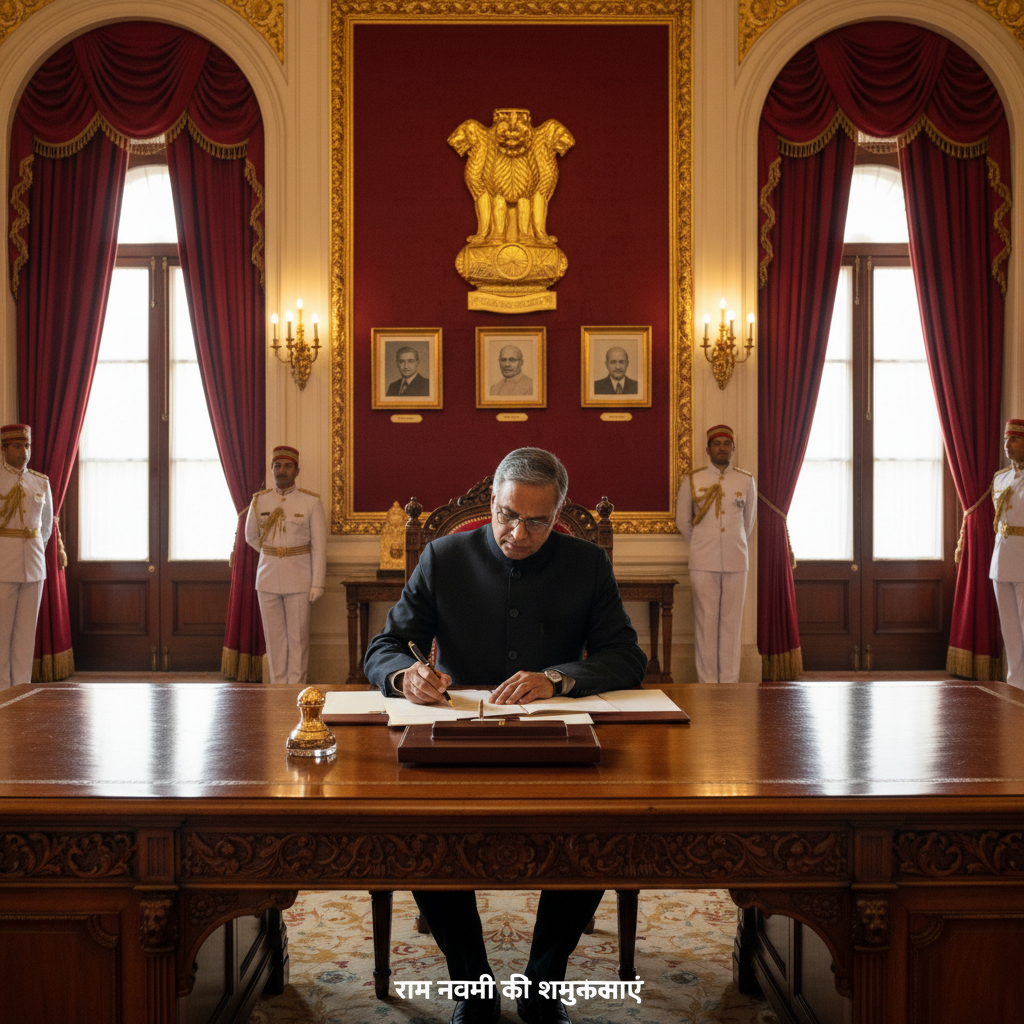
The President of India extended warm greetings to the nation on the auspicious occasion of Ram Navami, observed on March 25, 2026, according to PIB. The presidential message underscores the constitutional tradition of India's head of state acknowledging significant religious festivals that hold deep cultural importance for millions of citizens across the country.
Ram Navami, celebrating the birth of Lord Rama, represents one of the most significant festivals in the Hindu calendar and draws observances from diverse communities throughout India. The timing of the festival, which typically falls in March or April according to the lunar calendar, marks a period of spiritual reflection and cultural celebration that transcends regional boundaries.
The presidential greeting reflects India's constitutional framework that emphasizes unity in diversity while respecting the religious sentiments of all communities. This tradition of presidential messages on major festivals has been maintained consistently since India's independence, serving as a symbol of the nation's inclusive approach to governance and cultural recognition.
KEY FACTS
- Ram Navami observed on March 25, 2026
- Presidential greetings conveyed to the entire nation
- Festival celebrates the birth of Lord Rama
- Observed by millions of devotees across India
- Part of constitutional tradition of acknowledging religious festivals
The significance of Ram Navami extends beyond its religious importance, embodying ideals of righteousness, duty, and moral governance that resonate with India's constitutional values. The Ramayana, which chronicles the life and teachings of Lord Rama, has influenced Indian culture, literature, and philosophical thought for millennia, making the festival a cornerstone of the nation's cultural heritage.
Presidential messages on religious occasions serve multiple purposes within India's democratic framework. They demonstrate the secular nature of the Indian state while acknowledging the cultural diversity that defines the nation. These greetings also reinforce the constitutional commitment to respecting all faiths and fostering national unity through shared cultural celebrations.
The observance of Ram Navami across India involves diverse traditions, from elaborate processions and temple celebrations to community gatherings and cultural programs. The festival typically spans nine days, culminating on the ninth day when Lord Rama's birth is specifically celebrated. Devotees engage in prayers, fasting, and recitation of religious texts, creating a atmosphere of spiritual devotion throughout the country.
By The Numbers
The historical context of presidential greetings on religious festivals dates back to India's early years of independence. The practice established a precedent for constitutional heads of state to acknowledge the religious and cultural diversity of the nation while maintaining the secular principles enshrined in the Constitution. This tradition has been upheld by successive presidents, regardless of their personal backgrounds or political affiliations.
Ram Navami holds particular significance in the Indian cultural landscape as it celebrates a figure who is revered not only as a deity but also as an ideal ruler and moral exemplar. The concept of 'Ram Rajya' or the rule of Rama has been invoked throughout Indian history as a metaphor for just and righteous governance, making the festival relevant to both spiritual and civic discourse.
"The President of India conveyed greetings to the nation on the auspicious occasion of Ram Navami on March 25, 2026" — PIB
The timing of Ram Navami celebrations often coincides with spring festivals across various cultures, creating an atmosphere of renewal and hope. The festival's emphasis on truth, duty, and moral conduct resonates with universal values that transcend religious boundaries, making it an occasion for broader reflection on ethical governance and social harmony.
Regional variations in Ram Navami celebrations reflect India's cultural diversity while maintaining core spiritual themes. Northern states often feature grand processions and community prayers, while southern regions may emphasize temple rituals and classical music performances. These varied expressions of devotion demonstrate how a single festival can accommodate multiple cultural interpretations while preserving its essential spiritual significance.
The role of technology and media in contemporary Ram Navami celebrations has expanded the festival's reach, enabling virtual participation and global connections among devotees. Digital platforms facilitate the sharing of prayers, cultural programs, and religious discourses, allowing the presidential message and other official communications to reach broader audiences instantly.
Educational institutions across India often organize special programs during Ram Navami, focusing on the festival's cultural and historical significance. These initiatives help younger generations understand the festival's role in shaping Indian values and traditions, ensuring continuity of cultural knowledge across generational lines.
The economic impact of Ram Navami celebrations extends across multiple sectors, from traditional crafts and temple decorations to food preparation and transportation services. Local economies often experience increased activity during the festival period, as communities prepare for celebrations and welcome visitors from other regions.
International recognition of Ram Navami has grown as Indian diaspora communities maintain their cultural traditions abroad. The festival serves as a bridge connecting overseas Indians with their cultural roots while introducing global audiences to Indian philosophical and spiritual concepts. Presidential greetings on such occasions also acknowledge the global dimension of Indian culture.
The constitutional significance of presidential messages during religious festivals reflects India's commitment to pluralism and inclusive governance. By acknowledging Ram Navami alongside festivals from other religious traditions, the Indian state demonstrates its respect for all faiths while maintaining constitutional neutrality in matters of religion.
Contemporary interpretations of Ram Navami often emphasize the festival's relevance to modern challenges such as environmental conservation, social justice, and ethical leadership. The teachings associated with Lord Rama continue to provide guidance for addressing contemporary issues while maintaining traditional spiritual values. The presidential greeting serves to reinforce these enduring principles in the context of modern India's diverse and dynamic society.